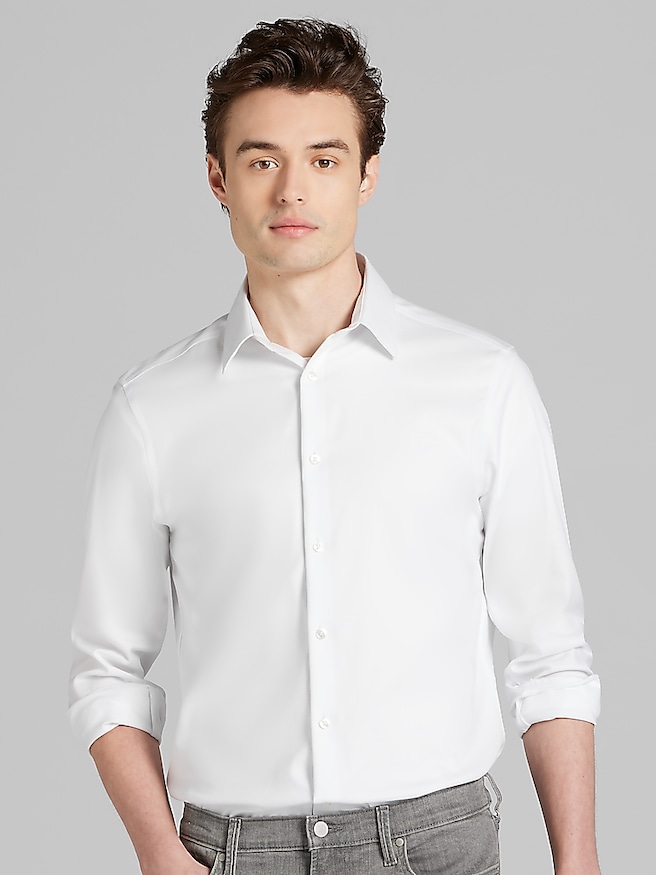
Shiny dress shirts have a light-catching surface that can range from a soft luster to a high-gloss finish. The difference is easy to spot when the fabric moves: a shirt with a restrained sheen might show a narrow highlight along the collar and cuffs, while glossy satin can reflect light across the entire front. Satin describes a weave, not a fiber, so a satin shirt can be made from silk, polyester, or a blend. The weave creates a smooth face that reflects light, but the fiber content and weight affect how the shirt hangs and feels. A lightweight silk satin can fall softly beneath a jacket, while a heavier polyester satin may hold a more defined shape at the collar and placket. Cotton sateen is another option for a smoother surface and a more understated glow. Metallic dress shirts get their shine from details such as reflective yarns or an applied finish. A fine metallic pattern can look like an ordinary texture from across the room and turn visibly reflective under a spotlight. Color changes the effect, too. Black and deep navy tend to show sheen as a bright highlight against a dark background, while silver and champagne can make the shine more apparent across the shirt. A deep burgundy satin shirt under a charcoal suit, for example, shows just a trace of luster with the jacket buttoned. Take the jacket off, and the same fabric catches light at the shoulders and down the sleeves. That's part of the appeal for a reception, prom, or evening performance: a shirt can look composed in a group photo yet still stand out on the dance floor or stage. For an event with flash photography, the degree of shine is worth considering alongside the color, since a glossy surface can appear brighter in photos than it does in a fitting room.
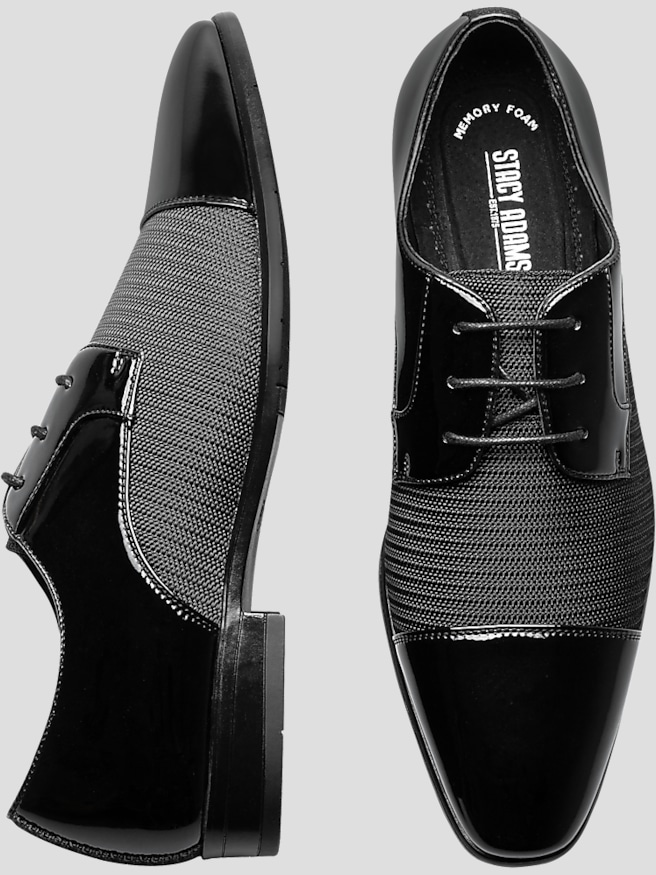
Fit is especially noticeable on a shiny dress shirt because reflected light draws attention to folds and pulling. Shoulder seams should sit near the ends of the shoulders, and the button placket should lie flat even when the wearer sits down. If the fabric pulls into diagonal lines between the buttons, more room across the chest or waist may produce a cleaner look. A slim fit can stay close to the body under a fitted jacket, while a classic fit gives the wearer more space to move. Neither cut needs to be tight to look neat. For a shirt worn with a tie, the collar should close comfortably without pinching, and the cuffs should reach the wrists without bunching under the jacket sleeves. An open collar and dark dress pants let a sharply cut satin shirt stand on its own at a dinner party. At a wedding reception or prom, a matte suit can frame a lustrous shirt without competing with it, particularly in photos where the lapels and shirtfront sit side by side. The same balance applies to Shiny Shoes: a softly lustrous shirt leaves room for a polished finish at the feet, while a high-gloss shirt often pairs well with shoes that reflect less light. A low-luster tie or a plain pocket square can also give the shirt more room to stand out. How much shine makes sense depends in part on the dress code. A bright metallic finish can suit a stage performance or a celebration where expressive attire is welcome, whereas a traditional formal shirt is a better choice for a strict black-tie event. For occasions between those extremes, a solid color with a mild sheen offers some visual interest without making the shirt the first thing people notice.
The way a shirt gets its shine matters for durability as much as appearance. The longer surface threads that give satin its smooth face can snag on rough edges, and an applied metallic finish may show wear where the fabric repeatedly rubs against a belt or bag strap. On a glossy dark shirt, abrasion can leave a dull spot that stands out when the fabric catches the light. For frequent wear, a smoother, lower-luster weave may be a practical choice, especially if the shirt will spend much of the evening under a jacket. For an occasional performance or celebration, a more reflective finish can be worth the extra care. Fiber content alone doesn't determine how a shirt should be cleaned, so check the garment's care label before washing, pressing, or steaming it. If machine washing is permitted, turning the shirt inside out and keeping it away from exposed zippers or hook-and-loop fasteners can help protect the surface. Some metallic finishes are sensitive to direct heat, so a fabric that looks sturdy may still need special handling. A smooth hanger can help keep the shirt from developing hard creases between wears. Care is also worth considering when choosing a shiny dress shirt as a gift. A subtle sheen can suit someone who already wears dark suits and would like a shirt with more character, while a stronger metallic finish may be a better match for a performer or someone who enjoys a standout look at a party. If the shirt will be worn with a tie, the recipient's usual neck and sleeve sizes are more useful than a casual shirt size alone. A familiar cut and a color that works with a suit the recipient already owns can make the gift easier to wear beyond the occasion it was chosen for.