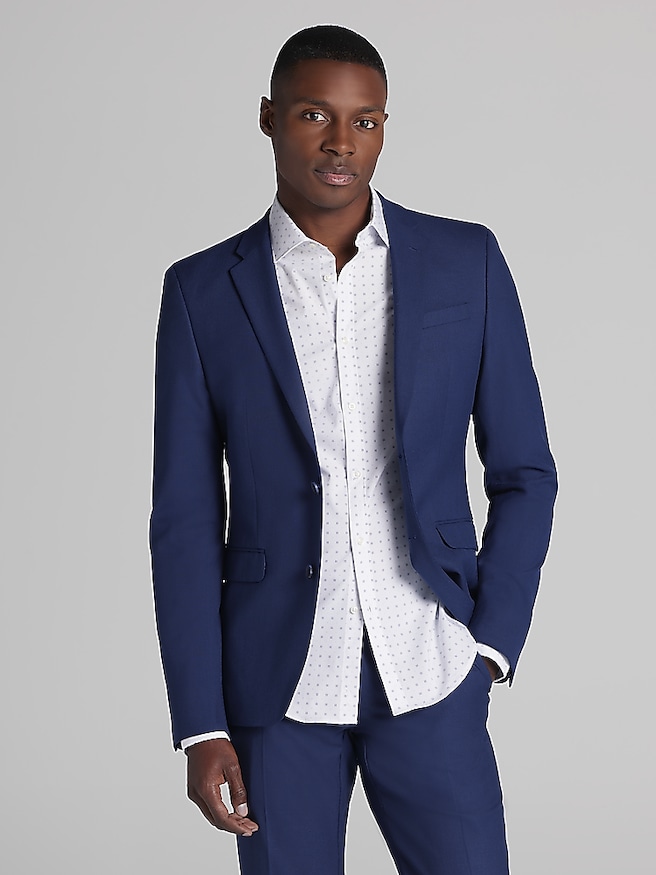
A sharkskin suit is a men’s suit made from finely woven, two-tone fabric with a smooth surface and a subtle sheen. The name refers to the appearance of the cloth, not its source: sharkskin suiting is a textile, not actual shark skin. Its characteristic depth comes from contrasting yarns woven closely together, often in a fine twill construction. From across a room, the fabric may look like a solid gray, charcoal, or navy; closer inspection reveals tiny variations in tone and a delicate diagonal texture. As light moves across the jacket, those variations give the surface a soft luster rather than a flat finish. The effect can be understated enough for a business meeting yet distinctive enough for a wedding reception. Not every sharkskin fabric has the same degree of shine, so the term describes a recognizable visual character rather than one fixed finish or fiber content. Wool and wool-blend sharkskin fabrics are common, while other compositions may incorporate mohair, silk, or synthetic fibers. The fiber label matters because it helps explain how a suit will feel, drape, and respond to regular wear. Worsted wool uses combed fibers to create relatively smooth yarns, making it well suited to the crisp appearance associated with sharkskin. Mohair can contribute resilience and a more pronounced luster, while other blended fibers may influence softness, recovery, or surface texture. Composition alone does not tell the entire story: fabric weight, yarn quality, weave, lining, and construction all affect the finished suit. A densely woven cloth can hold a clean line, but no fabric is automatically wrinkle-proof or immune to abrasion. For anyone drawn to the clean finish of Smooth Suits, sharkskin adds visual depth without relying on a bold check or stripe. Its distinction is easiest to appreciate at the lapel, shoulder, and sleeve, where the cloth catches light as the wearer moves.
Fit gives that fabric its shape, and a sharkskin suit looks most composed when the jacket and trousers follow the body without pulling. The jacket’s shoulders should sit close to the natural shoulder line, with sleeves falling smoothly rather than collapsing beneath the seam. A collar that rests against the shirt collar helps maintain a clean outline, while lapels should lie flat when the jacket is buttoned. Pronounced X-shaped creases around the fastening can indicate that the body is too tight; excess fabric through the chest or back can obscure the suit’s structure. A slim fit offers a closer silhouette, but it still needs enough room for sitting, reaching, and walking. A classic fit allows more ease, and neither approach should depend on sizing down or up to create a particular look. Trouser rise, seat, and thigh room deserve as much attention as the jacket. The waistband should feel secure without relying on an overtightened belt, and the pockets should remain relatively flat. A slight break at the shoe creates a familiar business finish, while a shorter, clean hem can give tapered trousers a sharper outline. The right proportions make the most of sharkskin’s subtle surface rather than allowing bunching or strain to distract from it. Charcoal sharkskin works naturally for presentations, interviews, and occasions that call for a restrained appearance. Navy provides similar versatility with a rich blue foundation, while lighter gray tends to make the weave and tonal contrast more noticeable. A white shirt and a textured silk tie keep the combination crisp; a pale blue shirt softens the contrast without competing with the cloth. Because the suit already has a gentle luster, quieter accessories often create the most balanced result. Matte leather shoes, a neatly folded pocket square, and a tie with a small-scale pattern provide definition without making every element compete for attention. For weddings, business dinners, and dressy celebrations, the result feels polished without looking theatrical. An invitation specifying black tie generally calls for a tuxedo rather than a sharkskin suit.
Comfort and longevity depend on how the suit is constructed, how it fits, and how it is treated between wears. A jacket that moves comfortably through the upper back and trousers that allow an easy seated position are especially valuable during long meetings, ceremonies, and receptions. Lining can help a jacket slide over a shirt and support its finished appearance, while internal construction influences how the chest and lapels hold their shape. These details matter more in daily use than a dramatic shine under display lighting. For frequent wear, allowing the suit to rest between outings gives minor creases time to relax and helps prevent repeated stress on the same areas. After wearing it, empty the pockets and hang the jacket on a broad, shaped hanger that supports the shoulders. Trousers should hang neatly from an appropriate hanger rather than remain folded over a chair. A light brushing with a suitable clothing brush can remove surface dust, and small spills deserve prompt attention according to the care label. Rubbing a stain can spread it or disturb the finish, so professional advice is sensible when the fabric or stain is uncertain. Dry cleaning should follow the garment’s instructions and be used when needed rather than automatically after every wear. When professional cleaning is necessary, cleaning the matching pieces together helps maintain a consistent appearance. Direct pressure from a hot iron can leave unwanted shine, particularly on darker fabric; pressing methods should suit the fiber content, with professional pressing a sound choice for stubborn creases. Breathable storage and enough space around the jacket help preserve its shape. Those habits make a difference whether the suit is worn regularly for work or reserved for milestone occasions. As a gift for a graduate, a new professional, or someone preparing for an important celebration, a sharkskin suit combines practical use with a distinctive finish. Involving the recipient in fit and alteration decisions helps turn that gesture into a suit that feels personal, comfortable, and ready for repeated wear.