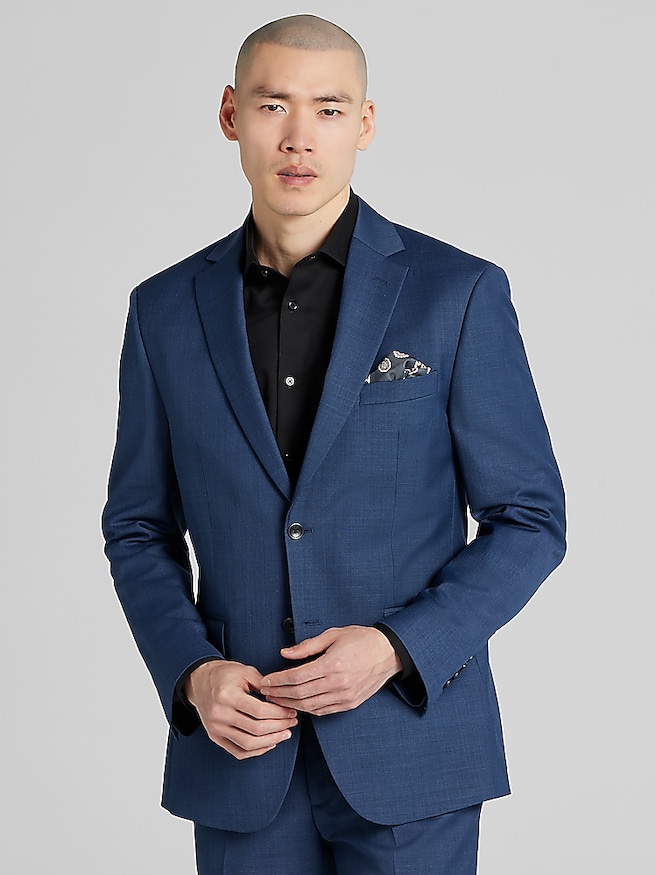
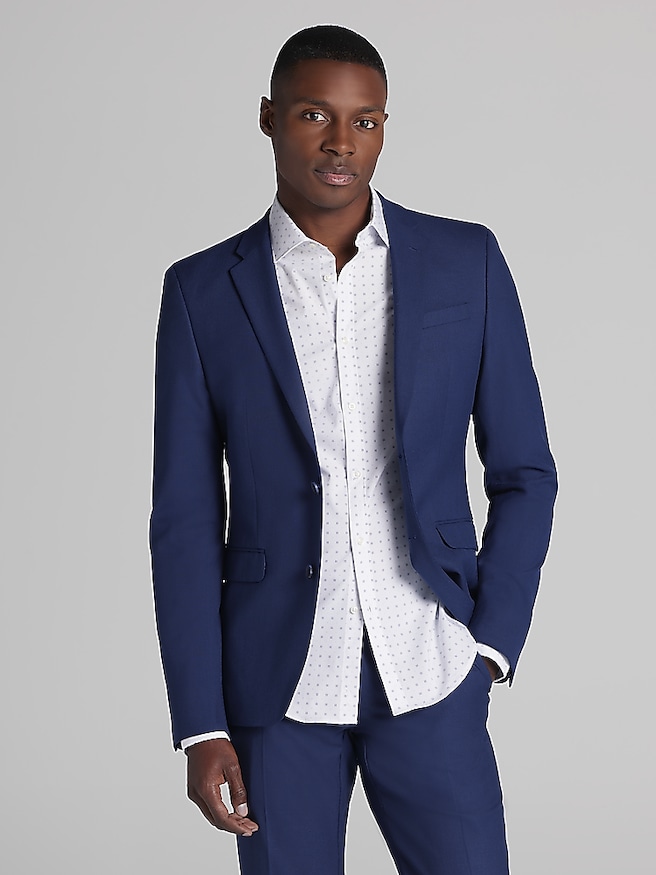
Blue sharkskin suits are tailored suits distinguished by a finely textured fabric with a subtle two-tone effect and a restrained luster. The name describes the cloth’s appearance, not an animal-derived skin: contrasting yarns give the surface visual depth that can look nearly solid from across a room and more dimensional up close. In blue, that effect brings character to a familiar suiting color without relying on a prominent stripe or check. Deep navy sharkskin has a reserved, business-ready presence, while medium blue makes the woven texture easier to see. The exact appearance depends on the yarns, fabric composition, and finishing, so sharkskin can range from relatively matte to noticeably lustrous rather than having one uniform level of shine. This balance of color and texture makes blue sharkskin suits suitable for office presentations, interviews, wedding ceremonies, graduation celebrations, and dinners that call for polished tailoring. A groom might choose the fabric for its depth in photographs, while a wedding guest might appreciate a suit that also feels appropriate at a professional event afterward. Under direct lighting, the surface can appear brighter; in softer light, the same fabric may read as a quieter blue. That shifting effect is part of its appeal, though a pronounced sheen generally creates a dressier impression than a subdued finish. A two-piece suit keeps the overall look straightforward, while a coordinating vest adds another layer of structure and allows a more complete appearance when the jacket comes off. The occasion still sets the boundaries: blue sharkskin works well for many events requiring a suit, but it does not replace a tuxedo when the invitation specifies black tie. Its strongest role is as distinctive, adaptable tailoring that looks intentional without making texture the entire focus of an outfit.
Fabric composition and construction influence how a blue sharkskin suit feels, drapes, and holds up to repeated wear. Wool is a common choice because it can fall cleanly through the jacket and trousers, breathe comfortably, and recover from light creasing with time between wears. Wool blends may combine those qualities with other characteristics, including added resilience or stretch, depending on the fibers and their proportions. Synthetic blends can also produce the characteristic sharkskin appearance, although the feel and movement of the finished fabric will vary. The fiber label tells more about composition than the sharkskin name alone, and a smooth surface is not, by itself, proof of softness or durability. Very fine wool can feel exceptionally refined, but a higher wool fineness number does not automatically mean greater resistance to abrasion. For someone wearing a suit regularly at a desk, through meetings, and during a commute, a balanced fabric with good recovery may be more practical than an especially delicate cloth. Fit matters just as much as material because the subtle luster can make pulling, twisting, and excess fabric more noticeable. Jacket shoulders should follow the natural shoulder line, with the collar resting neatly against the shirt rather than standing away from the neck. The front should close without strong tension lines around the button, and the sleeves should allow comfortable movement without swallowing the hands. Slim cuts create a closer outline, while classic cuts generally provide more room through the chest, waist, seat, and thighs; neither should feel restrictive when seated. Trouser fabric should fall smoothly rather than strain across the pockets or bunch heavily above the shoes. A slight break creates a traditional finish, while little or no break produces a cleaner, more contemporary line. Thoughtful alterations to sleeve length, trouser hems, or the waist can refine the silhouette, but a sound fit through the shoulders and seat provides the strongest starting point.
The fine texture of blue sharkskin pairs naturally with simple, clearly defined accessories. A white dress shirt keeps the contrast crisp for an interview or ceremony, while pale blue creates a softer combination that still looks professional. With medium-blue fabric, a navy or burgundy tie adds depth without competing with the suit’s surface. Small-scale patterns can work well, but large, glossy designs may draw attention away from the tailoring. A textured silk tie or a quietly patterned pocket square gives the outfit dimension without requiring every element to shine. Black leather shoes support a more formal appearance, while dark brown leather can bring a less severe finish when the occasion permits. Matching the belt closely to the shoes helps keep the details cohesive. For another neutral interpretation of the same fabric effect, Light Grey Sharkskin Suits provide a lighter visual contrast to blue, with the same emphasis on fine texture rather than bold pattern. Care helps preserve that texture and the clean lines that make sharkskin appealing. The garment’s care label should determine cleaning methods, especially when the outer fabric, lining, and internal construction have different requirements. Routine care generally includes brushing away surface dust, letting the suit air after wear, and hanging the jacket on a broad, supportive hanger. Trousers benefit from being hung neatly along their crease, and allowing space in the closet helps prevent unnecessary crushing. Professional cleaning is appropriate when required by the label or when soil and odors remain, rather than automatically after every outing. Direct heat and heavy pressing can leave unwanted shine, so wrinkles are best handled according to the care instructions or by a professional familiar with tailored garments. Rotating suits also gives the cloth time to recover. As a gift for a graduate, partner, or family member preparing for an important milestone, a blue sharkskin suit is most personal when sizing, preferred fit, and room for alterations are considered alongside the occasion.