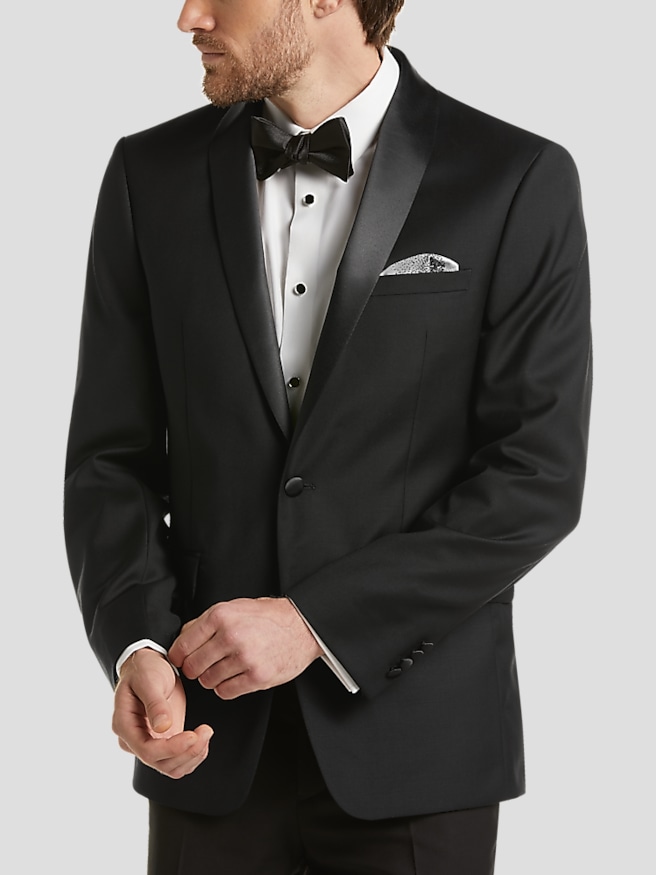
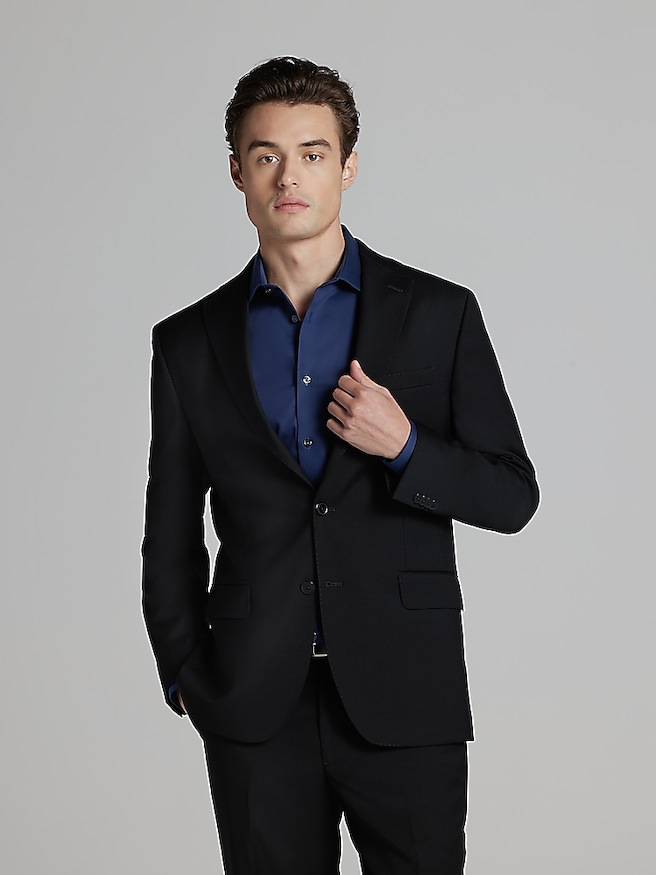
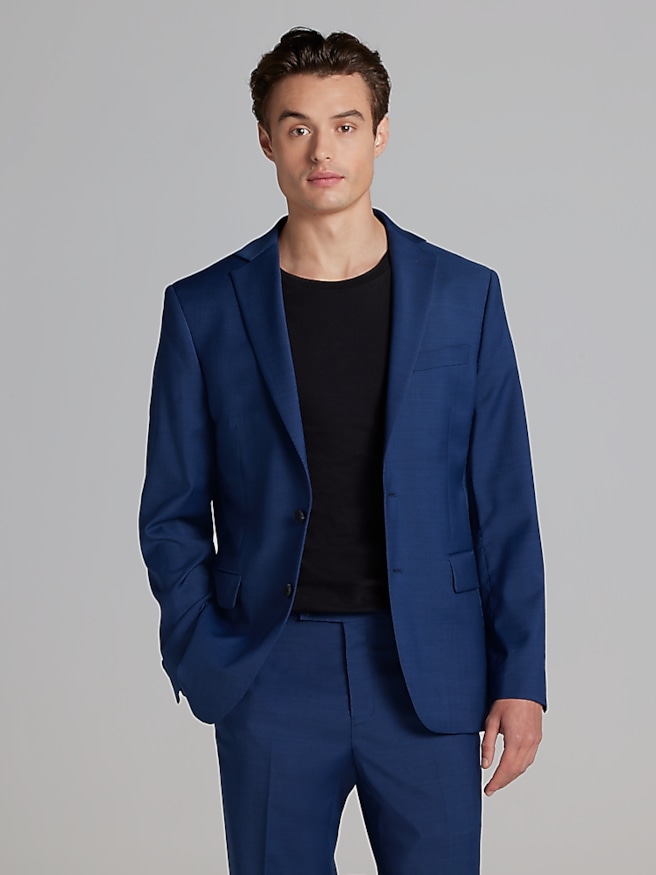
Semi-formal jackets are tailored layers, including blazers and refined sport coats, that add structure and polish to dress shirts and trousers without necessarily requiring a matching suit. They suit occasions where casual clothing feels too relaxed, but the invitation leaves room for separates: a wedding reception, an anniversary dinner, a theater performance, or a professional celebration. The dress code still sets the standard, and a black-tie event generally calls for a tuxedo rather than a standard blazer. Within semi-formal dressing, the strongest combinations look intentional from shoulder to shoe. A dark jacket with contrasting gray trousers creates a clear, balanced outline, while closely related shades can give an outfit a quieter, more coordinated appearance. Navy, charcoal, and medium gray provide straightforward starting points because they work with a broad range of shirt colors and leather accessories. Subtle checks, fine herringbone, and textured solids add dimension without competing with the rest of the outfit. A smooth fabric and restrained pattern generally read dressier than a coarse weave or bold plaid. Details matter, too: notch lapels offer familiar versatility, while peak lapels create a sharper, more pronounced line. Patch pockets tend to feel more relaxed than neatly finished flap or welt pockets, making pocket construction another useful signal of a jacket’s intended use. Men’s semi-formal jackets also leave room for personal expression through a softly patterned tie, a neatly folded pocket square, or a shirt with a subtle texture. These accents work best when one detail leads and the others stay understated. For a dinner with colleagues, that might mean a white shirt, dark trousers, and polished lace-up shoes; for a reception, a richer tie color can add distinction without changing the entire outfit. The broader range of Style Jackets shows how fabric, silhouette, and finishing details shape the character of a tailored layer. For semi-formal occasions, the goal is a jacket that belongs naturally with dress trousers rather than one that looks separated from a matching suit.
Fabric and construction influence how a jacket looks at the start of an event and how comfortably it wears through dinner, conversation, and time on the dance floor. Wool is valued in tailoring for its drape, breathability, and ability to recover from ordinary creasing, though performance varies with the weave and fabric weight. Wool blends can combine that tailored appearance with other qualities, such as a smoother hand or added stretch. Cotton offers a more matte, relaxed surface, while linen contributes visible texture and a natural tendency to wrinkle; those characteristics can be appealing when the occasion allows a less formal finish. Fabrics with a touch of silk may have a subtle sheen, but a pronounced shine can make a jacket feel more evening-focused. A densely woven cloth often presents a cleaner surface, while an open weave has a more visible texture. Lining and internal structure affect the experience as much as the outer fabric. A fully lined jacket can slide smoothly over a dress shirt, while partial lining changes the feel and weight without automatically making the jacket more or less formal. Light shoulder padding creates a softer outline; a more structured shoulder gives the upper body a defined shape. Neither approach replaces proper fit. The shoulder seam should sit close to the natural shoulder, the collar should rest against the shirt collar, and the lapels should lie flat rather than bow outward. With the jacket buttoned, the front should close without pulling into an obvious X-shaped crease. There should also be enough room to sit comfortably, reach for a glass, and move the arms without the entire jacket lifting. Slim, tailored, and classic fit labels describe general silhouettes, but their proportions vary, so shoulder width, chest room, sleeve length, and overall balance deserve more attention than the label alone. A small amount of shirt cuff showing beneath the sleeve gives the outfit a deliberate finish. Jacket length should balance the torso and trousers, and back vents should hang closed when standing naturally.
A useful semi-formal jacket fits more than one moment without losing its sense of purpose. The same understated silhouette can accompany a presentation followed by dinner, a graduation celebration, or a milestone birthday at a restaurant where guests are dressing up. Its versatility comes from proportion and fabric as much as color. A jacket with moderate lapels, restrained buttons, and a subtle surface is easier to combine with several pairs of dress trousers than one dominated by oversized details or a striking pattern. Trousers should complement the jacket’s formality and texture; a refined wool jacket can look disconnected above heavily distressed denim or overly casual footwear. A dress shirt with a collar that sits neatly beneath the lapels helps maintain a clean neckline, whether the occasion calls for a tie or permits an open collar. Care helps preserve that appearance over repeated wear. The care label is the starting point, since fiber blends, linings, and internal construction can require different treatment. A broad, shaped hanger supports the shoulders, while space in the closet keeps the sleeves and lapels from being compressed. Emptying the pockets after wear prevents unnecessary stretching, and a soft clothing brush can lift surface dust from suitable fabrics. Giving the jacket time to air between wears helps it recover its shape. Cleaning should follow the label and the needs of the garment rather than an automatic schedule, and stains deserve prompt attention from a cleaner familiar with tailored clothing. Repeated friction at cuffs, pocket edges, and elbows can affect appearance, making smooth linings, secure stitching, and well-finished seams meaningful considerations for regular use. For a gift recipient such as a partner, father, brother, or recent graduate, a semi-formal jacket can mark a new role or an important achievement. Accurate measurements and room for appropriate alterations matter more than guessing from a shirt size. The most useful choice feels comfortable in motion, complements clothing the recipient already wears, and looks at home wherever a polished appearance is part of the occasion.