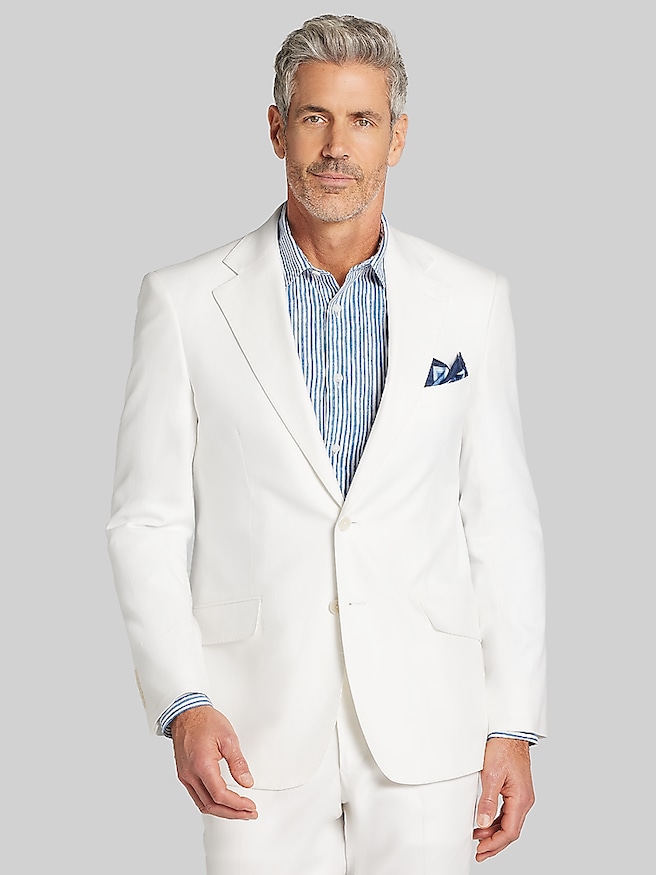
Seasonal wedding suits for men bring together fabric, color, fit, and formality in a look suited to the celebration. Lightweight wool, linen, and cotton blends can work well for spring and summer weddings, while flannel and more substantial wool fabrics offer added warmth for fall and winter ceremonies. The best match also depends on the venue and dress code: a breezy waterfront setting calls for different considerations than an evening reception in a grand ballroom. For grooms, groomsmen, and guests, seasonal details should support the occasion rather than override its level of formality. A pale suit may feel at home at a daytime garden ceremony, but a dark suit generally has a more formal appearance after sunset. Spring wedding suits often draw on light gray, soft blue, and subtle woven texture, with breathable construction that feels comfortable through an outdoor ceremony and an indoor reception. Summer wedding suits place particular emphasis on fabric weight and airflow. Linen has an easy texture and develops visible creases as it is worn, making it especially suited to relaxed celebrations where a perfectly smooth finish is not the goal. Cotton offers a crisp appearance with a more casual character, while lightweight wool can provide a polished drape without the weight associated with heavier tailoring. Fabric content alone does not determine comfort; weave, lining, and how closely a suit fits also matter. An open weave and partial lining can allow more airflow, while a tight fit can feel restrictive even in a lightweight fabric. For a ceremony on a lawn or terrace, a jacket that allows easy movement and trousers with a comfortable rise make standing, sitting, and walking between locations feel more natural. Shirts and accessories can reinforce the setting through restrained color and texture, leaving the suit itself clean-lined enough for photographs, dinner, and dancing.
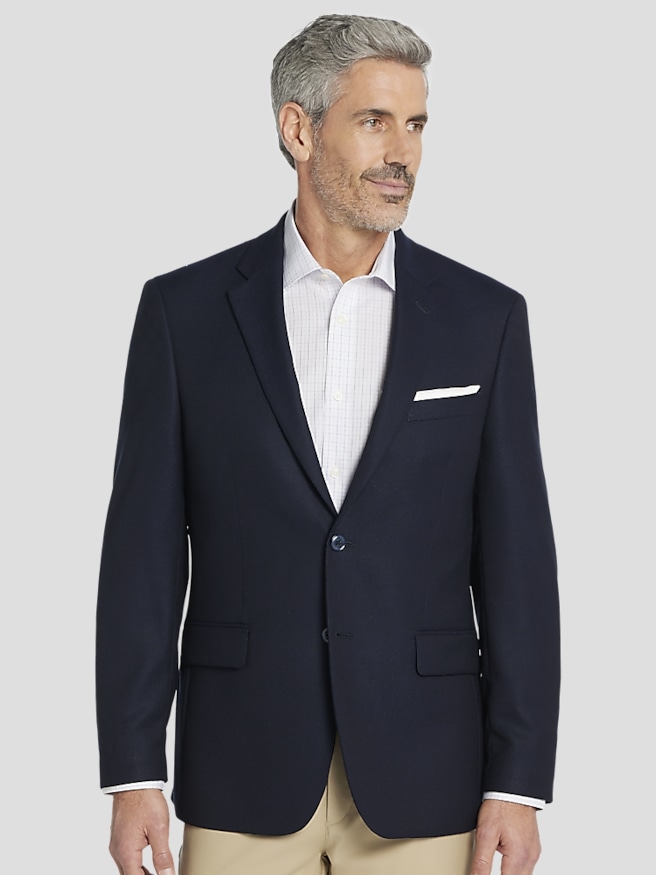
Fall wedding suits often feature richer colors and fabrics with a little more texture. Navy, charcoal, medium brown, and deep green can complement wood-paneled venues, vineyard settings, and outdoor ceremonies surrounded by autumn foliage. These colors do not need elaborate accessories to feel distinctive; a textured tie, a neatly folded pocket square, or a crisp shirt can provide enough contrast. Wool flannel has a softly brushed surface that creates a warmer, less glossy appearance, while worsted wool offers a smoother finish that works across a broad range of wedding settings. Heavier fabric is not automatically better, especially when most of the celebration takes place indoors. A medium-weight wool suit can be a practical choice for a brief outdoor ceremony followed by several hours in a heated reception space. Winter wedding suits tend toward deeper tones, substantial drape, and layers that remain polished when an outer coat comes off. A waistcoat adds coverage and gives a three-piece suit a finished appearance when the jacket is removed, though it also adds warmth. For an evening ceremony, dark navy or charcoal with a white shirt creates a clear, understated contrast that photographs well under indoor lighting. A black-tie dress code calls for the appropriate formalwear rather than simply a darker seasonal suit. Celebrations with a more relaxed dress code may allow coordinated separates, and men's fall wedding blazers can complement dress trousers when a matching suit is not expected. The distinction matters for wedding parties, where matching fabrics and colors create a more uniform appearance than individually coordinated jackets. Grooms can stand apart through a waistcoat, tie, or boutonniere while keeping the overall group cohesive. Guests have more flexibility, but the invitation and venue remain stronger cues than a seasonal color palette alone.
Fit gives seasonal wedding attire its shape and helps it stay comfortable through a full celebration. Jacket shoulders should lie smoothly without extending noticeably beyond the natural shoulder, and the collar should sit close to the shirt without a visible gap. A buttoned jacket should define the torso without pulling into pronounced creases across the front. Slim, tailored, and classic fits describe different proportions, but the most flattering choice is the one that accommodates the wearer’s build and movement rather than relying on a label. Trousers need enough room through the seat and thighs for sitting through dinner, with a waistband that stays comfortable and a hem that falls cleanly over dress shoes. Trying the full outfit with the intended shirt and shoes makes sleeve length, trouser length, and overall balance easier to assess. Construction also affects how a suit feels over time: a well-shaped chest, smooth lining, secure seams, and fabric that recovers after wear all contribute to a dependable garment. A versatile seasonal suit can serve beyond the wedding, with understated navy, gray, or brown working for other celebrations and dressier occasions when styled appropriately. Care helps preserve that usefulness. The garment’s care label should determine cleaning methods, particularly for blends, textured fabrics, and structured jackets. Between wears, a suit benefits from airing out and resting on a broad, shaped hanger, with trousers hung neatly to limit unnecessary creasing. Gentle brushing can remove surface dust from suitable wool fabrics, while spills deserve prompt attention using a method appropriate to the material. Professional cleaning is best reserved for when it is needed rather than treated as an automatic step after every wear. Before travel, a garment bag helps protect the fabric from contact and abrasion; after arrival, hanging the suit gives packing creases time to relax. With thoughtful fabric selection, a balanced fit, and consistent care, seasonal wedding suits can feel appropriate to the setting while retaining the polish expected of an important occasion.