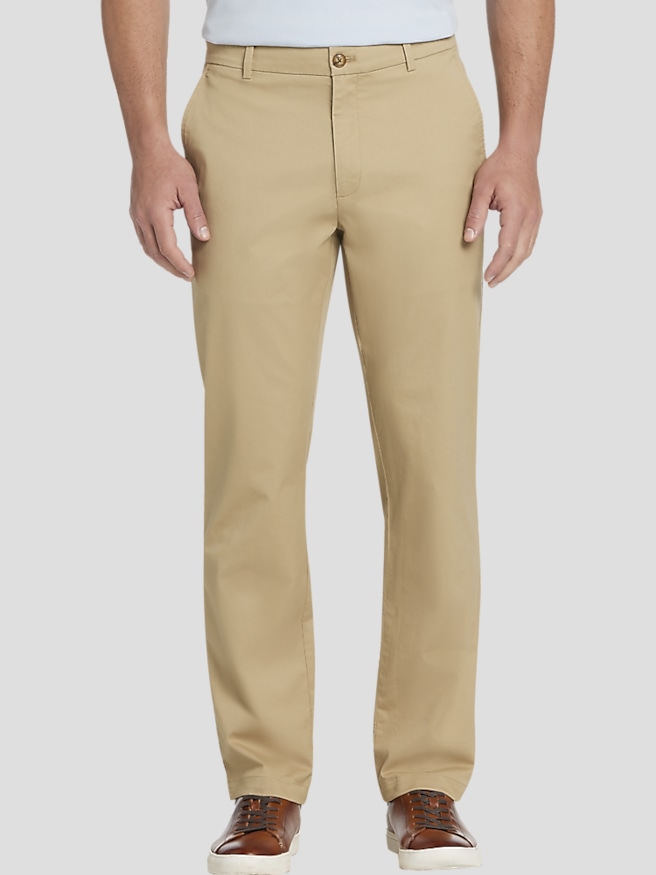
Sand colored pants bring a softer alternative to dark trousers without losing the clean, composed look that makes a neutral pair so useful. Their pale, earthy tone sits comfortably alongside navy, white, charcoal, olive, and brown, giving familiar shirts and jackets a slightly different character. A white Oxford shirt tucked into sand chinos creates a straightforward outfit for an office with a relaxed dress code, while a navy blazer and neatly pressed trousers can carry the same color combination into a dinner reservation or a daytime celebration. The effect depends as much on texture and construction as on shade: a matte cotton twill reads more casually than a smooth, finely woven dress fabric, even when the colors are nearly identical. Sand can lean toward cream, muted khaki, or a slightly deeper tan, so the surrounding pieces help establish the contrast. A dark belt and brown leather shoes give a light pair of pants a defined finish; suede loafers and a textured knit polo create a less structured impression. Black can work, too, particularly when repeated in a shirt or jacket so the shoes do not look disconnected from the outfit. For a closely related neutral with a casual cotton-twill character, Beige Chinos offer another direction for everyday dressing. Sand colored pants are especially useful when a full suit would feel too formal but jeans would not quite suit the setting. Think of a client lunch at a neighborhood restaurant, a family portrait with a restrained color palette, or a graduation gathering where photographs are part of the day. They provide a quiet foundation rather than a strong focal point, leaving room for a patterned shirt, an interesting jacket weave, or a favorite pair of shoes. Tonal combinations also have a place: an ivory shirt and sand trousers can look deliberate when the fabrics have enough contrast to keep the pieces visually distinct. The appeal is not that every outfit becomes dressy, but that the same color can support several levels of polish.
Fabric and fit determine how sand colored pants feel through a full day and how neatly they hold their shape. Cotton twill has a recognizable diagonal weave and a substantial, familiar hand, making it a natural choice for chinos worn to work, casual dinners, and everyday appointments. A small amount of stretch can add ease when sitting, climbing stairs, or moving between a desk and a meeting room, although comfort still depends on having enough room through the waist, seat, and thighs. Stretch should complement a good fit rather than compensate for a pair that pulls across the front. Wool and wool-blend trousers generally offer a more fluid drape and a dressier surface, particularly when finished with a defined crease. Linen blends introduce visible texture and a more relaxed appearance, including the natural creasing that comes with the fiber. Fabric blends may also influence wrinkle resistance, recovery, and care requirements, so fiber content matters beyond the feel of the cloth. In a light neutral, the weight and coverage of the fabric deserve attention as well; pocket bags and seams should not become distracting features of the finished look. A well-fitting waistband rests securely without digging in, and the front pockets lie flat instead of flaring open. Slim fits create a closer outline through the leg, tailored fits balance shape with room to move, and straight fits maintain a more consistent line from thigh to hem. Those descriptions can vary, making actual measurements more useful than a fit name alone. Rise affects where the waistband sits and how comfortably a shirt stays tucked, while pleats can provide additional room through the upper leg. Flat-front trousers create a cleaner, simpler front. At the hem, a slight break gives a traditional finish over dress shoes, while little or no break creates a sharper edge above loafers. The right length lets the fabric fall cleanly without collecting in heavy folds around the ankle or catching beneath the heel.
The lasting usefulness of sand colored pants comes from a combination of sound construction, suitable care, and realistic expectations about how they will be worn. Even stitching, secure buttons, neatly finished seams, and well-supported pocket openings matter on a pair that moves repeatedly between the office chair, the car seat, and dinner out. Areas that receive regular friction, including the seat, inner thighs, and pocket edges, benefit from fabric with enough substance for the intended use. A pair chosen primarily for polished occasions may have a finer hand than one meant for frequent casual wear; neither needs to serve every purpose. Because lighter cloth can make marks more noticeable, prompt attention to spills helps preserve an even appearance. The care label should determine whether washing, professional cleaning, or another treatment is appropriate. For washable pants, turning them inside out and washing with compatible colors can help protect the surface, while the recommended drying method helps limit unwanted changes in size or texture. High heat is not a shortcut to a crisp finish and can be especially hard on stretch fibers. Pressing instructions matter, too: the correct setting and, when appropriate, a pressing cloth help avoid shine or damage. Hanging trousers neatly after wear and allowing them time between outings can reduce unnecessary handling and keep the leg line more orderly. Sand colored pants can also make a practical gift for a father, brother, partner, or recent graduate building a more versatile wardrobe. Familiar waist and inseam measurements, along with knowledge of the recipient’s preferred rise and leg shape, make the choice more personal than color alone. Someone who spends most days in tucked-in shirts may appreciate a smooth waistband and a defined crease, while someone with a less formal routine may get more use from soft twill and a relaxed finish. In either case, the understated shade leaves plenty of room for individual style, from a crisp button-down and leather lace-ups to an untucked polo and clean, minimal sneakers.