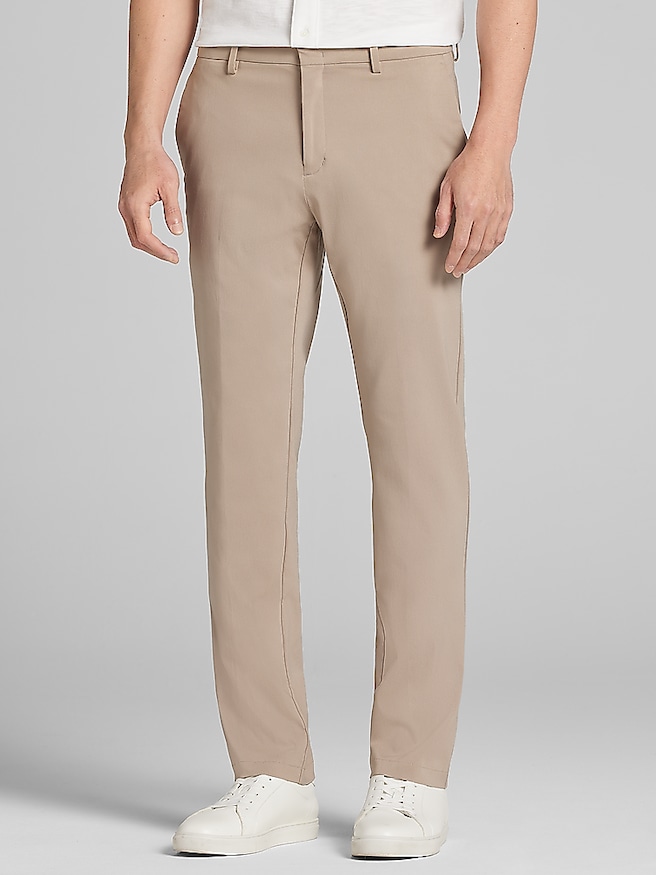
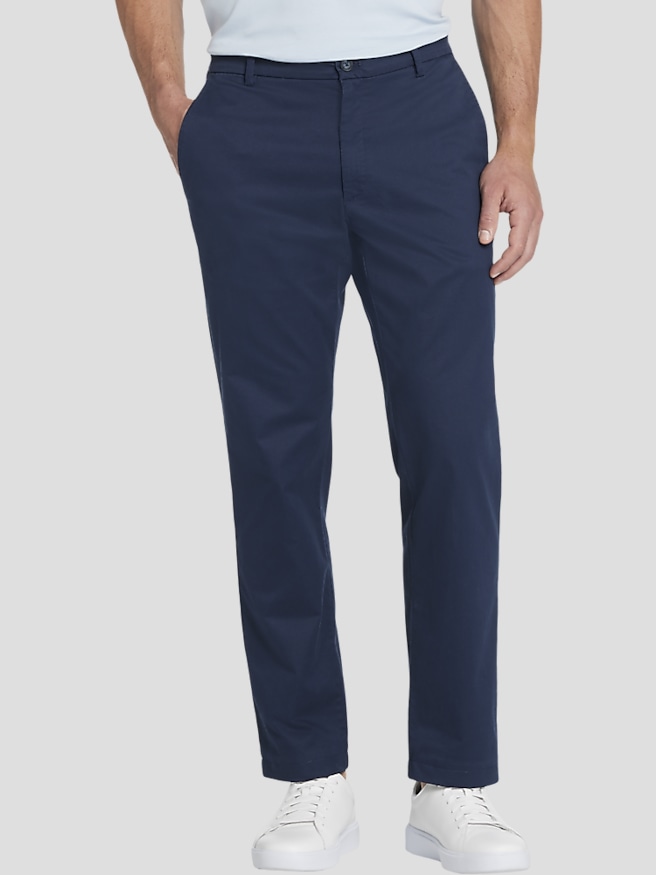
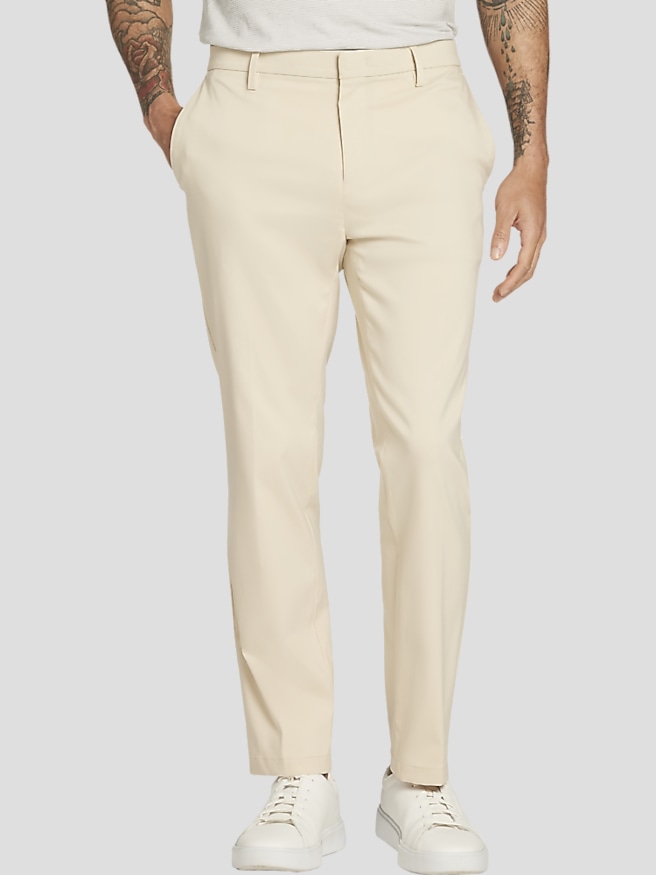
Beige chinos are cotton-twill pants with a clean, tailored appearance that sits comfortably between denim and dress trousers. Their neutral color and typically understated details make them a versatile choice for business-casual offices, relaxed dinners, family gatherings, and everyday plans that call for something more polished than jeans. Chino fabric has a subtle diagonal weave, giving the surface texture without the pronounced ridges of corduroy or the sheen associated with some dress fabrics. Beige covers a useful range of shades, from pale sand and light stone to warmer tones with a hint of tan. These variations can change the character of an outfit: a pale beige looks crisp against navy, while a warmer shade blends naturally with olive, cream, and earthy brown. Although chinos and khakis often overlap in everyday language, beige describes the color, while chino refers to the fabric and style of pant. That distinction matters because beige chinos can have a refined, close-fitting silhouette or a roomier, more relaxed shape. A white Oxford shirt tucked into a neatly fitted pair creates an easy foundation for a workplace with a relaxed dress code. A navy blazer adds structure for a client lunch, while a simple knit polo keeps the same pants appropriate for an informal dinner. For off-duty wear, a plain T-shirt and clean sneakers let the light neutral color do its work without making the outfit look overly coordinated. Brown leather loafers, suede shoes, and minimal white sneakers all complement beige, though each gives the finished look a distinct level of formality. A belt that relates to the shoes helps a tucked-in shirt feel intentional, especially when the waistband is visible. For a darker neutral with a sharper contrast against light shirts, black chinos offer another useful foundation. Beige remains especially adaptable when the goal is a softer contrast and an outfit that feels put together without being formal.
Fabric and fit have as much influence on beige chinos as color does. Pure cotton twill offers a familiar natural feel, while cotton blended with a small amount of elastane or spandex can provide give through the hips and knees. Some blends also include synthetic fibers to support shape retention or reduce wrinkling, but performance depends on the fabric’s construction and finish rather than fiber names alone. Stretch can make sitting through a commute or reaching across a desk more comfortable; it should not have to compensate for a waistband or seat that is too tight. A well-fitting waistband stays in place without a belt being pulled tight, and the front pockets should lie relatively flat instead of flaring open. The fabric should skim the seat and thighs without horizontal pulling, with enough room to sit, walk, and bend naturally. Slim-fit chinos generally follow the leg more closely, straight fits maintain a more consistent line toward the ankle, and athletic fits typically allow additional room through the seat and thighs before narrowing below the knee. Fit names are not universal, so waist, rise, thigh room, and leg opening are more useful considerations than a label alone. The rise affects where the waistband sits and how comfortably a shirt stays tucked, while the leg opening influences how the pants meet the shoes. A narrow hem can work neatly with low-profile sneakers or loafers; a straighter leg balances shoes with a more substantial shape. Length also changes the impression. A hem that barely touches the shoe looks crisp, while a slight break adds a small fold at the front for a more traditional finish. Excess fabric pooling around the ankle can make even a carefully chosen outfit appear unfinished. For someone who moves between a desk, meetings, and time on foot, a comfortable thigh and a tidy hem often matter more than an extremely narrow cut. Trying the pants while seated, with the intended shoes nearby, gives a clearer sense of everyday comfort than standing in front of a mirror alone.
Durability comes from a combination of fabric quality, construction, fit, and care. A closely woven twill can stand up well to regular wear, while secure stitching, firmly attached buttons, and neatly finished pocket edges are useful signs of careful construction. Heavier fabric may feel more substantial, but weight by itself does not establish quality or longevity. Pants that pull tightly across the seat or strain at the pockets place extra stress on those areas, making comfortable sizing part of maintaining their condition. Beige also makes spills and marks more noticeable than a dark shade, so timely attention helps preserve a clean appearance. The care label should determine the washing, drying, and ironing routine, since cotton, stretch blends, and special finishes can have distinct requirements. When machine washing is permitted, washing with similar colors and avoiding unnecessary heat can help limit shrinkage and wear. Turning the pants inside out may reduce surface abrasion, and emptying pockets prevents forgotten contents from leaving marks or damaging the fabric. A spill is best blotted rather than rubbed aggressively, with any stain treatment checked against the care instructions and tested in an inconspicuous area. Removing chinos promptly after drying and smoothing the legs before hanging can reduce wrinkles; pressing at the recommended setting restores a neater finish when needed. A center crease gives beige chinos a more tailored look, while an uncreased leg keeps the effect relaxed. Between wears, a proper hanger helps prevent deep folds and keeps the pants ready for the next outing. These practical qualities also make beige chinos a thoughtful gift for someone building a business-casual wardrobe, starting a role with a relaxed office dress code, or looking for an alternative to everyday denim. Knowing the recipient’s usual measurements and preferred cut is more useful than choosing by appearance alone. With a comfortable fit, suitable fabric, and straightforward care, beige chinos can become the pair that works with familiar shirts and shoes across a wide range of everyday occasions.