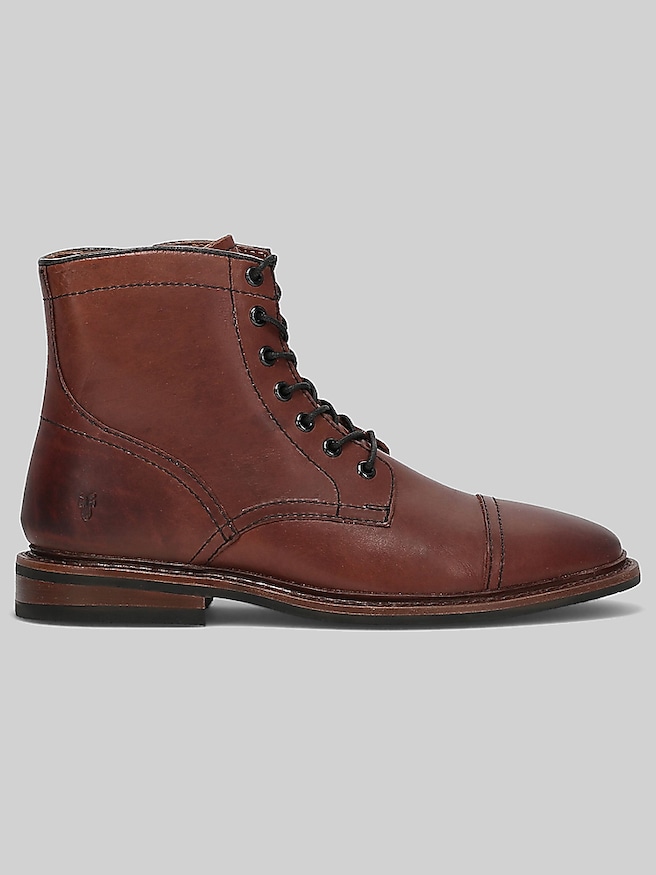
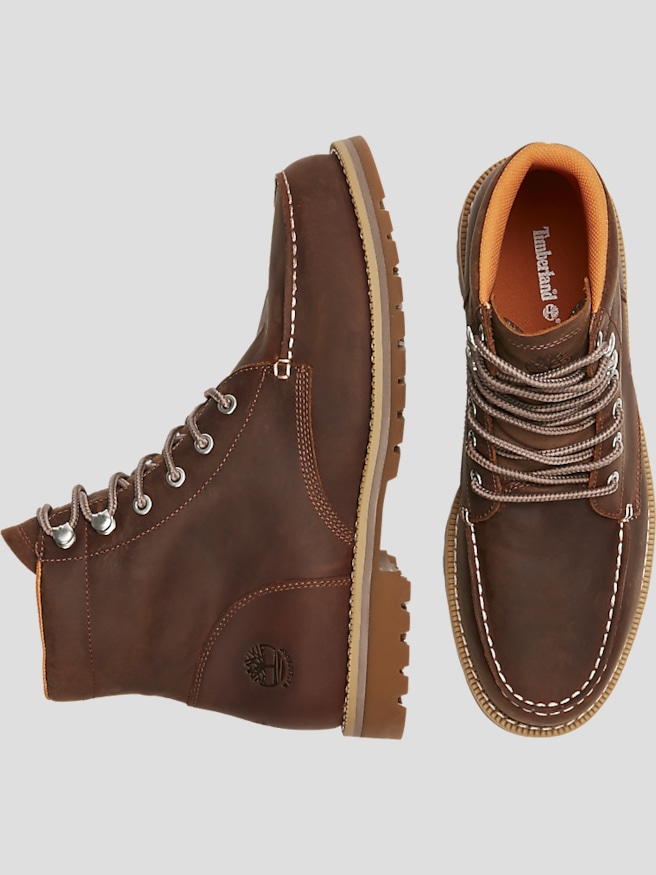
Round toe boots have a curved front that follows the general outline of the forefoot, giving them a familiar profile that works with both casual clothing and more polished everyday outfits. The shape can offer less taper around the toes than a pointed design, although toe shape alone does not determine how much room a boot provides. Width, depth, and the shape of the last—the form used to build the boot—matter just as much. A rounded toe can look substantial on a rugged lace-up boot or understated on a sleek ankle boot, making this category broader than a single style. Chelsea boots pair the shape with elastic side panels and a clean pull-on silhouette, while western boots often add a taller shaft, distinctive stitching, and a defined heel. Roper-inspired designs typically have a shorter shaft and a lower heel than traditional western styles, creating a grounded look that pairs naturally with denim. Materials contribute to that character as much as the outline does. Smooth leather brings a refined finish that can complement chinos and an unstructured jacket; suede has a soft, textured surface that looks at home beside corduroy or dark jeans. Full-grain leather retains the hide’s natural surface and can develop a distinctive patina with proper care, while nubuck has a finely buffed finish that calls for care suited to its texture. Synthetic uppers offer another option, with performance and upkeep depending on their construction rather than their appearance alone. Details such as visible stitching, subtle grain, and the shape of the shaft help determine whether a boot feels relaxed, western, or dress-oriented. For a day that moves from a casual office to dinner, a moderately rounded toe and restrained detailing can keep the outfit cohesive without looking overly formal. The appeal is a recognizable shape with enough variety to suit different wardrobes, rather than a promise that every round toe boot will fit or perform the same way.
Comfort in round toe boots comes from the complete fit, not simply the extra-looking space at the front. Toes need room to rest naturally without pressing against the upper or hitting the end, and the widest part of the foot should sit comfortably within the widest part of the boot. The instep should feel secure rather than squeezed, with enough hold to prevent the foot from sliding forward during a step. A small amount of initial heel movement can occur in some pull-on leather designs, but pronounced slipping, rubbing, or instability is not something to dismiss as normal break-in. Leather may soften with wear; it should not be expected to turn a painfully tight boot into the correct size. The socks worn most often with the boots also affect fit, especially when comparing a thin dress sock with a more cushioned everyday pair. For broader feet, an appropriate width is generally a better starting point than choosing extra length to compensate for a narrow toe box. Underfoot construction deserves equal attention. Cushioning can soften the feel of a step, while a supportive footbed and stable heel can help the boot feel balanced through a day of standing and walking. Rubber outsoles often suit frequent walking, though traction varies with tread design, material, and the surface underfoot. Leather soles can create a streamlined appearance, with a different feel and care requirements. Some welted constructions allow sole replacement, which can extend useful life when the upper remains in good condition; repair options depend on the individual construction. Intended use should guide these choices. Everyday boots can complement errands, commuting, and relaxed workplace dress codes, but a sturdy appearance does not establish protective performance. Jobs requiring safety toes, electrical-hazard protection, or documented slip resistance call for footwear carrying the relevant ratings. Riding also requires purpose-appropriate heel and sole design, not just western styling. Shaft height, flexibility, and closure style round out the decision, influencing ankle movement, ease of entry, and how comfortably a pant leg falls over the boot.
Regular care helps round toe boots retain their shape, finish, and flexibility, especially where the leather bends across the forefoot. Loose dust and grit can be lifted with a soft brush before they settle into seams or abrade the surface. Smooth leather may benefit from a lightly damp cloth for routine cleaning and a compatible conditioner applied according to the care instructions, with any treatment tested first on an inconspicuous area. More conditioner is not necessarily better: excessive application can change the finish or leave residue. Suede and nubuck generally need brushes and cleaning products designed for their textured surfaces rather than the creams used on smooth leather. If boots become damp through cleaning or everyday use, natural air-drying away from radiators and other direct heat sources helps protect the materials. Letting footwear rest between wears gives the lining time to dry, while appropriately sized shoe trees can help support the shape without stretching it. Attention to worn heel edges, loose stitching, and thinning soles can also prevent small issues from becoming larger repairs. These practical habits support the versatility that makes rounded-toe footwear easy to keep in regular rotation. Straight-leg jeans usually fall neatly over a western shaft, while tapered chinos can frame an ankle-height boot without bunching heavily at the opening. Trouser length matters: a clean break allows the toe shape to remain visible and keeps the overall outline intentional. For settings that favor a lower-profile lace-up shoe, Round Toe Oxfords offer a related rounded silhouette without the boot shaft. As a gift, round toe boots can suit a dad, partner, brother, or graduate who already enjoys leather footwear, denim, or western-inspired clothing. Familiarity with the recipient’s size, width, preferred closure, and daily routine matters more than choosing by appearance alone. Someone who spends hours on foot may prioritize support and a flexible sole, while someone dressing for dinners or a casual office may favor smoother leather and quieter detailing. The strongest match brings together a comfortable fit, suitable construction, and a style that feels natural with the clothes already in the closet.