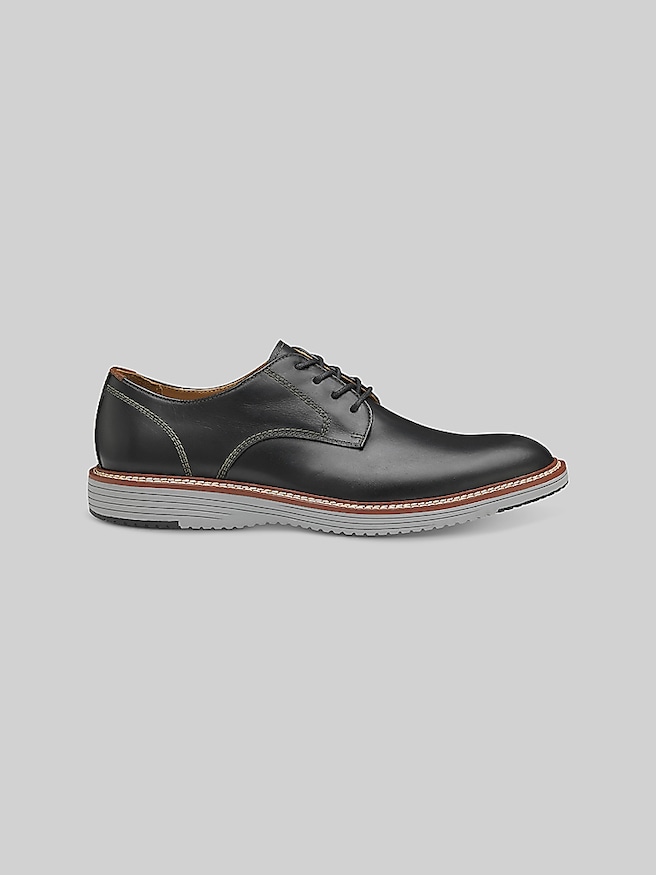
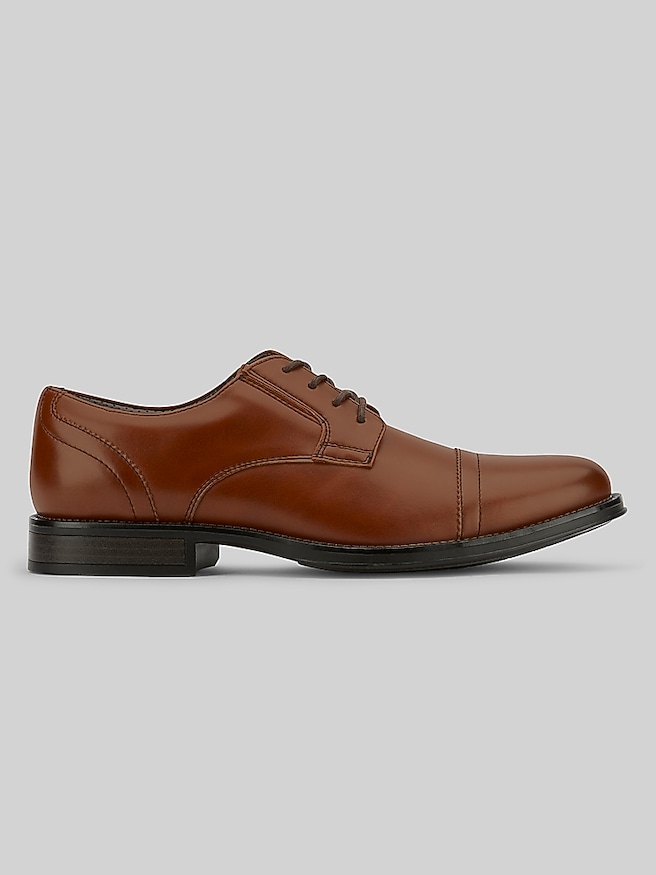
Round toe oxfords are lace-up dress shoes with a curved toe silhouette and, in traditional oxford construction, a closed-lacing system in which the eyelet tabs sit beneath the vamp. That combination creates a clean, structured appearance without the elongated outline of a sharply tapered toe. The rounded shape describes the shoe’s profile, not its level of formality: a sleek leather oxford with restrained detailing can look right at home with a business suit, while a broader shape and substantial rubber sole lean toward everyday office wear. Toe shape also differs from toe detailing. Round toe oxfords may have a plain front, a stitched cap across the toe, or decorative perforations, so the overall impression depends on more than the curve at the front. For a particularly understated expression of the style, Black Plain Toe Oxford Shoes offer a smooth visual foundation for charcoal tailoring, navy trousers, and other polished combinations. Brown leather brings warmth to textured gray pants, olive chinos, and blue sport coats, while deeper shades can move comfortably between daytime meetings and evening celebrations. A rounded toe often gives an outfit a balanced, familiar proportion, especially when the trouser hem falls neatly above the shoe rather than gathering heavily over it. These shoes suit office professionals, wedding guests, graduates, and anyone who needs footwear that feels considered without drawing attention away from the rest of an outfit. Picture a presentation followed by dinner, or a ceremony that moves from an indoor aisle to a paved courtyard: the same pair may serve both settings when its construction, finish, and sole match the occasion. During the cooler months, smooth leather and subtle stitching also sit naturally alongside wool trousers, fine-gauge sweaters, and tailored outerwear. The appeal is versatility grounded in a recognizable dress-shoe shape, with enough variation in texture and construction to support both formal wardrobes and more relaxed combinations.
Materials and construction influence how round toe oxfords feel, wear, and develop character over time. Smooth leather uppers can take a polished finish and gradually soften at natural flex points, while suede has a matte surface that complements brushed fabrics and less formal tailoring. Full-grain leather retains the hide’s natural grain; its appearance and performance still depend on the quality of the leather, the finish, and how the shoes are maintained. Some uppers use coated leather or synthetic materials, which can have distinct cleaning requirements and may not respond to conditioner in the same way as uncoated leather. Linings matter as well, particularly for long stretches indoors. Leather and textile linings vary in moisture handling, softness, and abrasion resistance, so the interior deserves as much attention as the exterior. Underfoot, leather soles offer a traditional profile, while rubber soles can provide flexibility and useful grip, depending on the compound and tread pattern. Foam cushioning may soften the sensation of standing on hard floors, but cushioning alone does not determine support or lasting comfort. A stable heel, a secure midfoot, and an appropriate shape through the forefoot all contribute to how a shoe performs through a full day. Rounded toes can provide a less tapered outline, but they do not automatically make a shoe wide or spacious. Actual room depends on the last, which is the form used to shape the shoe, along with its size and width. A sound fit leaves the toes free from compression, holds the heel without excessive slipping, and allows the widest part of the foot to align with the widest part of the shoe. Trying on dress shoes with the socks intended for regular wear gives a more realistic impression than using thick athletic socks. Feet can expand after hours of standing, making a later-day fitting useful. Leather may ease with wear, but a break-in period should not be expected to correct pinched toes, persistent rubbing, or insufficient width. For someone moving between a desk, a train platform, and a standing reception, fit and sole flexibility are more meaningful than a soft first impression alone.
Durability comes from the relationship between materials, assembly, use, and care rather than from any single feature. Welted construction may make future resoling possible, depending on the shoe and a repair specialist’s assessment, while other construction methods can create a lighter or more flexible feel. Neither a thick sole nor a glossy upper guarantees a longer service life. Repeated wear in wet conditions, dragging at the heel, and storing shoes while damp can all shorten their useful life. Regular care begins with removing surface dirt before it settles into creases and seams. Smooth leather generally benefits from occasional conditioning with a suitable product and polishing when the finish needs refreshing; suede calls for a suede brush and treatments intended for its texture. Care directions for the specific material should take priority, and any new treatment is best tested on a discreet area first. After a damp commute, shoes should dry naturally away from radiators and direct heat. Cedar shoe trees can help maintain shape and absorb some residual moisture, while alternating pairs gives interiors time to dry between wears. Salt residue during colder weather deserves prompt attention with a material-appropriate cleaner rather than vigorous scrubbing. Even with a rubber outsole, dress shoes should not be assumed to provide secure footing on ice or waterproof protection in heavy precipitation. For everyday use, choosing a sole suited to the walking surfaces involved helps preserve both comfort and appearance. A slim profile may be well suited to mostly indoor occasions, while a more substantial outsole may feel practical for regular walks between buildings. Round toe oxfords can also make a thoughtful gift for a graduation, a career milestone, or an important celebration, especially when the recipient’s size, width, and preferred dress-shoe fit are known. Someone who regularly wears suits may appreciate a restrained silhouette, while someone whose wardrobe centers on chinos and sport coats may favor softer textures or more visible sole construction. With an appropriate fit and consistent care, the rounded oxford shape provides a dependable finishing touch: composed beneath tailored trousers, approachable with smart casual clothing, and adaptable enough for the occasions that call for looking put together.