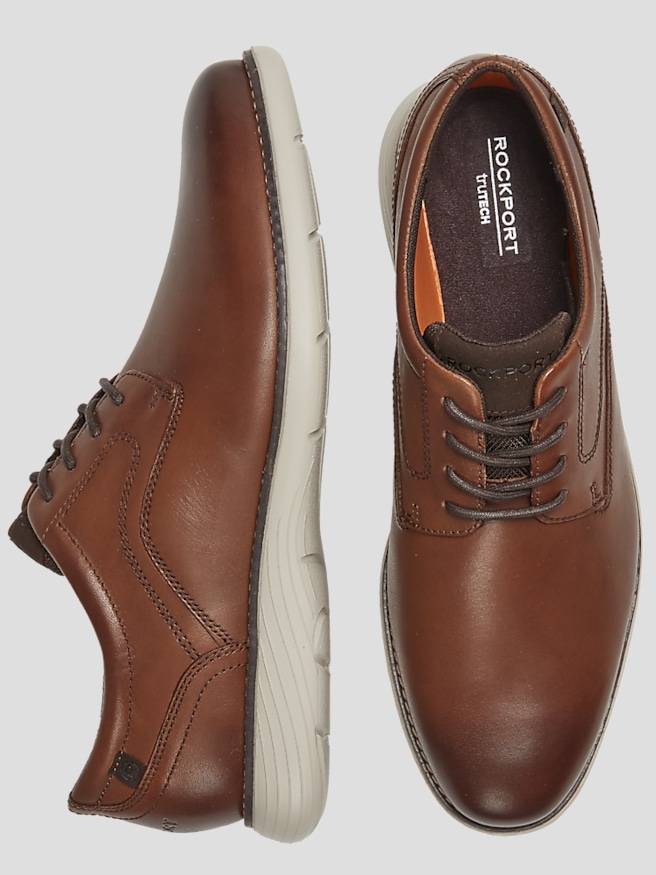
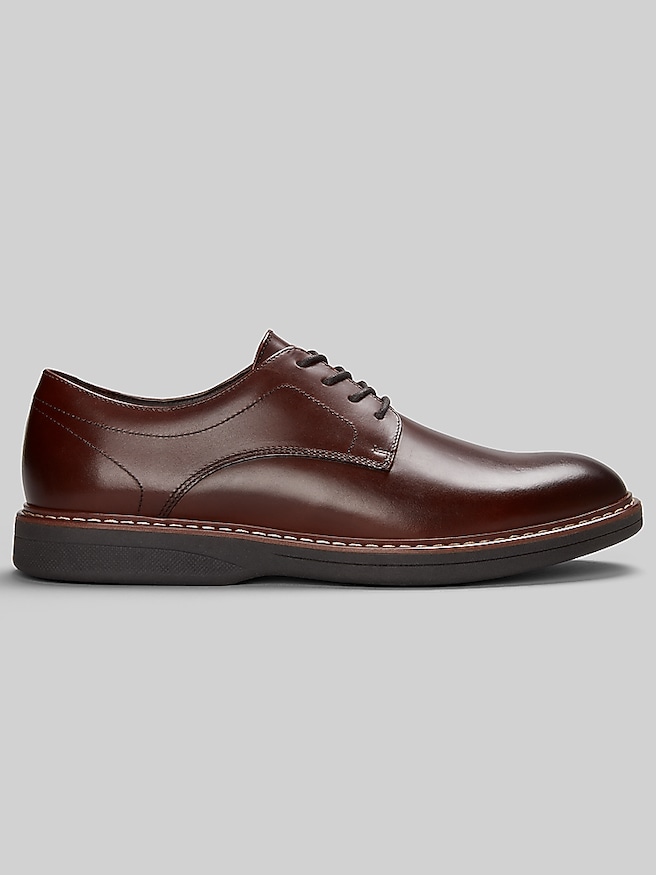
Classic dress shoes with lightweight cushioning bring a polished look to days that involve more than sitting at a desk. Their appeal lies in the combination of a structured leather-shoe silhouette and comfort-focused construction: a neat profile beneath tailored trousers, a supportive feel underfoot, and enough flexibility for an ordinary walking stride. Depending on the design, cushioned footbeds, flexible outsoles, and lighter components can make dress footwear feel less rigid without giving it the appearance of a sneaker. That balance suits a commute followed by client meetings, a presentation that keeps someone standing, or a wedding reception with several hours between the first photograph and the last dance. Smooth leather uppers offer a clean surface that complements the texture of wool trousers and the crisp lines of a suit. A restrained toe shape and minimal detailing tend to look more formal, while visible stitching and a broader profile can feel at home with chinos and a sport coat. Black leather creates a sharp finish with charcoal or dark navy tailoring; brown shades introduce softer contrast and coordinate easily with earth tones. Matching the general color and finish of a belt to the shoes helps the outfit look intentional without requiring an exact shade match. Trouser length matters, too: a hem that rests lightly above the shoe keeps the overall line tidy and allows the shape of the footwear to remain visible. For office professionals, frequent event attendees, and anyone moving between business and social settings, comfort-minded dress shoes occupy a useful middle ground between traditional formal footwear and casual walking shoes. They also make a thoughtful gift for a graduate starting a first professional role or someone building a more versatile wardrobe, particularly when the recipient’s size, width, and preferred fit are known. The strongest everyday choice is usually a shape and finish that works with clothing already worn regularly, rather than one that requires an entirely new outfit.
Materials and construction influence how dress shoes look, bend, and feel over a full day. Leather uppers can develop natural creasing as they flex, and their appearance depends on the leather’s finish, the shoe’s structure, and routine care. A smooth, polished surface generally reads as dressier than a heavily textured one, though a high shine is not necessary for a professional appearance. Inside the shoe, lining seams, heel padding, and the surface of the footbed can be just as noticeable as the upper material. Cushioning helps soften the sensation of each step, while support comes from the shape and stability of the shoe as a whole; a soft footbed alone does not establish a supportive fit. Foam cushioning, including EVA where specified, can provide a lighter feel, but cushioning systems and removable components vary by design. A removable footbed may offer room for a compatible personal insert, provided the replacement does not crowd the toes or lift the heel too high. Outsole material also changes the experience underfoot. Rubber and other flexible compounds can offer a yielding feel and useful traction, although a textured sole should not be assumed to have a tested slip-resistance rating. For fit, the toes need space to lie naturally without pressing against the front or sides, and the heel should remain reasonably secure through a normal stride. The widest part of the foot should align with the widest part of the shoe, allowing the forefoot to flex without pinching. Lace-up closures provide some adjustment across the instep, but tightening the laces cannot correct a shoe that is fundamentally too long or too wide. Trying dress footwear with the socks intended for daily wear gives a more realistic sense of interior space. A few steps across a room can reveal heel movement, pressure over the instep, or a stiff edge near the ankle. Leather may soften with use, but painful pressure is not a fit issue to dismiss as a necessary break-in period.
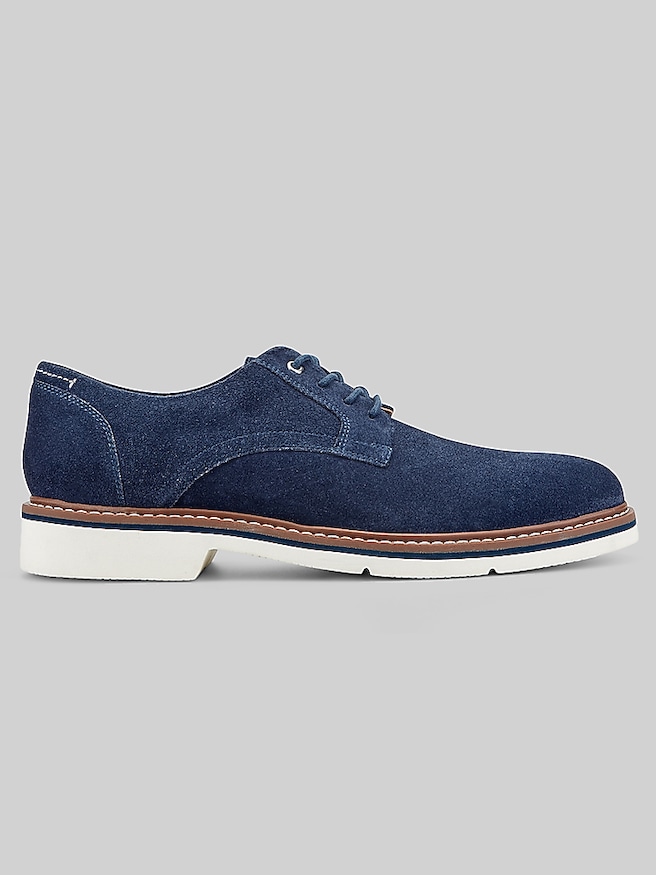
Regular care helps comfort-focused dress footwear retain both its appearance and its usefulness. Surface dust is easiest to remove before it settles into creases, so a soft brush or clean cloth is a practical first step after wear. Smooth leather may benefit from a suitable conditioner and polish, applied according to the footwear and care-product directions; testing an inconspicuous area first helps avoid an unexpected change in color or finish. Heavy applications can leave buildup, particularly around stitching and textured details, so modest amounts and gentle buffing are generally more effective than repeated thick coats. Leather, suede, and synthetic materials need different treatment, making the stated material a better starting point than appearance alone. For a softer, textured alternative within a polished wardrobe, Rockport Suede Shoes offer a related direction to explore, with care needs distinct from those of smooth leather. Between wears, allowing footwear to air out and using properly sized shoe trees can help preserve its shape. A shoehorn reduces unnecessary pressure on the back of the shoe, while loosening the laces before removal helps protect the heel structure. Storage away from direct heat is preferable to speeding up drying near a heater. Durability also depends on patterns of use: repeated pavement walking wears an outsole differently than mostly seated office work, and rotating pairs gives each one time to dry naturally between outings. Worn heel edges, flattened cushioning, separating seams, or a noticeably uneven stance deserve attention even when the uppers still look presentable. For business trips, a versatile pair can simplify packing by working with both a suit and less formal trousers, but dress footwear is not automatically intended for strenuous walking or specialized workplace conditions. The most useful combination is straightforward: an appropriate level of polish, a secure fit, materials suited to regular care, and construction that feels comfortable during the activities that fill an ordinary day.