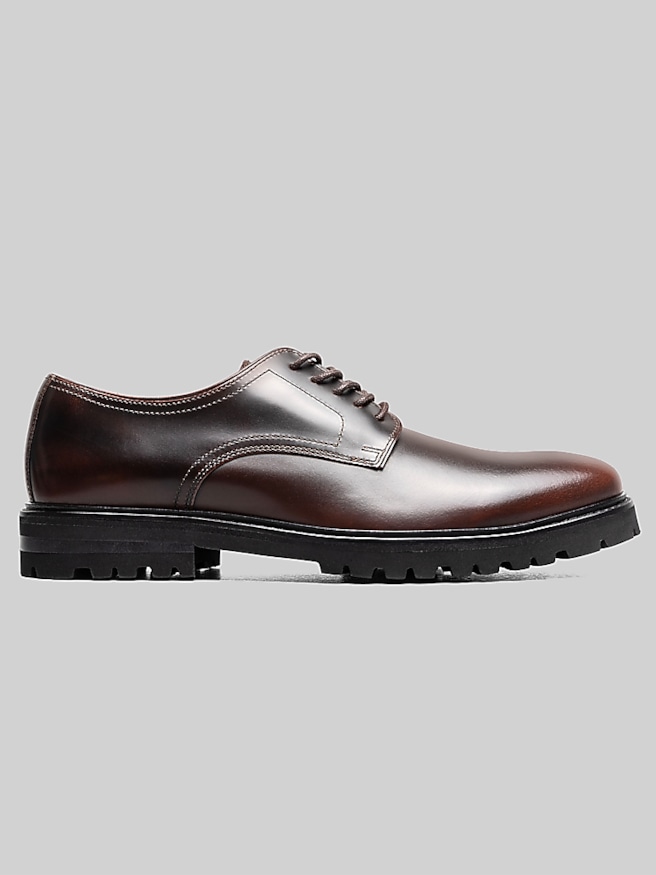
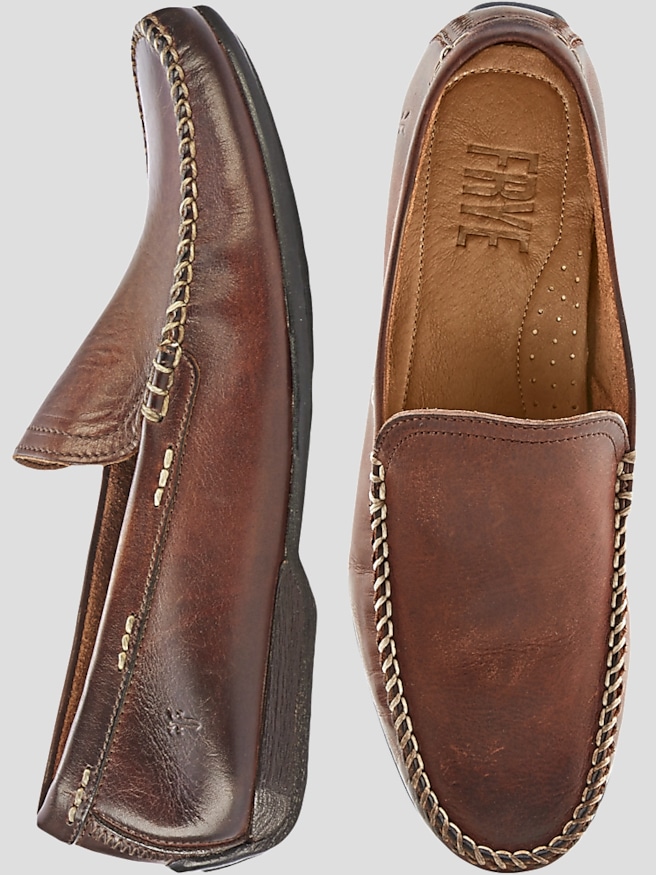
Reddish-brown shoes combine the earthy depth of brown with warm red undertones, creating a rich alternative to straightforward dark brown or black footwear. The color family includes mahogany and chestnut shades with a noticeable red cast, along with deeper oxblood tones that can sit close to burgundy. These names are not interchangeable: mahogany typically keeps a stronger brown foundation, while burgundy and bordeaux tend toward wine-red. Leather texture, polish, and burnishing also affect the impression, so a smooth, glossy finish may look more saturated than a softly textured surface in a similar shade. That depth makes reddish-brown dress shoes especially useful alongside navy, charcoal, medium gray, olive, and khaki. With a navy suit, a dark mahogany pair adds warmth without creating a harsh contrast; beneath gray trousers, the same color becomes a more noticeable finishing detail. Tan chinos and a blue button-down give the color a relaxed setting, while dark denim can support a more textured loafer or lace-up style. Black trousers call for a little more consideration: deep oxblood generally creates a quieter transition than a bright, coppery brown, especially when another detail in the outfit echoes that warmth. The shape of the shoe matters as much as the shade. An Oxford’s closed lacing creates a neat, streamlined appearance suited to tailored clothing, while a Derby’s open lacing has a slightly less formal character and can offer more adjustment across the instep. Loafers introduce an easy, uncluttered profile, and brogue detailing adds texture that works naturally with chinos, patterned trousers, and less formal suits. A plain toe keeps attention on the leather and color; a cap toe introduces a defined line across the front. For belts and other leather accessories, a similar depth and undertone usually look more cohesive than an exact color match attempted across noticeably different finishes. The result can feel coordinated without making every leather detail look identical.
Materials and construction help determine how reddish-brown shoes feel, wear, and develop character. Smooth leather can show subtle variations in color across the toe, quarters, and heel, particularly when the finish includes burnishing. Full-grain leather retains the hide’s natural surface and can develop an attractive patina with appropriate care, though the quality of the leather, lining, stitching, and overall construction all contribute to durability. Suede offers a softer, matte expression of the same color family, with a nap that changes appearance as it catches the light. Its relaxed texture can be particularly effective with cotton trousers or denim, while polished leather generally makes an easier visual transition to a suit. Neither surface alone guarantees comfort or longevity. The lining should feel smooth, seams should not press against the foot, and the heel structure should provide support without digging in. Leather soles offer a traditional profile and can feel flexible after some wear, while rubber soles may provide additional grip and cushioning depending on their design. Some stitched constructions can accommodate resoling, but repair options depend on how the individual shoe is made. Fit deserves equal attention, especially for footwear intended for a full workday or a wedding that involves hours of standing. Toes need space to move without striking the front, the widest part of the foot should sit comfortably within the widest part of the shoe, and the upper should feel secure rather than restrictive. A sleek toe shape does not require squeezed toes. Lace-up styles allow adjustment, while loafers rely more closely on the relationship between the heel, instep, and overall shape. Trying shoes with the socks intended for regular use gives a more realistic sense of fit; anyone using an orthotic also needs enough interior room for it. Leather may soften, but persistent pinching, numbness, or rubbing is not a useful break-in target. Comfort should begin with a suitable size and shape, not with the expectation that substantial discomfort will disappear.
Thoughtful care preserves both the color and the structure of reddish-brown footwear. For smooth leather, removing surface dust with a soft brush or cloth before applying care products helps prevent grit from being worked into the finish. A suitable conditioner can help maintain suppleness, while a compatible cream polish can refresh color and soften the appearance of minor scuffs. Because reddish-brown shades vary considerably, testing a small amount in an inconspicuous area is worthwhile; a strongly pigmented dark brown polish may mute red undertones, while an overly red polish can shift the overall appearance. Neutral products can be useful when preserving the existing shade is the priority, provided they are appropriate for the leather and finish. Suede needs its own approach, including a suitable brush and suede-specific cleaning products rather than ordinary leather cream or wax. Any protective treatment should be compatible with the material and tested first. If shoes become damp, letting them dry naturally away from direct heat helps protect the leather; cedar shoe trees can help maintain shape and absorb residual moisture between wears. Rotating footwear also gives the interior time to air out, and attending to worn heels or soles early can help prevent more extensive damage. That care supports the everyday usefulness of the color, whether the shoes are part of an office wardrobe, a dinner outfit, or a wedding guest’s tailored look. For a groom or someone attending a ceremony, the dress code still takes priority: reddish-brown shoes can complement many suits, but traditional black-tie clothing generally calls for black formal footwear. As a gift, this color family suits someone who already wears navy or gray tailoring and appreciates a distinctive detail; confirming size, width, and preferred silhouette matters more than guessing from color alone. For another expression of the broader brown palette, explore Brown Spring Shoes. Across dressier and more relaxed outfits, the appeal remains the balance of familiar brown depth and a subtle red accent.