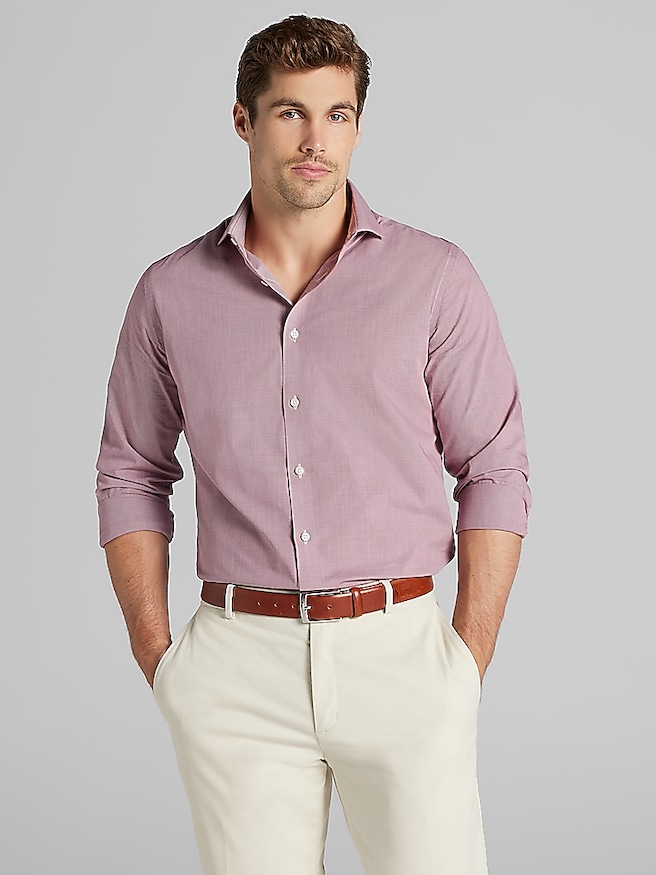
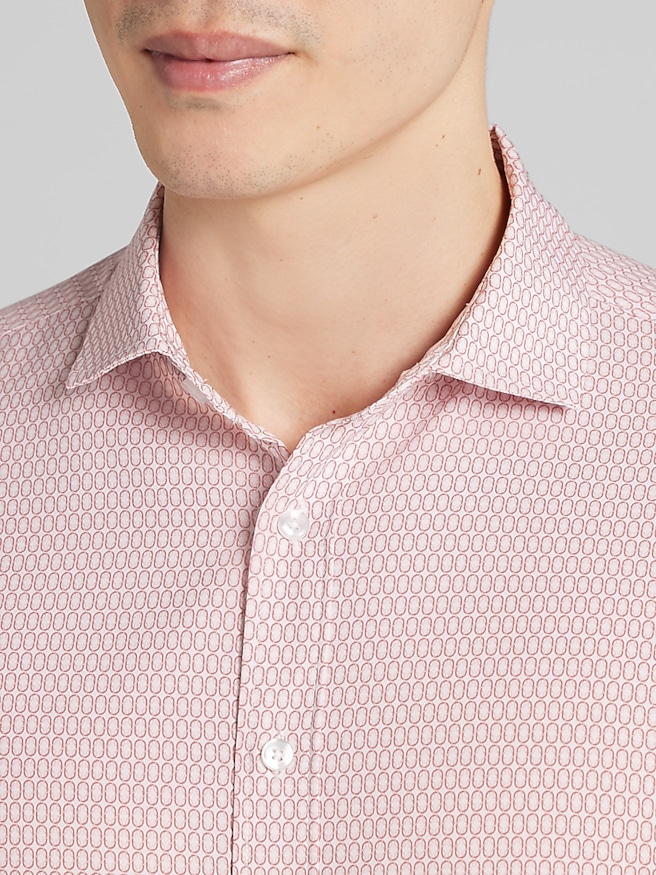
Men’s red shirts bring a distinct point of color to an outfit, whether the look centers on dark denim, tailored trousers, or a jacket with clean, understated lines. The shade makes a noticeable difference: bright cherry red has an energetic presence, while brick, burgundy, and deeper wine tones tend to look more subdued. A solid red shirt keeps attention on color and shape; checks, stripes, and small repeating patterns break up the color and can make it easier to pair with everyday clothing. Against navy trousers, red creates a crisp contrast without needing much else. With charcoal, it adds depth to a polished outfit, and with tan chinos, it feels relaxed without looking unfinished. Dark, even-wash jeans provide another straightforward pairing, especially when shoes and accessories stay simple. For occasions that call for a collar and a cleaner outline, Men's Red Button Up Shirts offer a useful starting point for looks ranging from an open-collar dinner outfit to a shirt worn beneath a sport coat. A muted red can sit comfortably alongside a textured gray jacket, while a brighter shade often works best when the surrounding pieces are quieter. Patterns deserve the same consideration: a fine check can blend into the overall outfit from a distance, whereas a large plaid becomes a stronger visual feature. Collar shape, sleeve length, and the finish of the fabric also influence how dressed up the shirt appears. A crisp collar and smooth surface generally feel more polished than a soft knit neckline or a visibly textured weave. Red does not need to occupy the entire outfit to make an impression. Keeping a belt, shoes, and trousers in familiar neutral tones lets the shirt supply the character, whether it is worn for a restaurant reservation, a workplace with a flexible dress code, or an evening spent catching up with friends. The result can be expressive without feeling overworked, particularly when the shade fits naturally with the clothing already in the closet.
Fabric and fit determine how a red shirt feels through a full day, not just how it looks on a hanger. Cotton is a familiar choice for its softness and breathability, though the weave changes its character considerably. A smooth poplin can create a neat, relatively crisp appearance, while an oxford weave adds visible texture and a slightly more substantial feel. Twill has a diagonal structure that can give the surface depth and a gentle drape. Knit fabrics move differently from woven fabrics, often feeling more flexible across the chest and arms. Blends may combine cotton’s feel with fibers that help with shape retention, stretch, or wrinkle resistance; the exact performance depends on the composition and construction. A small amount of stretch can be useful for someone who spends time driving, reaching across a desk, or moving between appointments, but it does not replace a well-proportioned fit. Shoulder seams should generally sit near the edge of the shoulders, and the front should lie smoothly rather than pull into gaps around the buttons. A closer cut creates a defined outline, while a roomier cut gives more ease through the torso. Neither needs to look oversized or restrictive. When seated, the shirt should leave enough space across the stomach and chest to remain comfortable. Sleeves also matter: cuffs that extend too far over the hand can make an otherwise polished shirt look loose, while sleeves that pull back sharply when the arms move may feel limiting. For a shirt intended to be tucked in, sufficient length helps the hem stay in place as the wearer sits or reaches. An untucked style benefits from a hem that looks proportionate with the rise of the trousers and the length of the torso. Anyone planning to wear a shirt beneath a jacket will also notice bulk at the upper arms, collar, and waist. Smooth layering comes from choosing compatible shapes, rather than trying to compress excess fabric under a narrow jacket. These details help a strong color look deliberate, with the shirt’s proportions supporting the outfit instead of competing with it.
Care plays an important role in preserving both the color and the structure of men’s red shirts. Rich dyes can sometimes transfer during early washes, so the care label and separation from pale fabrics deserve attention. Washing with similar colors, using an appropriate detergent, and avoiding unnecessary heat can help limit fading and shrinkage when those methods are suitable for the fabric. Turning a washable shirt inside out may reduce surface abrasion, particularly around areas that rub against other garments in the wash. Prompt attention to stains is useful, but vigorous scrubbing can leave a lighter patch or roughen the surface; a treatment compatible with the material is a better choice. Some shirts can be machine washed, while others need professional care, and finishing methods should follow the label rather than assumptions based on appearance. Removing a shirt promptly after drying can reduce settled wrinkles, and a suitable hanger helps support its shape between wears. Durability also depends on everyday construction details, including secure buttons, consistent stitching, and neatly finished seams. Areas such as cuffs, collar edges, and the underarms experience repeated movement and contact, making fit and gentle care part of how well a shirt holds up. A comfortable shirt that fits its intended setting is more likely to become a regular part of the wardrobe, whether that means a dependable option for dinners, a colorful alternative for casual office days, or an easy pairing with jeans for social plans. Red shirts can also make thoughtful gifts for someone who already enjoys color or frequently wears navy, gray, and other neutrals. A shade close to the recipient’s established preferences is usually easier to incorporate than one chosen only for its boldness. Familiar sleeve lengths, collar styles, and fits make the gift more personal and practical. For someone whose wardrobe is mostly understated, a deeper red or a small-scale pattern can add variety without requiring a new approach to dressing. With attention to fabric, proportion, and care, a red shirt can remain a distinctive, useful piece rather than something reserved for a single occasion.