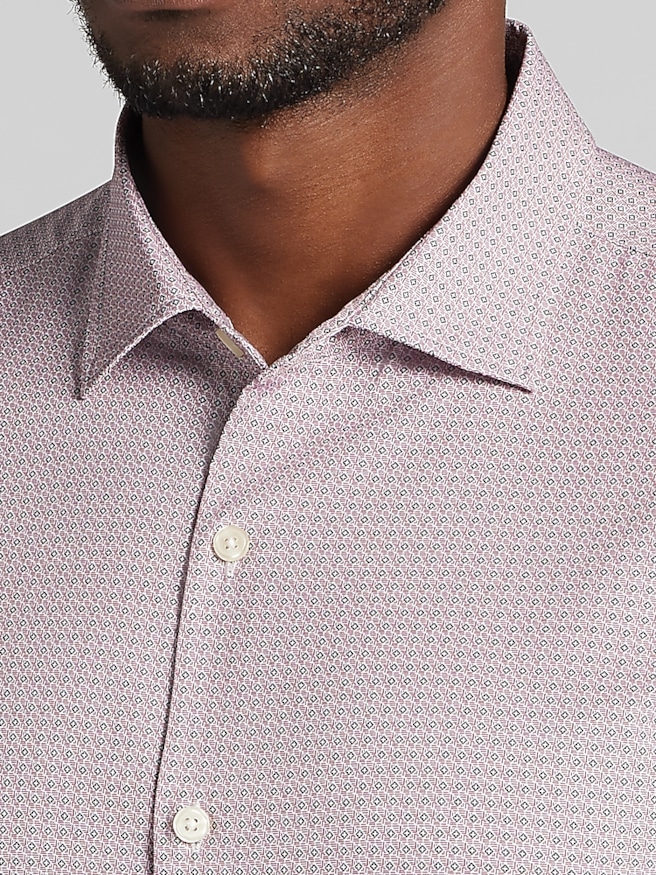
Men’s red dress shirts bring a distinctive accent to tailored clothing, with shades ranging from bright scarlet and rich crimson to deeper burgundy and wine tones. A solid red shirt makes color the focal point of an outfit, while a fine stripe, small check, or subtle woven pattern adds detail without needing a bold accessory. The shade matters as much as the pattern: vivid reds have a confident, expressive look, while darker reds tend to feel more understated beneath a suit jacket. For an office that welcomes color, a burgundy dress shirt with charcoal trousers creates a polished combination that is easy to coordinate. For a dinner, wedding reception, or milestone celebration, a richer red beneath a navy jacket offers contrast without making every part of the outfit compete for attention. Gray, navy, and black are useful foundations because they allow the shirt’s color to stand out against familiar tailoring. Brown leather shoes and a coordinating belt can soften the effect of navy or gray, while black leather accessories create a sharper finish with charcoal. A tie in a muted tone or restrained pattern generally complements red more easily than another large block of bright color. When the shirt has a visible check or stripe, a solid tie keeps the combination clear; when the shirt is solid, a small patterned tie can introduce texture. Wearing the collar open creates a less formal impression, provided the collar sits neatly and the neckline remains controlled. Red dress shirts suit people who enjoy adding personality to professional clothing, as well as those building an outfit for a celebration or an evening out. The occasion still sets the boundaries. A conservative workplace may call for a subdued shade and quiet pattern, while an event with a strict black-tie dress code generally calls for traditional white formal shirting rather than a red dress shirt. Within those boundaries, red can be a considered wardrobe choice rather than simply a statement color.
Fit and fabric determine how comfortably a red dress shirt wears and how cleanly it sits beneath tailoring. A classic fit generally provides more room through the chest and waist, while a slim fit follows the torso more closely. An athletic cut may accommodate broader shoulders with a more shaped waist, although fit names and proportions vary, so measurements are more useful than the label alone. The shoulder seams should sit near the edges of the shoulders, and the front should lie flat without pulling into an X around the buttons. Enough room to reach forward, sit down, and bend the elbows makes a noticeable difference through a workday or a long reception. With the collar buttoned, the neck should feel secure rather than tight; sleeves should reach the wrist without covering the hand. Beneath a properly fitted jacket, a small amount of shirt cuff showing helps give the outfit a finished appearance. Shirt length also matters, particularly for a tucked-in outfit: the hem needs enough coverage to stay in place during ordinary movement without creating excess bulk at the waistband. Cotton is valued for its soft feel and breathability, while cotton blends can combine that familiar comfort with easier wrinkle management. Stretch fabrics may offer added flexibility, but they still need the right cut and size to avoid strain across the chest or upper arms. Poplin typically has a smooth, crisp surface, while twill has a subtle diagonal texture and often a slightly fuller feel. An Oxford weave adds more visible texture and can lean less formal, depending on its fineness and construction. Collar shape changes the overall effect, too. A point collar provides a defined frame for a tie, while a spread collar leaves more space for the knot. For outfits built around full-length sleeves, men's red long sleeve shirts can complement tailored layers or stand on their own with dress trousers. The best choice balances appearance with ease of movement, rather than relying on color alone.
Regular care helps preserve the color, structure, and finish that make men’s red dress shirts look polished. The care label should guide washing, drying, ironing, and any professional cleaning, since fiber blends, finishes, and construction can require different treatment. Strong reds deserve attention during laundering: washing with similar colors and avoiding a mixed load of pale clothing can help reduce the risk of color transfer, especially with a new shirt. Where machine washing is permitted, fastening the appropriate closures and following the recommended cycle can limit unnecessary stress on the fabric. Promptly removing a shirt after washing or drying helps keep wrinkles from settling deeply, and using the recommended iron setting protects the fibers and any easy-care finish. Non-iron or wrinkle-resistant treatments can reduce routine pressing, but they do not replace proper laundering or guarantee a perfectly smooth shirt after every wear. A sturdy hanger supports the shoulders between uses, while giving the shirt space helps prevent compressed collars and crowded sleeves. For frequent wear, construction deserves close attention alongside fabric: secure buttons, even stitching, neatly finished seams, and well-made cuffs are useful signs of a shirt designed for repeated use. Fraying at the collar or cuffs, persistent pulling at seams, and loose buttons are worth addressing before the next important occasion. A red dress shirt can also make a thoughtful gift for someone who regularly wears tailored clothing or enjoys a more expressive wardrobe. A familiar neck size, sleeve length, and preferred fit offer a better starting point than guessing from a casual-shirt size. Someone who usually wears quiet colors may appreciate a deep burgundy, while someone who already favors stronger accents may be comfortable with a brighter red or a small pattern. Whether chosen for presentations, dinners, celebrations, or everyday professional wear, a red dress shirt works best when its proportions, texture, and care needs match the person wearing it. That combination gives the color purpose and makes the shirt easier to wear repeatedly with clothing already in the wardrobe.