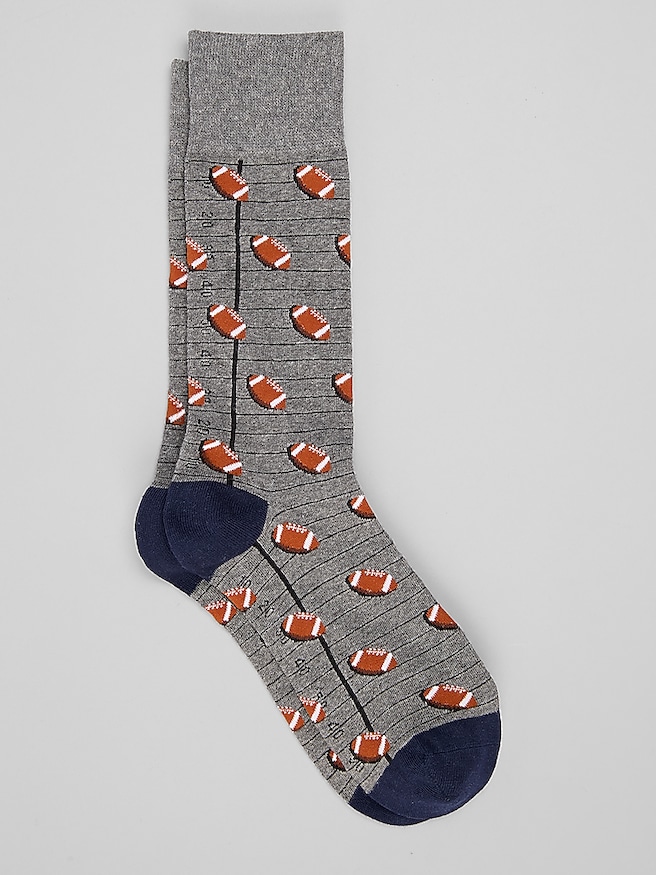
Printed cotton socks combine the familiar softness of cotton with patterned designs that add color, character, and a personal touch to everyday clothing. They can be an understated finishing detail beneath tailored trousers or a more noticeable accent between cuffed chinos and casual shoes. Small geometric shapes, scattered dots, botanical motifs, and playful illustrations each create a distinct effect, from quietly polished to deliberately expressive. A dark background with a compact repeat tends to blend easily with office attire, while larger motifs and brighter contrasts bring more personality to relaxed outfits. The appeal is often in that brief glimpse of pattern when someone sits down, crosses a leg, or steps onto a staircase: enough visual interest to make a familiar combination feel considered without taking attention away from the overall look. Cotton provides a soft, breathable foundation, although socks described as cotton are often blends rather than entirely cotton. Added nylon or polyester can contribute strength and help the fabric hold its shape, while a small amount of spandex supplies stretch for a closer fit. The fiber percentages matter more than the cotton label alone because they influence how the socks feel, recover after wear, and respond to washing. Combed cotton has undergone an additional process that removes shorter fibers, typically creating a smoother yarn with a pleasant feel against the skin. Fabric weight also makes a meaningful distinction. A lightweight cotton blend can fit comfortably inside close-fitting dress shoes, whereas a slightly more substantial knit may suit everyday loafers, sneakers, or boots with extra room. During the cooler months, cotton socks can provide a comfortable everyday layer, but warmth depends on thickness, construction, footwear, and conditions rather than pattern or fiber name alone. For long periods outdoors in cold or wet weather, purpose-built insulating or moisture-managing socks may be more suitable than a lightweight printed cotton style.
The best fit feels secure without calling attention to itself. Printed cotton socks should sit smoothly around the foot, with the heel section aligned to the heel and enough room at the toes to avoid a compressed feeling. Excess fabric can bunch beneath the ball of the foot, while a sock stretched too tightly may feel restrictive and make a printed motif look distorted. Shoe-size ranges offer a useful starting point, but foot width, instep height, and preferred snugness also affect comfort. A gently supportive cuff helps keep the sock in place without leaving an uncomfortable band around the calf. Crew lengths work well with many casual outfits, and taller dress-oriented lengths provide more coverage beneath trousers when seated. Ankle-height styles create a lower profile with casual footwear, though they leave more skin exposed as temperatures cool. Inside the shoe, details such as a smooth toe seam, a well-shaped heel, and cushioning in the right places can matter as much as the fabric itself. A lightly cushioned sole may soften everyday steps, but extra padding can make an already snug shoe feel crowded. For a day that moves from a commute to a desk and then dinner, a balanced cotton blend with a stable fit offers practical versatility. Cotton absorbs moisture, but it does not dry as quickly as many performance fibers, so demanding workouts and prolonged high-sweat activity call for other considerations. Pattern choice brings a separate kind of versatility. Navy trousers can take a sock with burgundy accents, charcoal tailoring pairs easily with muted blue or green, and earthy shades sit naturally alongside brown leather footwear. Repeating one color from a shirt or tie can connect the outfit without making every accessory match. For offices with more traditional expectations, a fine-scale print in restrained colors keeps the effect subtle; on a casual evening out, a bolder motif can become the one intentionally unexpected detail.
Printed cotton socks also make approachable gifts because they combine everyday usefulness with an opportunity to recognize someone’s interests. A pattern that nods to a favorite pastime, a fondness for animals, or an appreciation for graphic design can feel personal without requiring a complete understanding of the recipient’s wardrobe. For a birthday, graduation, or small thank-you, the most thoughtful choice balances the artwork with a size and length the recipient will actually wear. Someone who spends most days in dress shoes may appreciate a smooth, lightweight construction, while a frequent sneaker wearer may prefer a more casual crew profile. For more character-driven patterns, novelty cotton socks offer a closely related way to express personality through a practical accessory. Lasting enjoyment, whether the socks are a gift or a personal wardrobe addition, depends partly on how the fabric and decoration are maintained. The care label should take priority because cotton blends and printing methods do not all respond to heat and washing in the same way. When permitted by those instructions, washing inside out with similar colors in cool water can help limit surface friction and protect the appearance of the design. A mild detergent and avoidance of chlorine bleach unless specifically allowed are sensible considerations for patterned fabrics. High dryer heat can contribute to shrinkage and affect elastic fibers; low heat or air-drying may be appropriate when the label allows it. The way a design is applied matters, too: a surface print can age differently from a pattern knitted into the fabric, and neither appearance alone nor a soft initial feel guarantees durability. Reinforced heels and toes, even stitching, and resilient stretch are useful construction details because those areas handle repeated pressure and movement. Keeping toenails smooth, checking shoes for rough interior spots, and rotating pairs can also reduce unnecessary wear. Stored clean and dry without stretching the cuffs, printed cotton socks remain a useful finishing touch for workdays, social occasions, and ordinary afternoons when a little pattern feels more interesting than a plain basic.