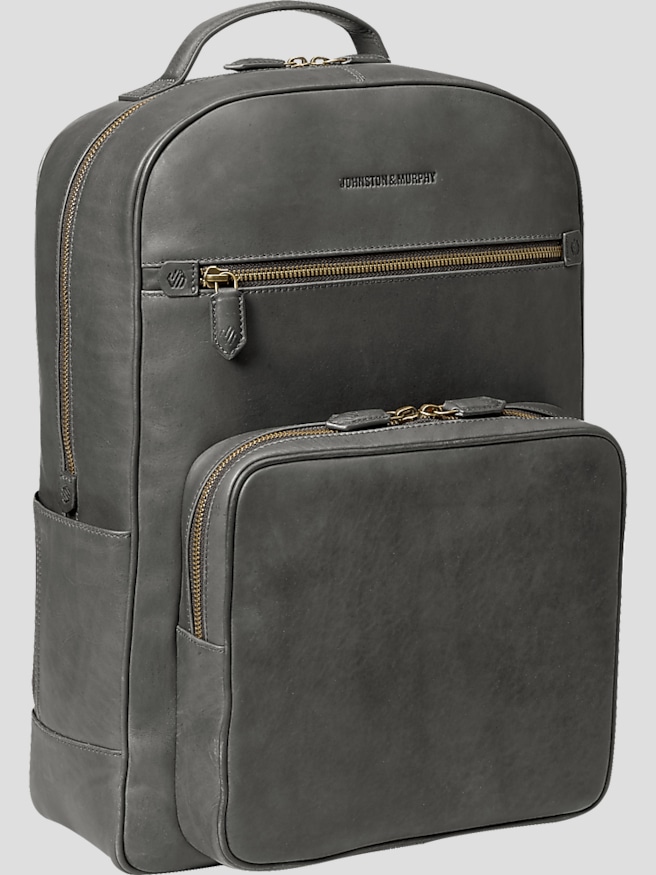
Premium leather backpacks bring the practicality of hands-free carrying to a more refined everyday accessory. Their appeal comes from the balance of leather quality, thoughtful construction, comfortable proportions, and useful organization—not simply a polished exterior. A clean-lined backpack can sit comfortably alongside tailored trousers and a sport coat, then look equally natural with dark denim and a knit polo. For commuting professionals, frequent travelers, and anyone carrying work essentials between appointments, that versatility makes leather a distinctive alternative to more casual bag materials. The leather itself shapes both the appearance and the carrying experience. Full-grain leather retains the hide’s natural grain surface, including subtle variations that give each piece character, and can develop a rich patina with use. Top-grain leather has typically been sanded or otherwise corrected for greater consistency and can offer a smooth, refined finish. Neither label alone tells the whole story: tanning, thickness, finishing, and construction all affect how a backpack feels and holds up. A substantial hide may create a firm silhouette but also add noticeable weight before anything goes inside. Softer leather can feel more relaxed against the body, though it may need internal reinforcement to maintain its shape. Pebbled textures tend to make minor surface marks less conspicuous, while smooth finishes emphasize clean lines and may show scuffs more readily. Black leather creates a restrained look that works well with business clothing; brown shades can add depth alongside navy, gray, and earth tones. Understated hardware and minimal exterior detailing keep the focus on the material, particularly when the bag is worn with a tailored jacket. Across men’s leather backpacks, the most useful distinction is often how the material and silhouette support everyday routines: a compact, structured profile for a laptop and documents, or a more forgiving shape for an extra layer, headphones, and personal essentials. Premium quality is most meaningful when the backpack feels as appropriate at the end of a full day as it looks at the beginning.
A well-proportioned leather backpack should carry the intended load without becoming awkward to wear or difficult to navigate through a crowded train, office hallway, or airport terminal. Exterior dimensions matter, but usable interior space matters just as much. A bag described for a particular laptop screen size may not accommodate every device in that category, since casing dimensions and sleeve openings vary. A padded compartment with a secure closure can help keep a computer from shifting, while a sleeve raised above the bottom of the bag can provide an additional buffer when the backpack is set down. Documents benefit from a flat section that separates them from chargers and other bulky objects. Smaller pockets are useful when they give keys, a wallet, and earbuds a consistent place, rather than dividing the interior into spaces too narrow to use. An opening that provides a clear view of the contents makes it easier to retrieve a notebook before a meeting without unpacking everything else. For longer days away from home, room for a bottle or lunch container can be more valuable than extra decorative compartments; any liquid container should close securely and remain separate from electronics. Comfort depends on the interaction of strap width, padding, adjustability, and the weight of the loaded bag. Straps should rest securely without digging into the shoulders, and the back panel should sit close enough to limit swinging during a walk. Overfilling changes that balance, pulling the bag away from the body and placing extra stress on seams and attachment points. A reinforced top handle is practical for short carries and for lifting the backpack onto a desk or luggage shelf. Travel-oriented details, such as a luggage pass-through, may be useful for someone who regularly carries a rolling suitcase, but airline size limits still require checking against the bag’s actual measurements. The right capacity leaves essentials accessible without encouraging unnecessary weight. A streamlined backpack may be ideal for a short commute, while a roomier interior better serves someone moving directly from the office to an overnight visit.
The durability of a premium leather backpack depends as much on its less visible details as on the outer hide. Even stitching, neatly finished edges, reinforced strap anchors, and securely attached hardware are important signs of considered construction. Zippers should move smoothly without catching the lining, and pocket openings should withstand repeated access without pulling out of shape. A sturdy lining helps protect the interior from the abrasion of notebooks, charging blocks, and other daily necessities. At stress points, reinforcement helps distribute the load rather than leaving a small area of leather to bear it alone. Leather can soften and gain character over time, but patina should not be confused with cracked finishes, failing seams, or loose attachments. Regular care helps preserve both appearance and function. Most smooth, finished leather benefits from gentle dust removal with a soft cloth, while cleaning and conditioning should follow the maker’s instructions for that particular finish. More conditioner is not necessarily better; excessive application can alter the color or leave residue. Testing an appropriate care product on an inconspicuous area helps reduce the risk of an unwanted change. Suede, nubuck, and specialty finishes need their own treatment rather than a standard smooth-leather routine. Ink, oils, and leaking toiletries can leave stubborn marks, so small protective pouches are useful inside the main compartment. When the backpack is not in use, emptying it, lightly supporting its shape, and storing it in a breathable dust cover can help prevent distortion and unnecessary surface contact. Avoid hanging a heavily loaded bag from one strap for extended periods. These practical considerations also make leather backpacks thoughtful gifts for a graduation, a new professional role, or a milestone birthday. A recipient who carries a computer daily may appreciate a well-padded sleeve more than extra capacity, while someone who travels often may favor easy access and a secure fit over a rigid silhouette. With proportions suited to the wearer and construction suited to the workload, a premium leather backpack becomes a useful part of a wardrobe rather than an accessory reserved for occasional outings.