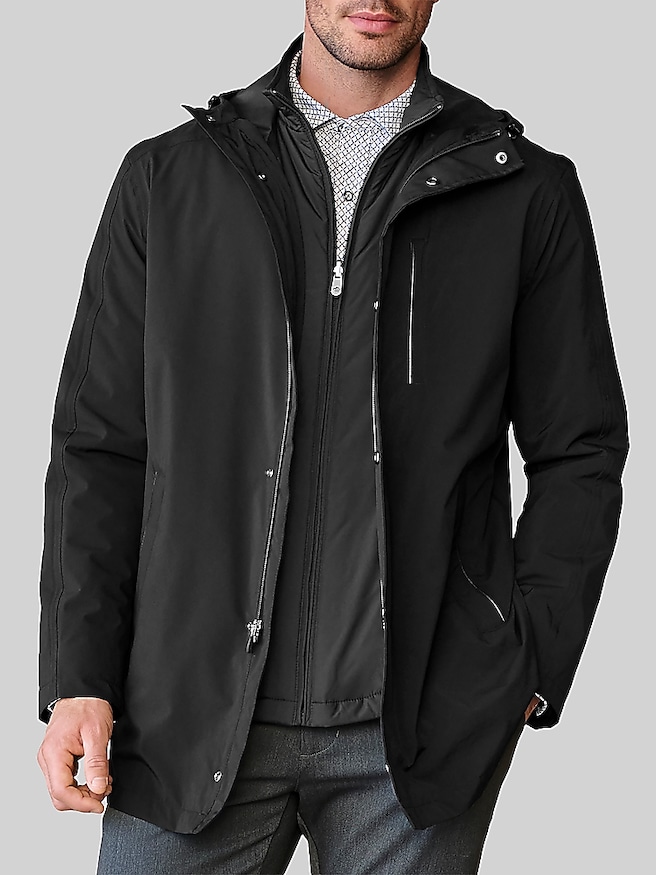
Polyester jackets are made from synthetic polyester fibers, either on their own or blended with other materials, and are valued for their durability, wrinkle resistance, and ability to retain their shape. Polyester absorbs relatively little water into the fiber, so many polyester fabrics dry more quickly than absorbent natural fabrics, although a jacket’s lining, padding, and overall construction affect drying time. These qualities make polyester a practical choice for everyday layers that move between a commute, a workday, and dinner plans without needing constant attention. The material does not have one fixed appearance or feel: a tightly woven fabric can have a smooth, crisp surface, while a textured weave can create a softer, more understated finish. Knit polyester offers a different drape, and brushed surfaces add softness against the skin. The distinction matters because fiber content alone does not tell the whole story. Fabric weight, weave, lining, and construction determine whether a jacket feels fluid and relaxed or more substantial and structured. Polyester blended with cotton may offer a different hand and moisture feel, while wool blends can add texture and natural character. Added elastane can provide stretch, but a polyester label by itself does not guarantee flexibility. A matte finish often pairs easily with everyday clothing, while a subtle sheen can give a tailored silhouette a dressier appearance. Polyester is also used in linings, so the outer fabric and lining labels should be considered separately. For regular wear, neatly finished seams, secure pocket openings, and smoothly operating closures matter just as much as the fabric composition. Polyester generally holds color well and resists many everyday wrinkles, but it is not immune to abrasion, snagging, or creasing. Breathability varies, too. Because the fiber absorbs little moisture, perspiration management depends on the fabric structure, any moisture-wicking finish, and the layers worn underneath. A densely woven, fully lined jacket will feel different during an active day than an unlined design with a more open construction.
Fit gives a polyester jacket its character, whether the intended look is clean and tailored or easygoing. The shoulder line should sit naturally, without pulling across the upper back or collapsing beyond the shoulder unless a deliberately relaxed silhouette is intended. Across the chest, a zipped or buttoned jacket should close without strained folds, leaving enough room for the shirt or other layer underneath. Sleeve length deserves equal attention: casual jacket sleeves generally finish near the wrist, while a tailored jacket may leave a small amount of shirt cuff visible. The hem influences proportion, with shorter shapes emphasizing the waist and longer designs creating a different balance over the hips. A comfortable fit also works in motion. Reaching for a steering wheel, sitting at a desk, and bending an elbow can reveal tightness that is not obvious while standing still. Stretch fabric may ease movement, but it cannot fully compensate for a jacket that is too narrow through the shoulders or upper arms. Body measurements and the relevant size chart offer a more dependable starting point than assuming every jacket follows the same sizing. For everyday outfits, a textured polyester jacket can bring definition to a simple shirt and chinos, while a smooth, understated style can work with dark denim and clean leather shoes. A tailored shape may suit an office with a relaxed dress code, a dinner reservation, or a social gathering, depending on the event’s expectations. For another coordinated layer, Polyester Shirts can complement a jacket, with contrasting textures helping the outfit feel considered rather than overly matched. A shirt with a soft finish under a crisp jacket creates a subtle distinction even when both pieces belong to a similar color palette. Polyester jackets can also make useful gifts for someone who appreciates low-fuss clothing for travel or daily wear. The most thoughtful choice reflects the recipient’s usual fit, preferred closures, and wardrobe colors, rather than relying on fiber content alone.
Care requirements depend on the complete jacket, not just the polyester in its fabric. Some designs are machine washable, while tailored construction, specialized finishes, or particular linings may require professional cleaning. The care label is the best reference for cleaning, drying, and pressing, especially when several fibers or materials are combined. Polyester’s resistance to wrinkles can reduce the need for frequent pressing, but it does not mean every jacket can be treated the same way. Excessive dryer heat or an overly hot iron can damage synthetic fibers, distort details, or affect a finish, so the permitted settings matter. When washing is allowed, fastened closures and care-label-approved handling can help limit unnecessary friction. Detergent residue and repeated use without appropriate cleaning may contribute to lingering odors, particularly around cuffs, collars, and underarms. Moisture-wicking claims should not be treated as a substitute for routine care. Like other synthetic garments, polyester jackets can release microfibers during laundering; washing only when needed and using a suitable microfiber-catching laundry device may help reduce the amount entering wastewater. Between cleanings, pockets emptied of heavy objects help preserve the jacket’s shape, and a hanger suited to its construction supports the shoulders without stretching them. A structured jacket benefits from a broad, supportive hanger, while a softer design should be stored according to its care guidance. Durability also depends on everyday habits: repeated rubbing from a bag strap, overfilled pockets, or rough surfaces can wear the fabric even when the fibers themselves are strong. Loose threads, stressed seams, and sticking zippers deserve attention before a small issue becomes a larger one. For frequent travelers, wrinkle resistance and relatively quick drying can simplify clothing care, but packing a jacket without sharply compressing its collar or front still helps maintain its appearance. The lasting appeal of polyester jackets comes from this balance of practicality and design: fabric that suits the intended activity, proportions that feel natural, and construction that holds up to regular use.