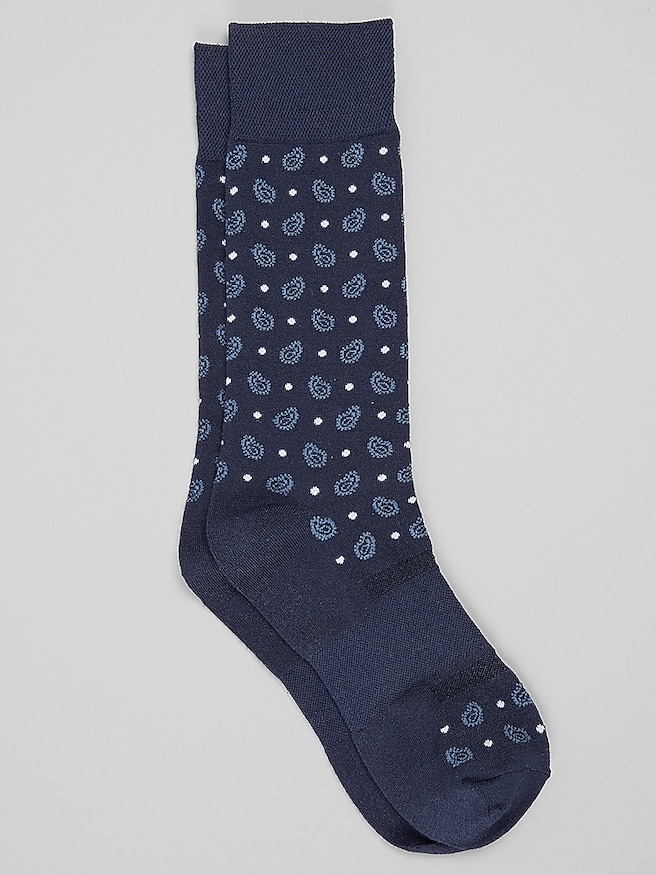
Polyester dress socks bring a smooth finish and resilient construction to a small but important part of a polished outfit. Polyester is a synthetic fiber valued for its strength, abrasion resistance, and low moisture absorption, qualities that can help socks withstand regular wear and dry relatively quickly after washing. Moisture-wicking performance depends on the yarn, fabric construction, and any applied treatments, rather than fiber content alone. In a well-designed sock, these features help move perspiration away from the skin so it can evaporate. Polyester can also hold color well, although fading and overall appearance depend on dye quality and care. These characteristics make polyester dress socks a practical consideration for office wardrobes, business travel, weddings, and other occasions that call for dress shoes rather than athletic footwear. The fabric is often blended with additional fibers to balance its performance and feel. Cotton can contribute a familiar softness, nylon can add strength, and small amounts of spandex or elastane provide stretch and recovery. A polyester-rich blend may feel sleek and lightweight, while a blend with more cotton may have a softer, more substantial hand. For a comparison centered on that natural fiber, Men's Cotton Dress Socks offer another way to approach an everyday dress wardrobe. Fiber percentages are useful, but they do not tell the whole story: knit density, yarn quality, seam placement, and finishing all influence how a sock feels inside a shoe. A fine-gauge knit can sit neatly beneath tailored trousers without adding much bulk, while a slightly more substantial construction may provide extra cushioning at the heel or underfoot. The right balance depends on the shoes, the length of the day, and personal preference. Someone moving between a desk, conference room, and evening dinner may value a smooth, secure fit as much as the fiber blend itself. Breathability also varies with thickness and construction, so a lightweight profile and an open, flexible knit can matter alongside the composition listed on the label.
Fit determines whether polyester dress socks remain an unobtrusive finishing touch or become something that needs adjusting throughout the day. A well-fitting pair follows the shape of the foot without loose fabric gathering beneath the arch or crowding the toes. The heel should sit where the foot naturally bends into the ankle, rather than pulling underneath the sole or riding too high at the back. Size ranges deserve attention, especially for anyone near the edge of a listed shoe-size bracket, because stretch cannot fully compensate for a sock that is too short or excessively long. A comfortable cuff should hold its position without feeling restrictive; a standard dress-sock cuff should not be assumed to provide graduated compression. Length changes both coverage and appearance. Crew and mid-calf styles work with many tailored outfits, while over-the-calf designs provide additional coverage when trouser hems rise while sitting or crossing one leg over the other. That detail can be especially noticeable during a seated interview, a ceremony, or a meeting around a conference table. Fine or low-profile toe seams can also make a meaningful difference inside close-fitting leather shoes, where a bulky seam may rub against the toes. Lightweight socks generally suit sleek oxfords and loafers, while modest cushioning may be comfortable in roomier dress shoes. Too much thickness can crowd footwear that already fits closely. Color and pattern offer another way to make the category work across a wardrobe. Matching socks closely to trousers creates a continuous line, particularly with navy, charcoal, or black tailoring. A subtle rib, small geometric motif, or restrained stripe adds detail without competing with a patterned tie or jacket. More expressive colors can pick up an accent elsewhere in an outfit, but the overall effect stays more deliberate when the shades share a clear connection. For formal settings, smooth textures and understated patterns keep the emphasis on clean tailoring rather than on the ankle. The result should feel coordinated while leaving enough room for personal taste.
Care and construction play a large role in how polyester dress socks hold their shape and appearance over repeated wears. Polyester fibers are durable, but no dress sock is immune to friction, snagging, or damage from rough shoe linings and poorly trimmed toenails. Reinforcement at the heel and toe can support areas that receive frequent rubbing, while resilient stretch yarns help the sock recover after being pulled on and worn. Durability still depends on the entire blend and the quality of the knit, not simply on a high polyester percentage. Pilling may develop where fabric repeatedly brushes against a shoe or trouser leg, and excessive stretching can strain the cuff. Following the care label is the best starting point for cleaning. Turning socks inside out helps expose the areas that collect perspiration and skin oils, and a mesh laundry bag can reduce tangling with other garments. Washing with similar colors helps preserve a consistent appearance. High dryer heat can be hard on elastic components, so the labeled drying instructions matter even when the main fiber is relatively tough. Fabric softener can interfere with some moisture-management finishes; any special care directions should take priority. Allowing socks to dry completely before wearing them again supports comfort, and rotating several pairs spreads out repeated friction and laundering. These everyday considerations also make polyester dress socks a thoughtful wardrobe gift for someone starting an office job, preparing for interviews, attending formal celebrations, or refreshing well-used basics. A father's preferred trouser colors, a partner's usual shoe size, or a graduate's new workplace dress expectations can help shape a useful choice without relying on novelty. Neutral shades and restrained patterns are easy to coordinate, while a carefully chosen accent color can make a familiar outfit feel more personal. Whether worn beneath a suit for an important presentation or with tailored pants for an ordinary workday, polyester dress socks work best when dependable construction, appropriate coverage, and a comfortable shoe fit come together.