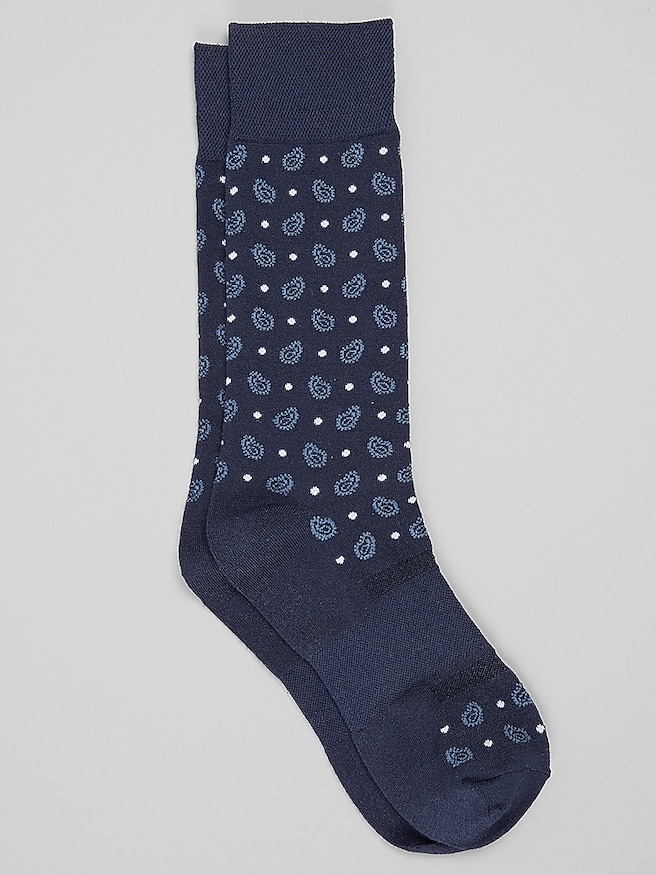
Cotton-blend dress socks combine the soft feel of cotton with the added resilience of fibers such as nylon, polyester, and spandex. Cotton contributes a comfortable texture and absorbs moisture, while the other fibers can help the fabric resist abrasion, recover its shape, and stay close to the foot. Spandex, also called elastane, supplies stretch; nylon commonly adds strength without much bulk; and polyester can support durability and moisture transport, depending on the yarn and knit. Those differences matter in a sock worn inside dress shoes through a commute, a full day at a desk, and an evening event. A blend is not automatically moisture-wicking simply because it contains synthetic fibers, and cotton itself can hold absorbed moisture. Fabric construction and any stated performance features deserve as much attention as the fiber percentages. A higher cotton content generally emphasizes cotton’s natural feel, but there is no single percentage that guarantees the best comfort or longest wear. The fiber label provides a clearer picture than the category name alone, whether comparing cotton-blend styles or Men's Cotton Dress Socks. Fine-gauge knitting creates the smooth, relatively thin profile associated with dress socks, helping them sit neatly inside oxfords, loafers, and other close-fitting footwear. Ribbed knitting adds texture and can give the leg a more flexible feel, while a smooth knit produces a cleaner visual finish beneath tailored trousers. Mercerized cotton undergoes a treatment that can increase its luster and strength, lending the finished fabric a more polished appearance. The result still depends on the complete blend and construction rather than that treatment alone. For someone who likes the softness of cotton but wants more shape recovery than a low-stretch fabric provides, a cotton blend offers a practical middle ground. It suits everyday business dressing as naturally as occasions that call for a pressed suit and carefully chosen accessories.
Fit is especially noticeable with dress socks because there is little extra room inside many leather shoes. A well-fitting pair follows the foot without pulling the toes inward, placing the heel pocket under the heel rather than above it or beneath the arch. Shoe-size ranges are useful starting points, but foot width, calf circumference, and the amount of stretch in the knit also affect comfort. Excess fabric can wrinkle under the ball of the foot or bunch near the toes, while a sock that is too small may feel strained across the instep. A smooth toe seam can reduce a source of rubbing, particularly during a day that involves walking between meetings or standing through a reception. Cushioning changes the fit, too: a lightly cushioned sole may soften each step, but a thicker knit takes up space and can make an otherwise comfortable shoe feel tight. Thin dress socks generally preserve the intended fit of close-cut footwear. Length determines both coverage and how the sock feels against the leg. Crew and mid-calf descriptions can vary, so the stated height is more informative than the name alone. Over-the-calf socks extend higher and can help maintain coverage when trouser hems rise while seated, although staying power still depends on sizing, cuff design, and elasticity. The cuff should feel secure without digging in or requiring repeated adjustment. For tailored outfits, socks close to the color of the trousers create a continuous line from the hem toward the shoe. Navy with navy trousers and charcoal with gray trousers are dependable combinations, while a darker shade can make a subtle transition when an exact match is unnecessary. Fine stripes, small dots, and restrained geometric patterns bring detail into view when the wearer crosses a leg. A small accent color can echo a tie or shirt without making every accessory look deliberately matched.
Cotton-blend dress socks earn their place through repeated wear, and durability depends on more than softness at the first touch. Reinforced heels and toes can help protect areas exposed to friction, while resilient yarns help the fabric recover after stretching over the foot. Shoes matter as well: a rough interior heel, crowded toe box, or slipping fit can create extra abrasion that even a sturdy sock must withstand. Rotating pairs allows time for laundering and complete drying between wears, and checking the heel and forefoot makes thinning easier to spot before a hole develops. Care should follow the label because fiber blends, dyes, and finishes can require different treatment. When permitted, a gentle wash cycle with similar colors helps limit unnecessary friction. Turning socks inside out exposes the inner surface to washing, and a mesh laundry bag can keep pairs together while reducing snagging. Chlorine bleach and excessive dryer heat can damage certain fibers or affect elasticity, so neither should be assumed suitable. Drying according to the stated directions helps protect the fit, and socks should be fully dry before being folded away. Pairing them flat rather than stretching one cuff tightly over the other avoids leaving the cuff under prolonged tension. These small habits support the qualities that make dress socks useful in the first place: a smooth fit, a comfortable feel, and a tidy appearance with tailored clothing. For someone building a business wardrobe, versatile solid colors simplify getting dressed before an early meeting. For wedding guests or anyone attending a formal dinner, sufficient length and a refined knit keep the outfit looking considered when seated as well as standing. Cotton-blend dress socks also make a practical gift for a graduate entering an office role, a partner who wears dress shoes regularly, or a father who appreciates useful wardrobe essentials. The recipient’s shoe size, preferred sock height, and usual trouser colors provide a more personal starting point than choosing a bold pattern alone.