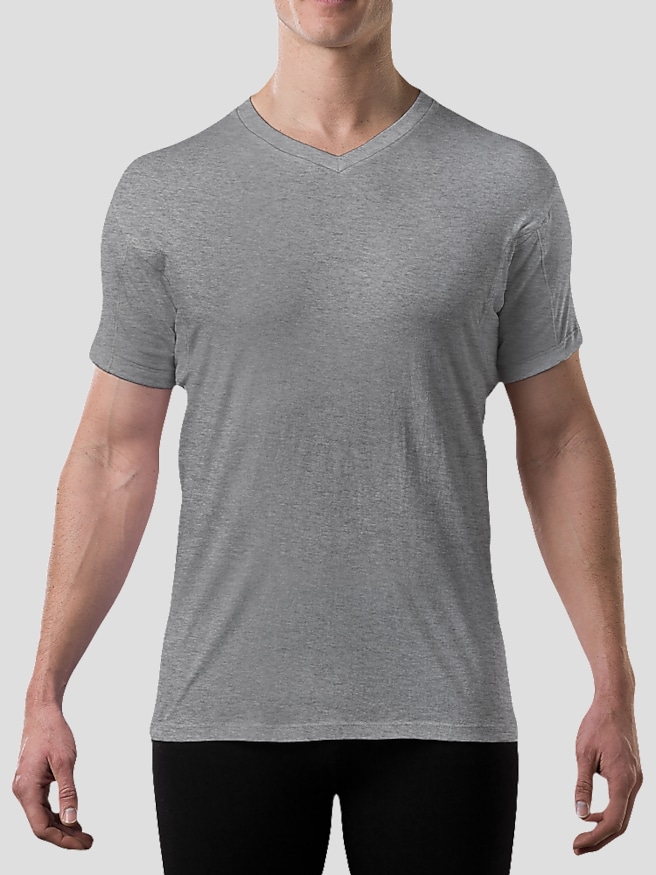
Plus-size moisture-wicking shirts for men pair sweat-managing fabrics with cuts that offer room through the chest, waist, or upper arms. The fabric draws perspiration away from the skin and spreads it over a wider area, where it can evaporate more readily. That can make a shirt feel less damp or clingy during a workout, on a brisk walk to the train, or halfway through a day of hauling boxes. Moisture wicking does not mean waterproof, and it does not prevent sweating. It describes how the shirt handles moisture once it reaches the fabric. Lightweight polyester and nylon blends are common in activewear because they tend to dry quickly. A small amount of spandex can help a shirt move through a reaching or twisting motion and return to shape afterward. Cotton blends can give a shirt a softer, more familiar feel, though a fabric with a higher cotton content may take longer to dry. Some fabrics wick because of the way the fibers are formed or the yarns are knit, while others rely in part on a finish applied to the fabric. Breathability is a separate consideration: an open knit lets more air pass through, while a denser knit can offer more coverage. A smooth, lightweight crewneck makes sense for gym sessions or active errands, especially if there are no bulky seams beneath a backpack strap. A collared knit with a bit more structure can look at home with chinos on a travel day that ends with dinner. The same moisture-managing property serves both purposes, even though one cut is better suited to repeated motion and the other has a neater drape. Weight and texture also affect how a shirt layers. A thin, smooth knit tends to slide under an overshirt without bunching at the sleeves, while a more substantial fabric may hang better when worn on its own.
A comfortable plus-size fit leaves enough room to move without making the shirt feel baggy. The difference often shows up away from the mirror: a shirt might lie flat while standing but pull across the upper back when reaching for the steering wheel or grip the waist when sitting down. On a shirt with traditional set-in sleeves, the shoulder seams should land near the ends of the shoulders, and the fabric across the chest should fall without noticeable pulling. Sleeves need room around the upper arm, particularly for lifting or reaching overhead. Stretch helps with those movements, but it should not have to make up for a shirt that is too tight at rest. On a collared style, fabric that fans out from the buttons is a sign that the chest or midsection may need more room. Length matters, too. An untucked hem should still provide coverage when reaching for a shelf, but extra length alone will not fix a cut that catches at the hips. A shirt meant to be tucked in should stay in place through an ordinary stretch or bend without leaving a thick fold beneath the waistband. Size labels are a starting point, since two shirts with the same marked size can have noticeably distinct proportions. Where garment measurements are provided, comparing them with a shirt that already fits well can be more useful than relying on the tag alone. Chest width, hem width, and back length are especially helpful when deciding between cuts. A straighter body can leave welcome room at the waist, while a gentle taper may sit more neatly under a jacket if it still allows comfortable movement. The broader Moisture Wicking Shirts collection offers another way to browse by fabric function when the occasion calls for a particular neckline or level of structure.
For shirts that get worn and washed often, the details that hold up over time are usually the ones that get the most friction. A knit that feels smooth under the arms and seams that lie flat can make a difference during repeated motion. Shoulder seams can also take a beating under a gym bag or backpack, and raised textures may snag more readily against rough straps or hook-and-loop closures. A neckline that springs back after a gentle stretch is worth noticing on a pullover that comes on and off frequently. Fabric weight alone is not a reliable measure of durability; a lighter knit with even stitching can stand up well to regular wear, while a heavier fabric can still pill where it rubs against a seat belt or bag. For laundering, the care label is the best starting point. Fabric softener and dryer sheets can leave a coating that interferes with the way some fabrics move moisture, so skip them unless the label says otherwise. Turning a shirt inside out and washing it with similarly lightweight garments can limit abrasion from heavy denim, exposed zippers, and hardware. Let a damp shirt air out before tossing it into a hamper, rather than leaving it balled up at the bottom of a gym bag. For drying, follow the label to help preserve the fabric’s shape and stretch. A moisture-wicking shirt can also make a practical gift for someone who lifts, travels often, walks the dog for miles, or simply likes an easy-care shirt for everyday wear. The best clues are the shirts that already get worn on repeat. Someone who lives in crewnecks may get more use out of a familiar neckline than a collar, while someone who regularly wears chinos may appreciate a shirt with enough structure to look tidy untucked. If there is a favorite shirt to use as a reference, its cut and measurements are better clues than its size label alone.