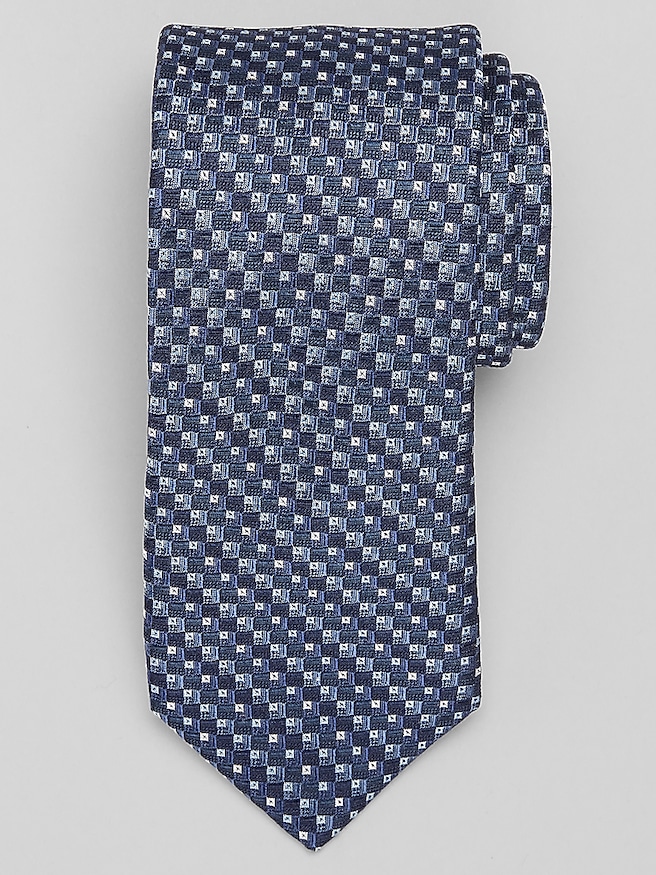
Pink accessories for men add color and personality to tailored clothing without requiring a head-to-toe statement. Ties, pocket squares, bow ties, and socks can introduce anything from a soft blush accent to a stronger rose or raspberry tone, giving familiar outfits a distinct point of interest. Against a navy suit, pink creates a clear contrast while keeping the overall look classic; with charcoal or medium gray, it softens the sharper lines of a jacket and trousers. A white shirt provides a crisp backdrop, while a pale blue shirt offers a subtler combination with a little more depth. The shade matters as much as the accessory itself. Dusty pink feels understated, salmon has a warmer cast, and brighter pink draws attention more immediately. These differences make the color useful across business attire, wedding outfits, graduation looks, and dressed-up evenings. A small pink pattern woven into a tie can feel restrained enough for a client meeting, while a more saturated pocket square lends energy to a jacket worn for a celebration. Pattern and texture also influence how much an accent stands out. A tiny geometric motif reads differently from a broad stripe, and a matte surface keeps color quieter than a glossy finish. When several accessories share a pink element, slight variations in shade and pattern tend to look more natural than exact repetition. A patterned tie with a muted pink detail can sit comfortably beside a pocket square that picks up the same color in its border. Pink socks offer a less visible approach, adding a glimpse of color when the wearer sits or crosses a leg. For looks that carry the color beyond small finishing touches, pink outfits for men provide a broader context for coordinating pink with shirts, trousers, and tailored layers. The common thread is balance: a deliberate accent can give a familiar outfit a fresh identity while leaving its clean lines intact.
Material gives pink accessories much of their character, affecting the way they catch light, hold their shape, and feel against the skin. Silk often lends neckwear a smooth surface and fluid drape, although its appearance can range from lustrous to softly textured depending on the weave. Cotton typically has a more matte finish, while linen brings visible texture and a slightly relaxed character. Wool can give a tie a fuller hand and a subdued appearance, making the same pink shade look quite distinct from its silk equivalent. Blended fabrics vary, so fiber content and construction are more useful indicators than color alone when assessing feel and care requirements. With pocket squares, fabric weight influences whether a fold looks crisp or settles into a softer puff. A substantial square can add unwanted bulk in a shallow breast pocket, while a lighter fabric may sit more comfortably without pushing the pocket outward. Proportion matters just as much in neckwear. A tie width that relates to the jacket’s lapels generally creates a balanced appearance, and a properly adjusted tie usually finishes near the belt buckle rather than hanging well above or below it. Bow ties need enough room at the neck to sit comfortably with the shirt collar fastened, without pulling tightly or shifting out of position. For socks, the practical details include a secure cuff, smooth seams, and enough length to maintain coverage beneath tailored trousers when seated. Fiber blends containing stretch can help socks recover their shape, though comfort also depends on the knit and the accuracy of the size. Durability comes from these less visible details as well as the face fabric: tidy stitching, neatly finished edges, and construction that holds its shape through repeated wear. Pink may be the visual draw, but the accessory still needs to work comfortably through a full day of meetings, photographs, dinner, or dancing.
Care helps preserve both the color and the structure that make an accessory look good. The care label remains the best starting point because similar-looking fabrics can require different treatment. Silk neckwear, for example, may need professional attention for stains, and rubbing a spill can spread the mark or disturb the surface. A tie benefits from being untied after wear rather than left in a tight knot, then stored without sharp creases or crowding. Pocket squares are easiest to keep neat when clean and dry before storage, with pressing methods suited to their fiber content. Washable socks should be cleaned according to their label, with particular attention to water temperature and drying instructions; excessive heat can affect elasticity and fit. Keeping accessories away from prolonged direct sunlight can also help protect their color. These routines matter most for pieces worn repeatedly, whether that means a favorite pink tie for presentations or patterned socks that become part of a regular office rotation. Intended use shapes the choice, too. For a wedding party, coordinating a shared pink tone can create continuity across different suit colors without requiring every detail to match. For a guest, one pink accent can bring personality to an outfit while keeping the formality appropriate to the invitation. At a graduation or milestone dinner, a brighter detail can stand out in photographs against a dark jacket. As gifts, pink accessories suit someone who already enjoys color as well as someone whose wardrobe is largely navy, gray, white, and blue. A tie or pocket square generally requires fewer sizing details than fitted clothing, although tie length, width, and the recipient’s usual style still deserve consideration. Socks call for a closer look at sizing and preferred coverage. The most useful choice reflects how the recipient actually dresses: subtle texture for a restrained wardrobe, a small repeating pattern for everyday tailoring, or a stronger pink accent for someone who enjoys a distinctive finishing touch.