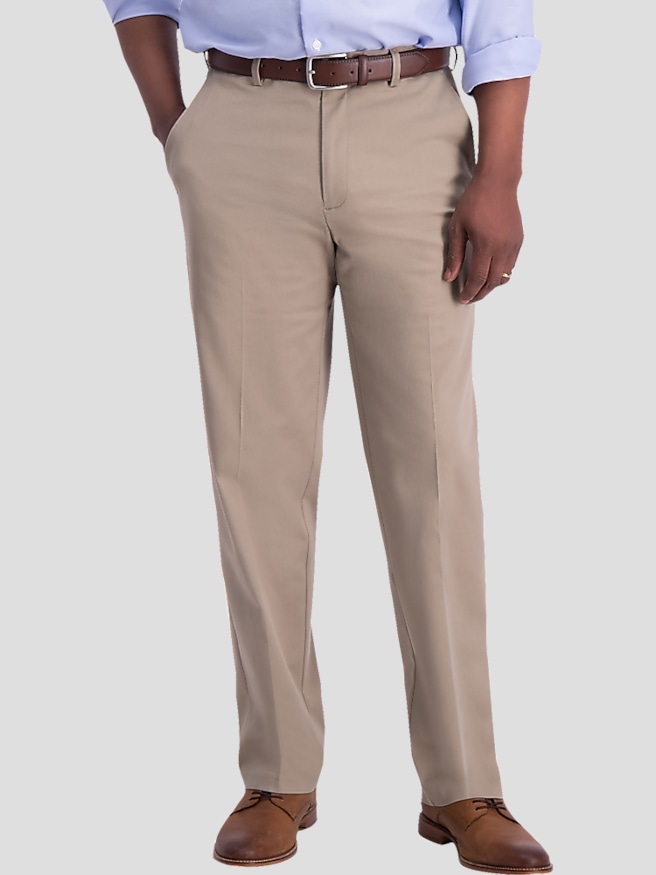
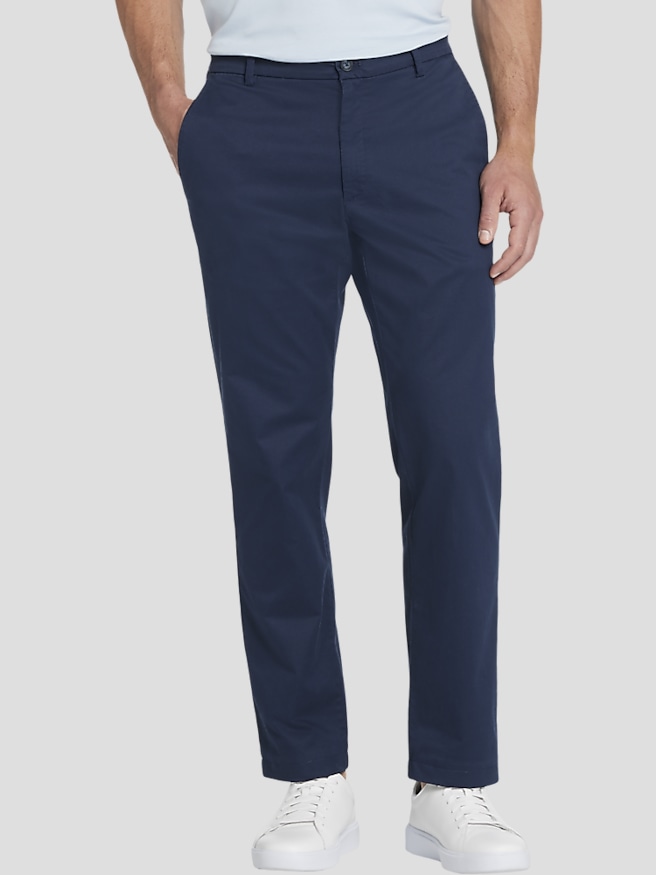
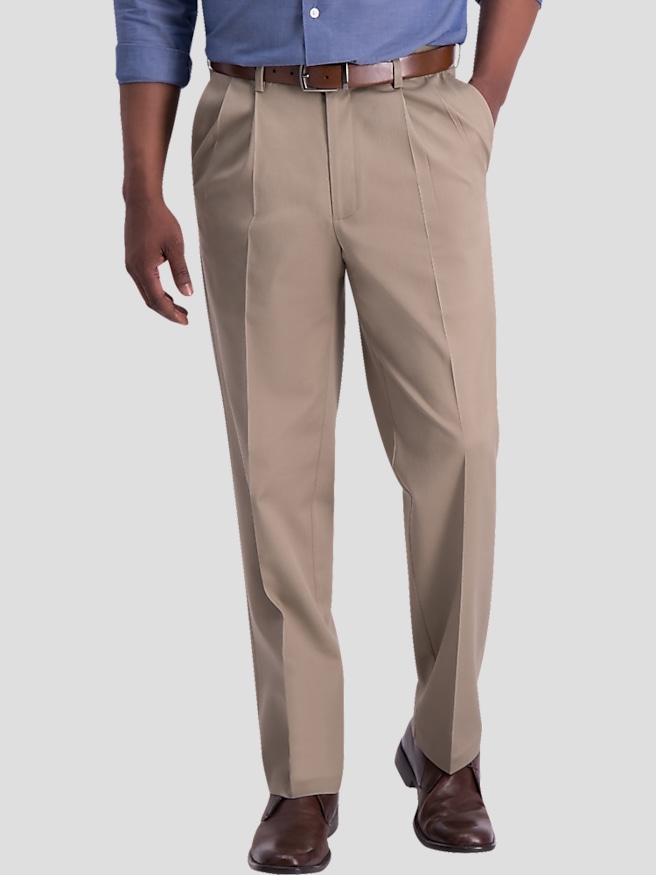
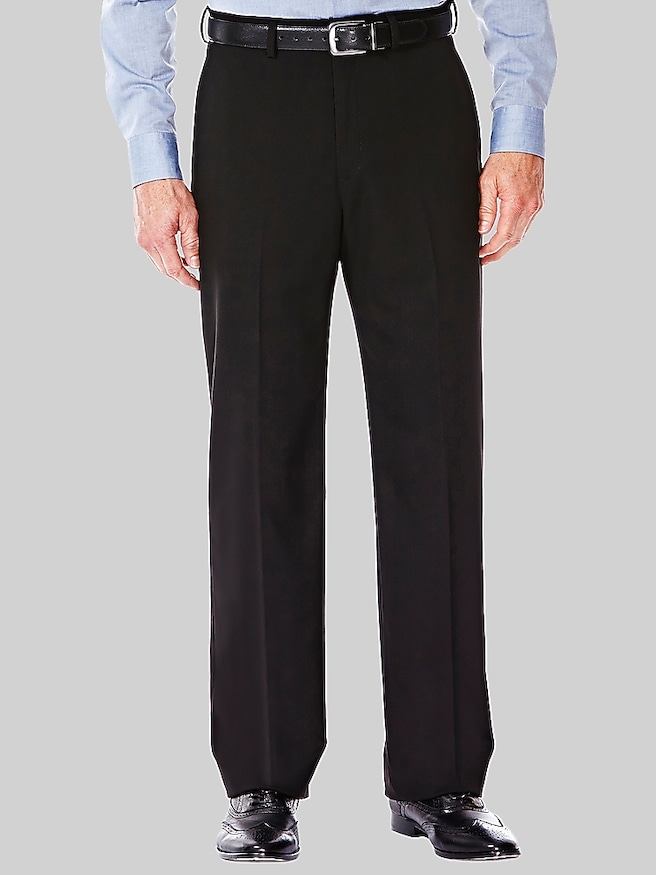
Permanent crease trousers are pants designed to retain a defined line down the front of each leg through normal wear and appropriate care, reducing the need to press that line back into place. That crisp vertical detail gives the fabric a tailored appearance, whether the pants are paired with a tucked-in dress shirt, a fine-gauge knit, or a coordinated jacket. Unlike a crease created only by routine ironing, a permanent crease is intended to last beyond a single pressing. Depending on the construction, the line may be maintained through a fabric treatment, a setting process, or stitching. The term describes the crease itself, not a promise that the entire garment will remain free of wrinkles. Areas around the lap, knees, and seat can still develop folds from sitting and movement. For someone whose day moves from a commute to a desk to an evening reservation, the appeal is a consistent finishing detail that helps the outfit look considered without demanding constant attention. Fabric makes a meaningful difference in how that finish looks and feels. Cotton offers a familiar hand and a comparatively relaxed character, while wool can provide a smooth drape suited to dressier settings. Polyester and blended fabrics can contribute shape retention and easier maintenance, although performance depends on the weave, finishing, and care requirements. A small amount of stretch can add flexibility when sitting, climbing stairs, or reaching into a low cabinet, but stretch content alone does not determine comfort. Fabric weight, waistband construction, and room through the hips and thighs matter just as much. A tightly woven cloth may give the crease a particularly distinct edge, while a softer fabric can produce a more understated line. These differences make permanent crease pants relevant to both business wardrobes and polished everyday dressing, rather than tying them to one level of formality.
A clean crease works best when the surrounding fit allows the fabric to hang naturally. Trousers that pull across the seat or upper thigh can distort the line, while excessive fabric may create folds that compete with it. The waistband should sit securely at its intended position without relying on a tightly cinched belt, and the rise should feel comfortable both standing and seated. A higher rise changes the proportions of a tucked-in shirt and can create a longer-looking leg line; a lower rise produces a different balance between the shirt and trousers. Through the leg, a straight silhouette gives the crease room to fall evenly, while a tapered shape narrows toward the ankle for a more defined outline. Neither shape is automatically dressier: fabric, finishing, and the rest of the outfit help establish the effect. Pleats are another separate consideration. A permanent crease runs lengthwise down the leg, whereas pleats are folds near the waistband that add shape and room. The two details can appear together, but one does not require the other. For a closer look at the relationship between waistband detailing and fabric, Mens Pleated Cotton Trousers offers a related direction. Flat-front styling creates a smoother appearance across the front, while pleats can accommodate movement and add dimension beneath a tucked-in shirt. Length also affects how clearly the crease reads. A hem that lightly meets the shoe can preserve a continuous line, while additional length creates a fuller break and more fabric at the ankle. The right balance depends on personal preference, leg opening, and footwear. Loafers, lace-up dress shoes, and streamlined boots each meet the hem differently, so the same inseam can look different with each pair. Pocket placement deserves attention as well: pockets that lie flat help maintain the silhouette, while overfilled pockets can interrupt the drape even when the waist and inseam are otherwise right.
In everyday use, permanent crease trousers can fill the space between casual pants and the lower half of a formal suit. A collared shirt and leather shoes make a straightforward combination for an office, a client lunch, or a presentation. A textured knit or an unstructured jacket can soften the effect for dinner, a community gathering, or an occasion that calls for looking put together without wearing a matching suit. The crease provides definition, but the full outfit still determines whether the result feels relaxed or formal. Subtle texture and muted colors tend to work easily with a varied wardrobe, while a smoother finish can emphasize the tailored line. For travel, crease retention can be useful when an itinerary includes both sitting for long stretches and arriving dressed for a meeting, though packing and handling still affect the fabric’s appearance. Care requirements should remain part of the decision, especially when the trousers will see frequent use. Some fabrics tolerate machine washing, while others require dry cleaning or more particular handling; the garment’s care label takes priority over any general expectation about easy-care pants. A permanent crease does not mean every fabric can withstand high dryer heat or a hot iron. When pressing is permitted, following the recommended settings helps protect the surface and avoids creating a second line beside the original crease. Hanging trousers neatly after wear can help limit unnecessary folds, and allowing space in the closet keeps them from being tightly compressed. Long-term appearance also depends on construction: secure seams, a stable waistband, and well-finished hems support repeated wear alongside the crease treatment itself. As a gift, trousers are most practical when the recipient’s waist, inseam, preferred rise, and usual fit are already known. For someone building a work wardrobe, dressing regularly for appointments, or simply preferring a sharper finish to everyday clothes, permanent crease trousers offer a useful combination of tailored definition and manageable upkeep.