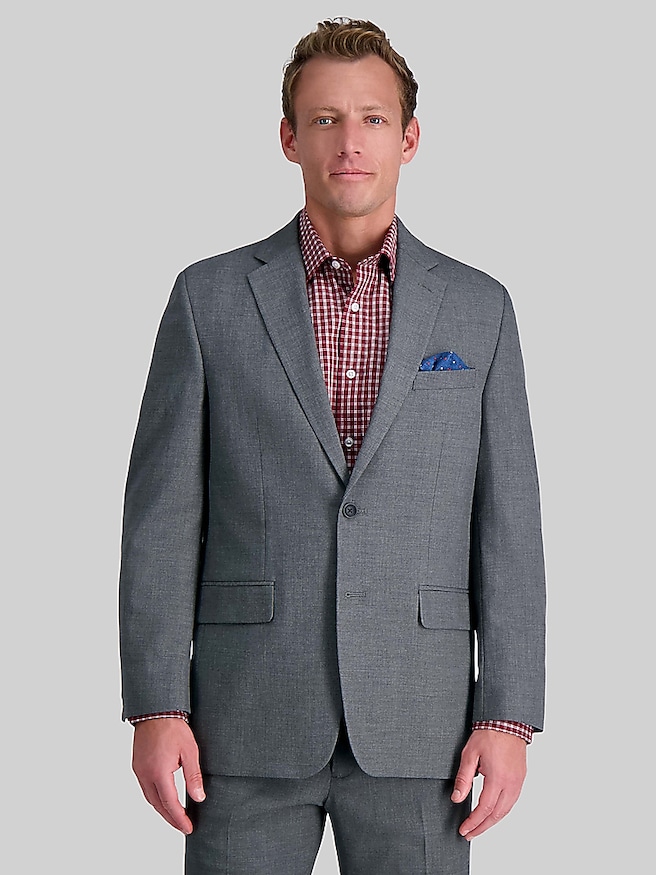
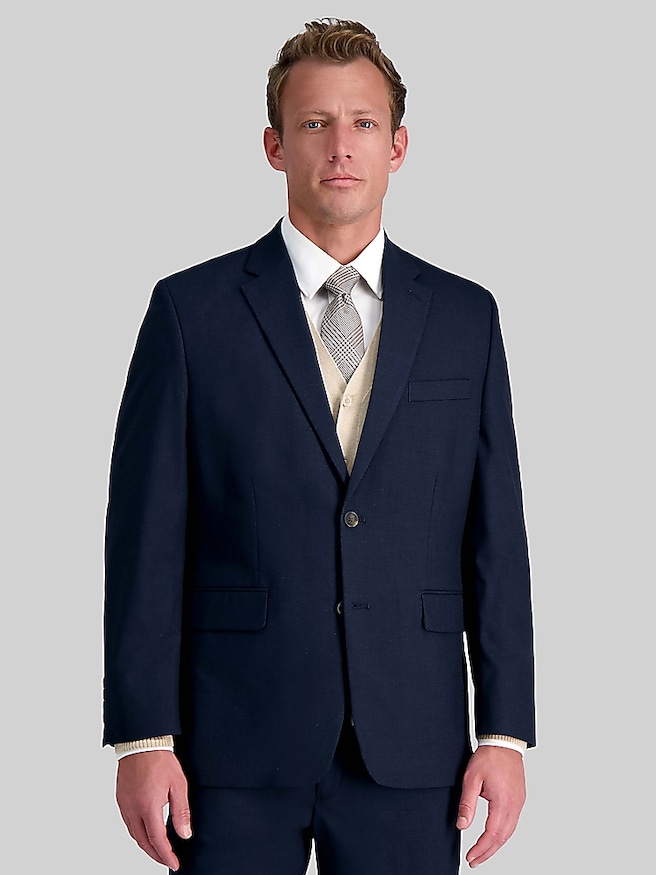
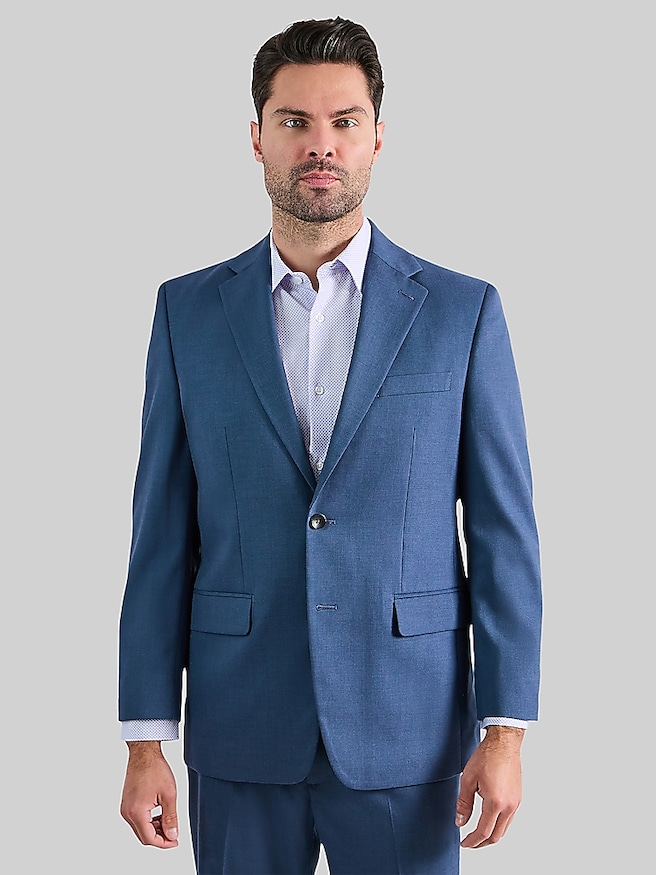
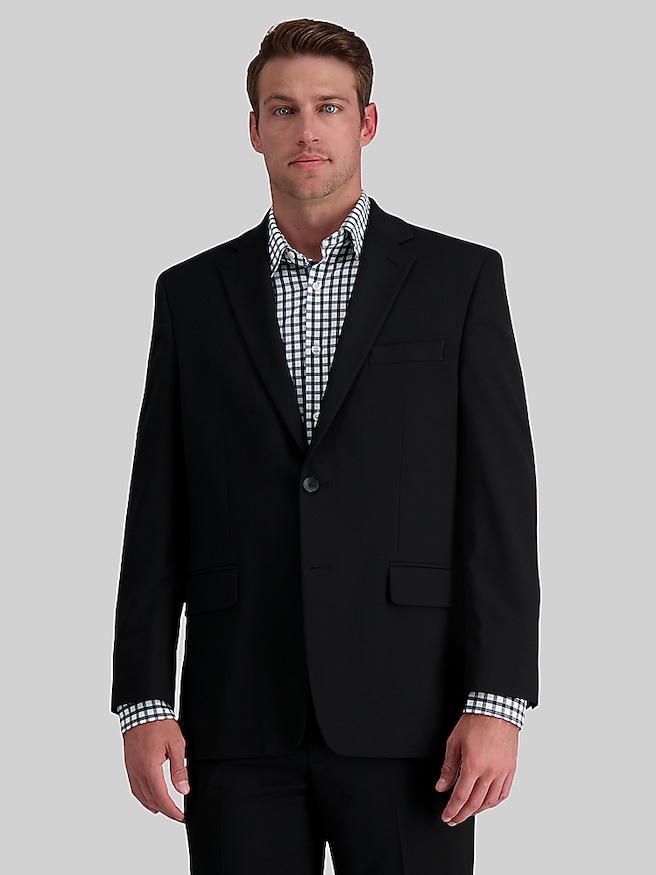
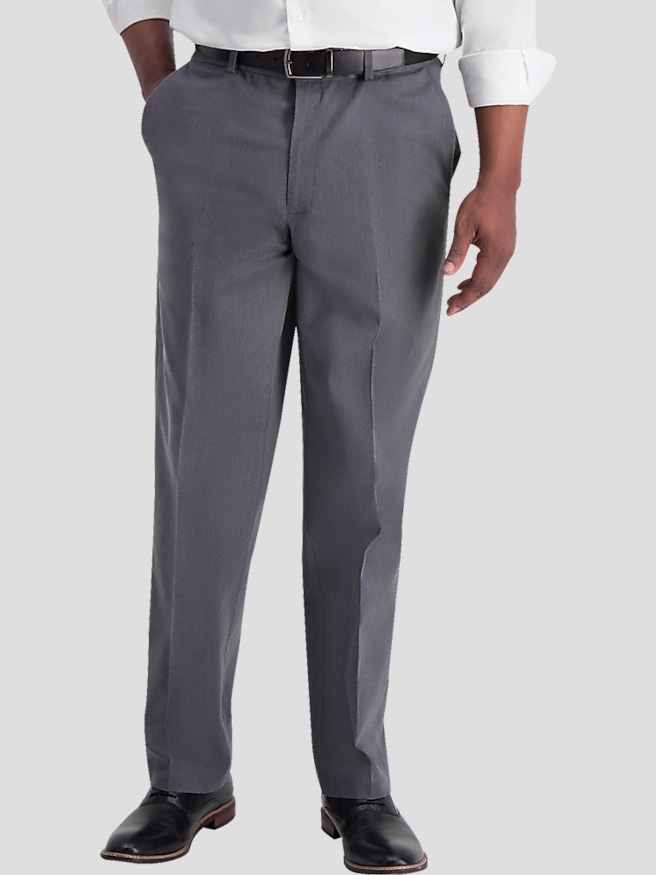
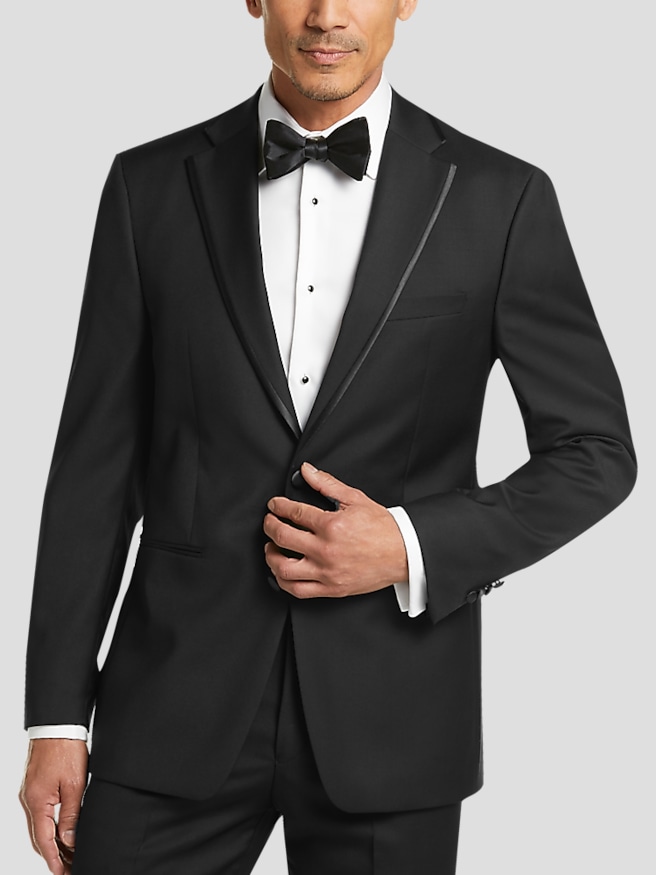
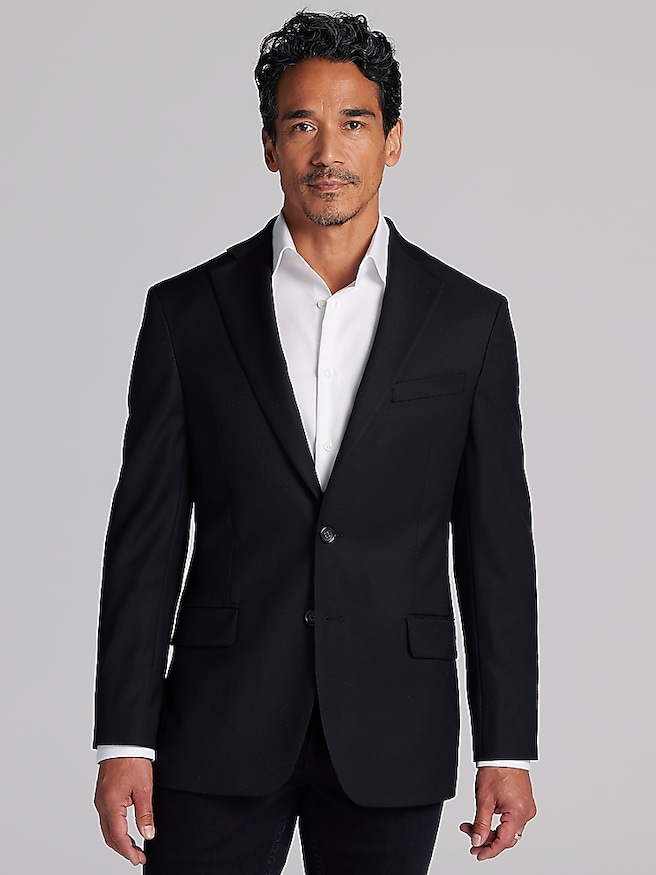
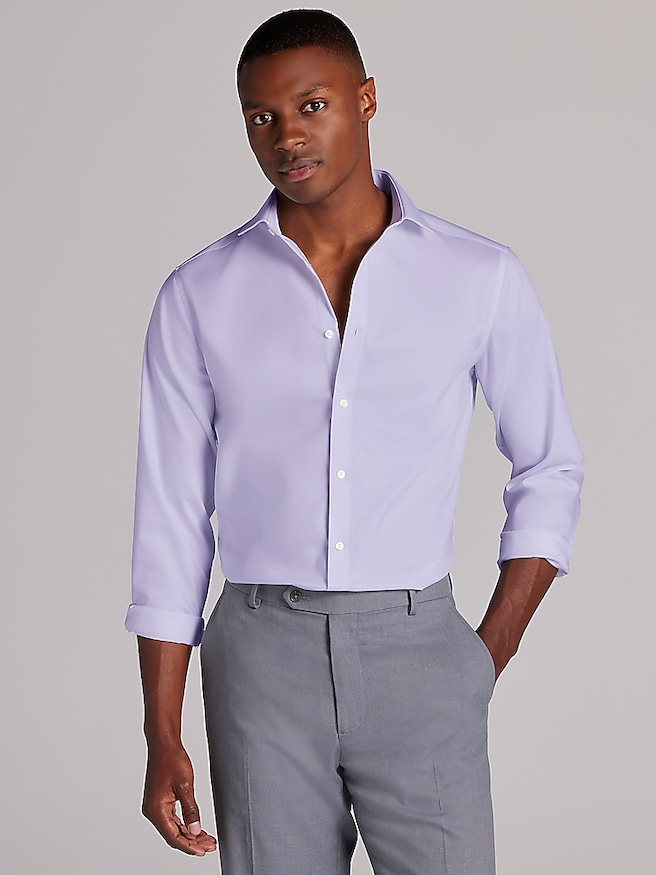
Party wear for guys spans tuxedos, tailored suits, sport coats, dress shirts, and polished casual separates, with the occasion setting the level of formality. A black-tie celebration calls for a tuxedo, a formal shirt, and appropriate evening accessories, while a cocktail reception generally suits a dark suit or a refined jacket-and-trouser combination. Birthday dinners, engagement parties, and nights out leave more room for patterned shirts, textured fabrics, and relaxed tailoring. The distinction is in the details: satin lapels give a tuxedo its evening character, a matching suit creates a continuous line, and contrasting separates feel less formal without looking unfinished. Black, navy, and charcoal make versatile foundations, especially when the shirt, shoes, and accessories share the same degree of polish. Burgundy, deep green, and subtle jewel tones add personality without requiring an elaborate outfit. Texture can make just as much of an impression as color. A velvet jacket has a rich surface that catches light, a finely woven wool suit offers a restrained finish, and a patterned shirt brings interest beneath a solid jacket. For celebrations where guests move from dinner to dancing, clothing needs to look composed both seated and in motion. A jacket that rests comfortably across the shoulders and trousers that allow an easy stride contribute more than an especially bold accessory. The strongest party outfits also make sense for their setting: a tuxedo belongs at a formal gala, while an open-collar shirt with tailored trousers can feel at home at a restaurant celebration. Collections of Mens Party Wear Outfits bring these levels of dress together, from understated evening combinations to more expressive looks. Across those combinations, the goal is a deliberate balance of formality, comfort, and personal style rather than adding decoration to every part of an outfit. That balance gives clothing a place beyond a single photograph, whether the evening involves a seated toast, a crowded dance floor, or several hours of conversation.
Fabric and fit shape how party clothing looks over the course of an event, not just when it first goes on. Wool is valued in tailoring for its drape, breathability, and ability to recover from light creasing, though performance varies with the weave and construction. Wool blends can combine a tailored appearance with added resilience, while fabrics containing stretch may offer more ease through the seat, knees, and elbows. Cotton shirts have a familiar, breathable feel; a smooth poplin looks crisp beneath a suit, while a twill weave adds subtle texture. Linen has a more relaxed character and naturally develops creases, making it better suited to an easygoing dress code than an event that calls for a sharply pressed finish. Velvet provides visual depth, but its pile needs thoughtful handling to avoid crushing. Satin describes a weave rather than a single fiber, so its feel and care requirements depend on the fabric composition. These distinctions matter when choosing clothing for frequent celebrations or an especially dressy occasion. Fit is equally specific. Jacket shoulders should sit cleanly without extending conspicuously beyond the natural shoulder, and the lapels should lie flat rather than bow away from the chest. When a jacket is fastened, pronounced pulling around the button usually signals that more room or a different cut is needed. Shirt collars should close comfortably when worn with a tie, and sleeves should allow a small amount of cuff to show beneath the jacket. Trousers should sit securely at the intended waistline, with enough room to sit through dinner without strain across the pockets. A slim fit follows the body closely; a more generous cut provides additional space without needing to look oversized. Neither is automatically more polished. Clean proportions, a suitable trouser length, and freedom of movement create the finished appearance. Alterations to sleeve length or hems can refine those proportions, but a sound fit through the shoulders and torso remains the foundation.
Finishing details give party attire its individual character and help connect pieces that might otherwise feel unrelated. A white dress shirt creates a clear contrast beneath dark tailoring, while a tonal shirt makes the overall look quieter and more fluid. A fine-gauge knit can soften a jacket-and-trouser combination for a relaxed celebration, provided the dress code allows it. Prints work best when their scale relates to the rest of the outfit: a small repeating pattern is easy to pair with solid tailoring, while a large motif becomes a focal point. Neckwear and pocket squares do not need to match exactly; a shared accent color often looks more considered than identical patterns. For black tie, a bow tie and formal footwear support the tuxedo’s purpose. With suits and less formal separates, leather oxfords, derbies, or loafers offer distinct degrees of structure. Shoes should be comfortable enough for standing and walking, not merely suited to a photograph, and socks that remain in place help maintain a clean line when seated. Durability depends partly on what happens after the celebration. Following the garment’s care label is essential, particularly for structured jackets, embellished fabrics, and delicate finishes. Airing clothing after wear, brushing suitable wool fabrics gently, and storing jackets on supportive hangers can help preserve their shape. Shirts benefit from prompt attention to collar marks, while stains on tailored clothing are best handled according to the fabric’s care requirements rather than vigorous rubbing. Leather footwear needs appropriate cleaning and conditioning, and shoe trees can help maintain its form between wears. For someone who regularly attends weddings, milestone dinners, or work celebrations, versatile party clothing can become a useful part of an established wardrobe. Accessories can also make thoughtful gifts when the recipient’s preferred colors and usual level of dress are known. A restrained foundation with a few expressive details keeps party wear adaptable, allowing the same tailoring to feel distinctive across occasions without losing the comfortable, well-finished quality that makes it enjoyable to wear.