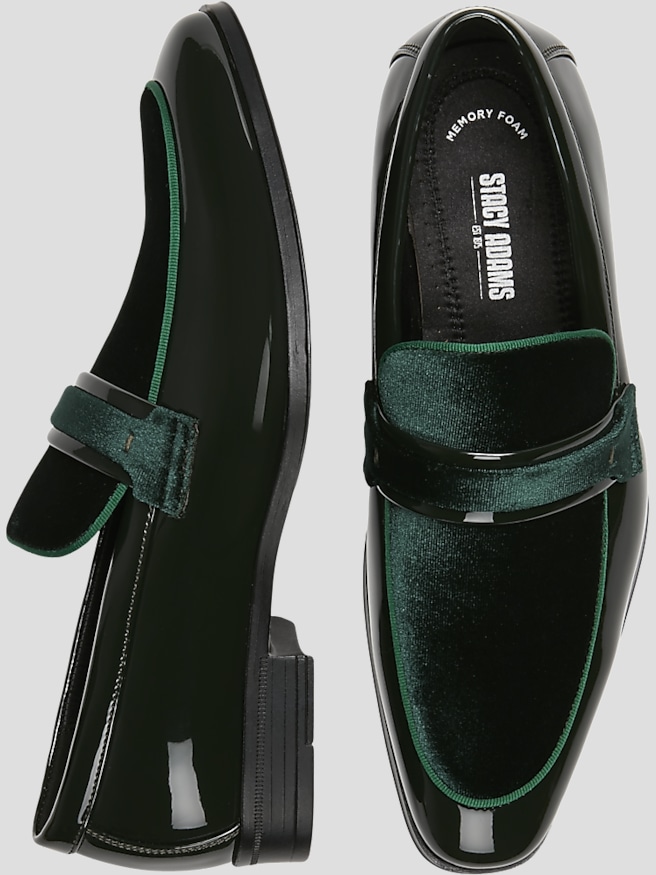
Olive green designer shoes offer an earthy alternative to black and brown, with a muted green tone that can feel understated or distinctive depending on the material, shape, and finish. Olive ranges from gray-green shades to deeper hues with brown undertones, giving the color enough depth to complement a broad menswear wardrobe. Smooth leather emphasizes clean lines and subtle variations in color, while suede softens the same shade with a matte, textured surface. Textile panels and mixed-material uppers can give sneakers a more relaxed, contemporary character. Across these styles, the appeal comes from the balance between an expressive color and a familiar silhouette: a streamlined loafer, a lace-up dress shoe, a monk strap, or a low-profile sneaker. Designer footwear often places particular emphasis on proportions, panel placement, finishing, and distinctive details, though the designer label alone does not establish how a shoe will fit or perform. An elongated toe creates a different impression from a rounded one, just as a slim leather sole feels visually lighter than a substantial rubber sole. Tonal stitching keeps the focus on the shape and color; contrasting welts, hardware, or laces make the design more noticeable. In a coordinated wardrobe, men's olive green shoes work especially well with cream, tan, charcoal, navy, chocolate brown, and dark denim. Olive suede loafers with stone-colored chinos and a navy blazer create a relaxed but considered combination for dinner or a business-casual gathering. Smooth leather lace-ups can give charcoal trousers a subtle point of distinction without relying on bright color. With dark jeans and a simple knit polo, an olive sneaker adds texture and depth while keeping the outfit grounded. The strongest combinations leave enough visual space for the footwear: clean trouser lines, restrained patterns, and a hem that does not bunch heavily over the upper help the shoe’s proportions remain visible.
Material and construction shape the experience of wearing olive green designer shoes as much as their appearance. Leather uppers can gradually conform to the foot, but their flexibility depends on the hide, thickness, lining, and finishing process. Suede has a softer surface that gives olive color a rich, almost shaded appearance, especially around seams and curves. Woven textiles and technical fabrics may reduce weight or add flexibility, although breathability and support depend on the complete construction rather than the upper material alone. Inside the shoe, smooth seams, a secure heel, and cushioning suited to the intended activity matter during a full day of wear. A pair worn mainly between a desk and a conference room faces different demands from footwear used for a commute with several blocks of walking. Rubber outsoles can provide useful traction and flexibility, while leather outsoles create a traditional dress-shoe profile; actual grip varies with tread, surface, and wear. Stitched and cemented constructions each have practical applications, and repair options depend on the specific design. For fit, the widest part of the foot should sit comfortably within the widest part of the shoe, with enough room for the toes to rest naturally rather than being pressed together. Lace-ups allow adjustment across the instep, while loafers depend more heavily on the relationship between the foot and the shoe’s fixed opening. Monk straps offer some adjustment, but buckle placement cannot compensate for an unsuitable shape. Trying footwear with the socks normally worn for that occasion gives a more useful sense of fit, and any usual orthotic should be considered at the same time. A little firmness in new leather is not the same as painful pressure, and an uncomfortable toe box should not be treated as something that will necessarily stretch into place. For dressier settings, a refined profile and restrained detailing generally complement tailoring more naturally than an oversized sole, while cushioned sneakers suit occasions where a relaxed dress code allows them.
Thoughtful care helps preserve both the olive color and the details that give designer footwear its character. Smooth leather benefits from gentle cleaning with products appropriate to its finish, followed by conditioning when recommended by the maker. Polish requires particular attention with green leather: a poorly matched tinted formula can alter the shade, while even a neutral product may change the sheen or deepen the color. Testing any treatment on an inconspicuous area helps reveal those effects before treating the whole upper. Suede calls for a different approach, with a suitable brush used gently to lift surface dust and restore the nap. Oils and conventional leather creams can flatten or stain suede, so care products should be specifically compatible with that material. Protective treatments are also finish-dependent and should never be assumed suitable for every upper. Textile sections, leather trim, and rubber components may each need separate cleaning methods, making the maker’s care directions especially useful for mixed-material designs. After cleaning, footwear should dry naturally away from direct heat. Shoe trees of an appropriate size can help leather shoes retain their shape, while allowing pairs time to air between wears supports freshness and gives absorbed moisture time to dissipate. Attention to worn heel edges, damaged stitching, and separating soles can also make repair decisions easier before damage becomes more extensive. These practical details matter whether the shoes are intended for regular office wear, occasional celebrations, or relaxed evenings out. Olive footwear can also make a thoughtful gift for someone who already enjoys earth tones, textured fabrics, or an alternative to conventional neutral shoes. Familiarity with the recipient’s preferred silhouette, usual size, and fit needs makes that choice more personal and practical than color alone. For the wearer building a coordinated wardrobe, olive offers distinction without demanding an entirely new set of clothes. A dark brown belt, a simple leather watch strap, or a textured jacket can echo its grounded character without matching it exactly, letting the shoes feel integrated rather than overly coordinated.