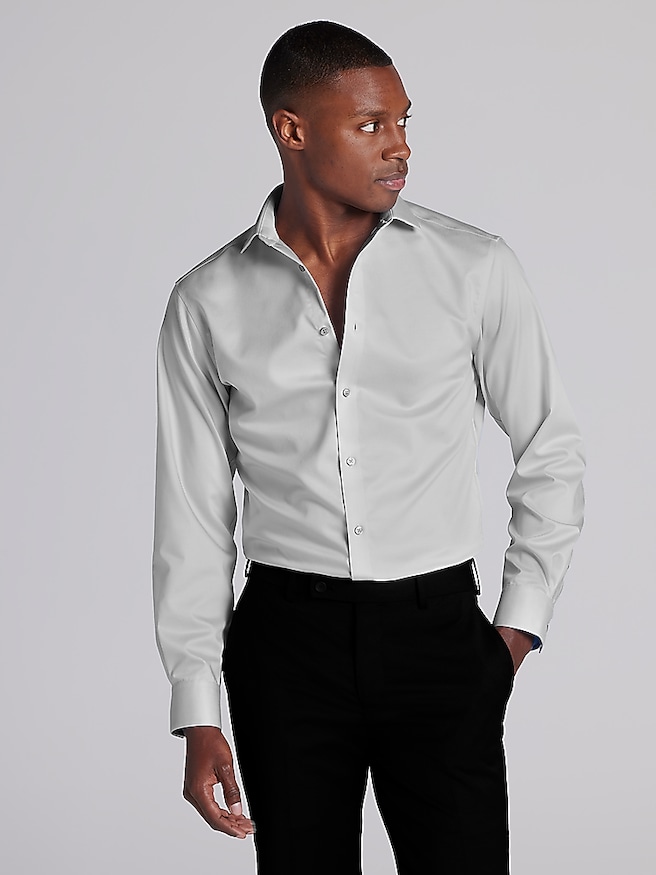
Office shirts provide a polished foundation for the workday, whether the schedule includes a client presentation, a team meeting, or several hours at a desk. Cotton, easy-care cotton blends, stretch fabrics, and wrinkle-resistant finishes are common considerations in work shirts because each can contribute something useful to a regular rotation. Cotton offers a soft feel and breathability, with a texture that varies according to the weave. Poplin typically has a smooth, closely woven surface that works well beneath a suit jacket, while twill has a subtle diagonal texture and often a slightly fuller drape. Oxford cloth has a more noticeable woven character, making it a natural match for chinos and less formal office settings. Cotton blends can combine a familiar feel with practical qualities such as shape retention or easier maintenance, depending on their fiber content and construction. Stretch fabrics allow some give when reaching for a conference room screen, sitting through a long meeting, or moving between appointments. That flexibility complements a good fit rather than replacing it; a shirt should still have enough room through the chest and shoulders to move without pulling. Wrinkle-resistant treatments can help minimize creasing, although they do not eliminate every fold or replace proper laundering. Fabric opacity matters, too, particularly with white and pale blue shirts worn without a jacket. A smooth undershirt close to the wearer’s skin tone can be less noticeable beneath light fabric than a bright white one. Collar structure, button attachment, and even stitching also influence how a shirt looks after repeated wear. A collar that lies neatly, a placket that stays flat, and seams that do not twist help maintain a composed appearance from the first appointment to the final conversation of the day. Together, these details give office shirts their everyday usefulness: a professional appearance supported by fabric and construction suited to regular wear.
Fit shapes the impression of an office shirt as much as color or pattern. A trim silhouette can sit neatly under a fitted jacket, while a roomier cut provides additional space through the torso for those who prefer a less close-fitting feel. Neither should create tension across the buttons or leave large folds gathered above the waistband. On a traditionally constructed shirt, the shoulder seams should sit near the edges of the shoulders, and the sleeves should allow comfortable movement without excessive fabric bunching at the elbows. Long sleeves generally look neat when the cuffs reach the wrist, with a small amount visible beyond a jacket sleeve when the arms are relaxed. The collar should button comfortably without pressing into the neck, especially when a tie is part of the dress code. Neck and sleeve measurements are useful for dress shirts, while shirts sized by familiar letter categories still benefit from checking the size chart and garment measurements. Length is another practical detail: a shirt intended to stay tucked needs enough fabric below the waistband to remain in place when the wearer sits or reaches. Color and pattern then establish the tone. White and light blue offer a straightforward foundation for navy, charcoal, and gray tailoring. Fine stripes and small checks introduce definition without becoming the focal point of an outfit, particularly when paired with solid trousers. A point collar creates a traditional profile, a spread collar leaves more room for a tie knot, and a button-down collar has a relaxed character that suits many business-casual settings. For workplaces where a tie and jacket are not required, men's short sleeve office shirts offer another silhouette to pair with chinos or tailored pants. The office dress code remains the deciding factor, since short sleeves are more appropriate in some workplaces than in others. Across these variations, clean proportions and a tidy neckline make an outfit look deliberate rather than overly complicated.
A dependable office wardrobe also accounts for what happens between wears. Care instructions deserve attention because two shirts with a similar appearance may need different washing, drying, or pressing methods. Machine-washable fabrics can simplify a routine, but the care label determines the appropriate cycle and whether tumble drying is suitable. Removing a shirt promptly after washing or drying, smoothing the placket and collar, and placing it on a supportive hanger can help limit set-in wrinkles. When ironing is permitted, the temperature should match the fabric rather than defaulting to the highest setting; stretch fibers and certain finishes may require particular care. Collar edges, cuffs, and the underarm area benefit from regular attention, since these are common places for residue and discoloration to develop. Treating marks promptly according to the garment’s instructions is generally more manageable than allowing them to settle through several wears. Durability depends on more than fabric thickness. Neat seams, firmly attached buttons, and appropriate laundering all contribute to how well a shirt holds its shape and appearance. Rotating shirts also gives each one time to be cleaned and prepared without repeatedly rushing the process. These everyday habits matter for commuters, desk-based professionals, instructors, and anyone whose work calls for a consistently presentable appearance. A straightforward shirt can move from an ordinary workday to a job interview or professional networking event when paired with the appropriate trousers, jacket, and shoes. Office shirts can also make thoughtful gifts for a graduate entering a first professional role or someone establishing a work wardrobe, especially when the recipient’s measurements, preferred fit, and workplace expectations are known. Familiar colors and manageable care requirements are often more useful than an unfamiliar pattern chosen only for novelty. The most practical work shirts fit the person, suit the setting, and remain comfortable through the actual motions of the day, from fastening a seat belt on the commute to leaning forward at a desk. That balance of appearance, movement, and upkeep makes them a lasting part of a professional wardrobe.