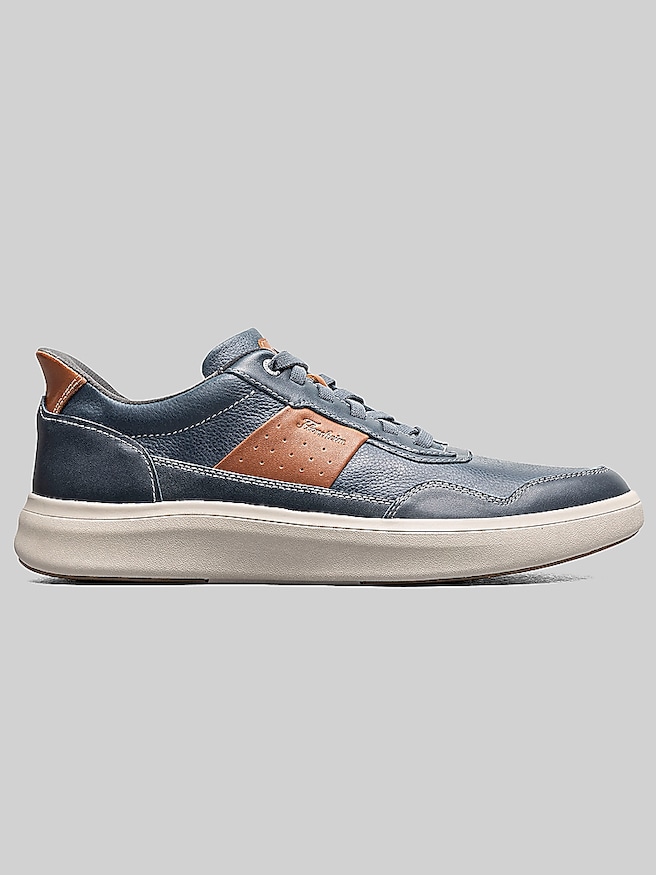
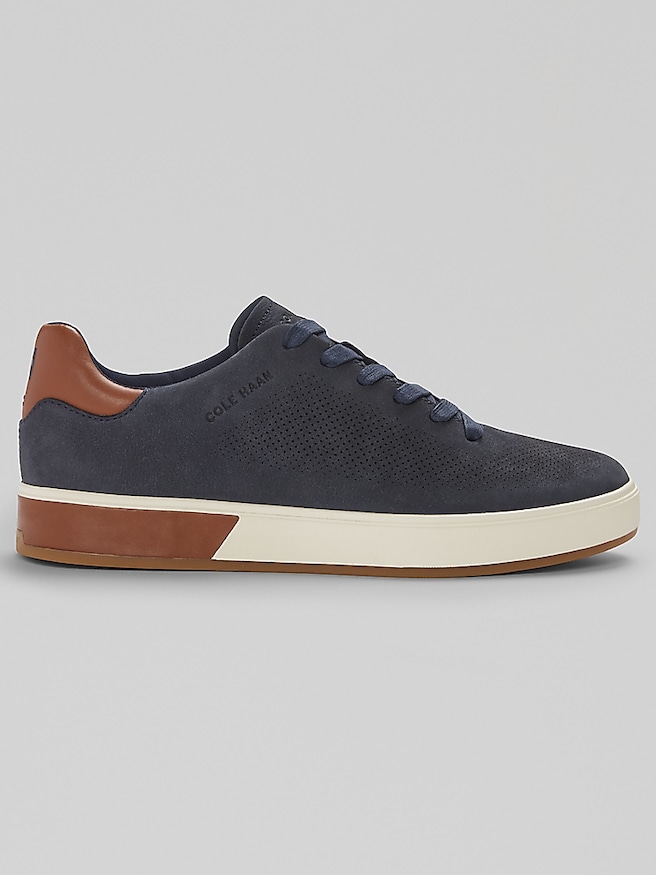
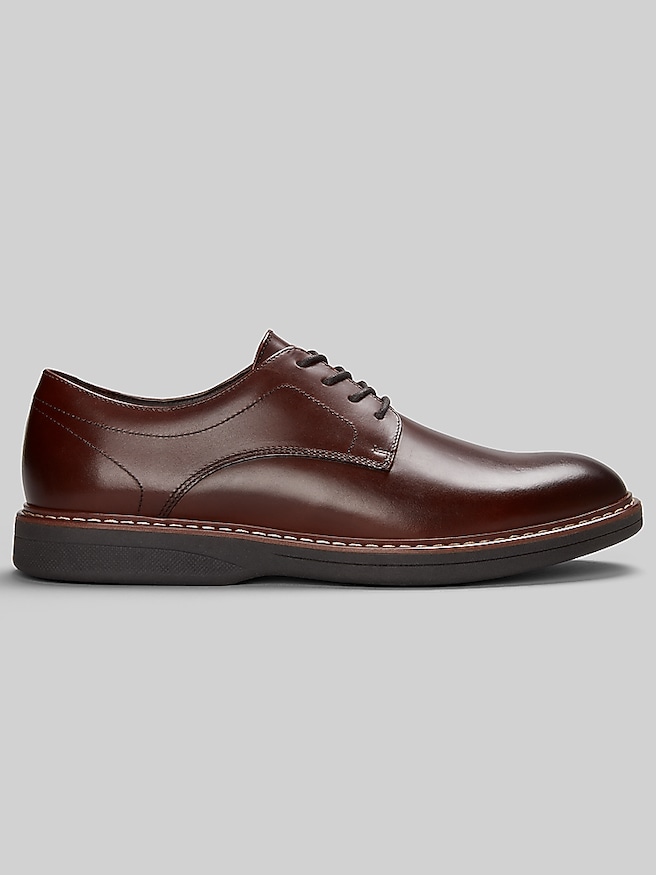
No lace sneakers bring the familiar comfort and casual character of sneakers to a shape that slips on without a knot to tie or loose ends to tuck away. The category includes several approaches to that convenience: elastic panels beside the tongue, stretch-knit uppers that flex around the foot, and openings shaped to hold the heel while allowing easy entry. Each creates a slightly different look, from a clean, low-profile shoe with few visible seams to a sportier silhouette with a more substantial sole. What connects them is a straightforward design that works with everyday clothing without drawing much attention to the fastening. A smooth leather upper can sit neatly beneath tapered chinos, while canvas adds a relaxed texture beside denim. Knit has a softer, more athletic appearance that pairs naturally with joggers and casual pants. Color and proportions matter as much as material. A dark, understated sneaker keeps the transition from pants to shoes quiet; a light-colored pair creates a clearer contrast and makes the footwear a more noticeable part of the outfit. Slim soles tend to look less bulky beneath narrow pant openings, while thicker soles balance fuller cuts. For an office with a casual dress code, no lace sneakers can complement an untucked button-down or a knit polo without making the outfit feel overly sporty. They also make sense for a day that moves from a commute to lunch, errands, and a relaxed dinner, especially when changing shoes would be inconvenient. With tailored clothing, a restrained shape and well-kept upper usually look more deliberate than a heavily athletic design, though the setting still determines whether sneakers are appropriate. Their appeal is not limited to one style of dresser. Men who prefer uncomplicated outfits, travelers who want an easy shoe for hotel stays, and anyone who dislikes stopping to retie laces may appreciate the same practical detail: a secure fit that does not depend on tying a bow.
Materials influence how no lace sneakers feel, how they hold their shape, and how much attention they need between wears. Leather offers a structured surface that can soften with use, although it should not require a painful break-in period to become comfortable. Suede brings a matte texture that works well with casual tailoring, but its raised surface needs different care from smooth leather. Canvas feels relaxed and familiar, while knit can provide flexibility across the top of the foot; how breathable either feels depends on the weave, lining, and overall construction. Inside the shoe, lining texture, seams, and the edges of elastic panels can be just as important as the exterior. A seam that rubs against the little toe or an opening that presses firmly across the instep can become distracting during an ordinary afternoon. Because there are no working laces to fine-tune the fit, the relationship between length, width, and instep height deserves particular attention. The heel should stay reasonably settled during walking, the toes should have room to move, and the upper should feel secure without squeezing. A shoe that slips at the heel is not necessarily improved by choosing a shorter size, particularly if that leaves the toes crowded. Trying on the footwear with the socks intended for everyday wear gives a more useful impression than trying it on barefoot when socks will normally be worn. Walking, turning, and taking a few steps at a quicker pace can reveal movement that standing still does not. Underfoot, cushioning may make hard floors more comfortable, but softness alone does not establish support. Sole flexibility, a stable heel area, and the way the shoe follows the foot all contribute to the experience. For someone who spends much of the day standing or uses an orthotic, interior depth and whether the footbed is removable can matter more than the ease of slipping the shoe on. Lace-free construction is a fastening choice, not a guarantee of suitability for running, training, or specialized workplace requirements.
Durability depends on both construction and the habits that surround daily wear. The heel lining and collar receive repeated friction as the foot enters and leaves the shoe, while elastic sections must recover after stretching. Using a shoehorn rather than crushing the back under the heel helps preserve the shape of a slip-on sneaker and keeps entry from becoming a source of unnecessary wear. Pulling from a reinforced tab, when present, is gentler than tugging repeatedly on a thin edge. Outsole wear is another practical consideration: tread gradually becomes less defined, and uneven wear can change how the shoe feels during walking. No lace sneakers intended for everyday use are best understood as casual footwear unless their stated specifications support a more specialized purpose. Care should follow the material and the maker’s directions rather than a single cleaning method for every pair. Smooth leather generally benefits from wiping away surface dirt and using an appropriate leather-care product; suede calls for a suitable brush and treatments intended for its texture. Canvas and knit may need gentle spot cleaning, and a fabric upper does not automatically mean the entire shoe is machine washable. Letting footwear dry naturally away from direct heat helps protect its shape and bonded components. Giving the interior time to air out between wears also helps keep repeated use more comfortable. Appearance benefits from these small routines, particularly when sneakers are worn with crisp chinos or a casual jacket, where scuffed edges and flattened heels are more noticeable. The clean front of a no lace design offers a different visual effect from White Lace Up Sneakers, whose visible lacing adds detail and allows adjustment across the instep. Both belong in an everyday wardrobe, with the preferred fastening often coming down to fit and personal habits. As a gift, no lace sneakers can be a thoughtful choice for a partner who favors simple dressing, a dad who appreciates practical footwear, or a college student whose routine includes plenty of walking. Knowing the recipient’s usual size, width, and preferred silhouette makes that convenience far more meaningful than the absence of laces alone.