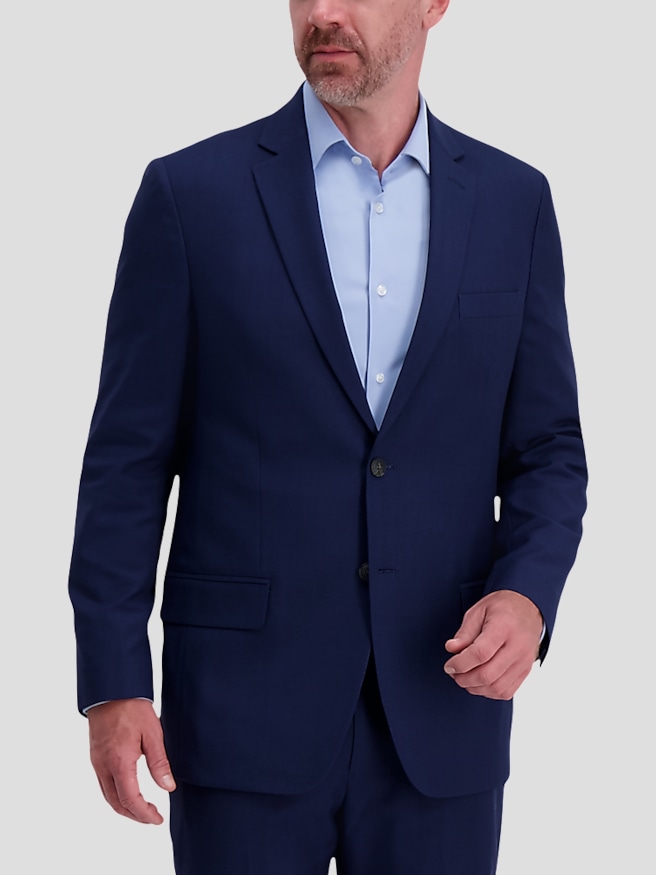
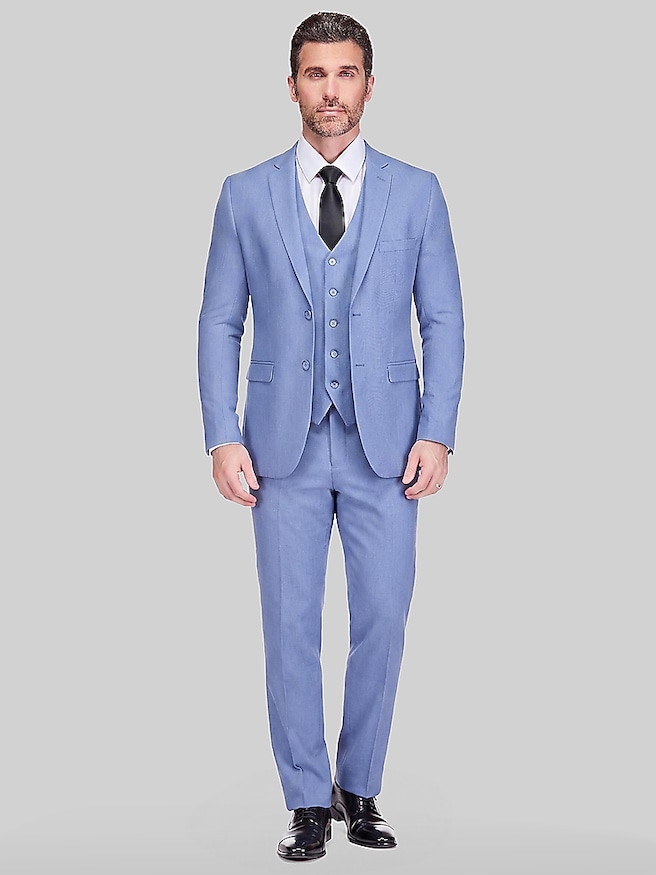
Navy suit combinations pair a dark blue suit with complementary shirts, ties, shoes, and accessories for business, weddings, and other dressed-up occasions. A white shirt, burgundy tie, and black leather oxfords create a crisp, formal-leaning look; a light blue shirt, textured navy tie, and dark brown shoes give the same suit a softer character. Navy works as a foundation because its depth supports both subtle contrasts and richer accents without competing with them. White brings the sharpest contrast, pale blue feels understated, and soft pink or lavender adds color while keeping the overall impression polished. For an interview or an important presentation, a solid shirt and a restrained tie pattern keep attention on the person wearing the suit. At a wedding or celebration, a small floral, paisley, or geometric tie can introduce more personality while remaining balanced against the dark jacket. Burgundy, forest green, silver-gray, and muted gold all complement navy, though the shirt and tie should remain distinct enough that neither disappears into the other. A navy tie can work with a navy suit when texture or a slight difference in shade gives the combination definition. Patterned shirts also have a place: a fine blue stripe pairs comfortably with a solid tie, while a small check benefits from a tie with a noticeably larger pattern. Black shoes give navy tailoring a sharper, more reserved finish, while dark brown leather adds warmth and works well for many office and wedding settings. Coordinating a leather belt with the shoes in a similar color family creates continuity; an exact match in finish is less important than a harmonious overall appearance. A pocket square provides another point of contrast without needing to duplicate the tie. White linen with a straight fold looks clean against navy, while a softly folded patterned square can pick up one accent color from the rest of the outfit.
Fabric and fit shape how these combinations look in motion, not just on a hanger. Worsted wool has a smooth surface and a natural drape that suit business meetings, ceremonies, and occasions that call for a polished finish. Wool blends can offer a balance of structure, resilience, and straightforward care, although performance depends on the full fiber composition and construction. Stretch fabrics may add ease through the shoulders, seat, and knees, particularly for someone who spends much of the day sitting, standing, or traveling between appointments. Cotton and linen bring more visible texture and a less formal character; linen also develops creases that are part of its appearance rather than a sign of poor fit. A smooth navy fabric supports crisp shirts and lustrous silk ties, while a more textured cloth pairs naturally with an Oxford-cloth shirt or a matte woven tie. Fabric weight, lining, and construction also affect how a jacket hangs and how substantial it feels. A clean fit begins at the shoulders, where the jacket should follow the body without extending outward or pinching inward. The chest and waist need enough room for comfortable movement, with lapels lying flat and the button closing without pronounced pulling. Shirt cuffs can show slightly below the jacket sleeves, creating a narrow, deliberate frame at the wrist. Through the trousers, a clean line means room to sit comfortably without excess fabric bunching at the seat or knees. Slim, tailored, and classic fits describe broad silhouettes rather than universal measurements, so the strongest choice is the one that complements the wearer’s proportions. Trouser length also changes the impression: little or no break looks sharper, while a modest break reads more traditional. Neat seams, secure buttons, and fabric that recovers after movement contribute to lasting wear, but even well-constructed tailoring benefits from small alterations that refine sleeve length, trouser hems, and the waist.
A coordinated vest adds another dimension to navy tailoring, creating a finished appearance even when the jacket comes off at a reception or dinner. A Navy Suit And Vest combination creates a continuous line through the torso, with matching fabric offering the most cohesive result. When pieces are intended to form a matching suit, consistent shade, weave, and finish matter; two fabrics described as navy can look noticeably different side by side. A vest should lie smoothly over the shirt and cover the trouser waistband without pulling across the buttons. The added layer often works best with a restrained shirt and tie, allowing the tailoring itself to provide the visual interest. For a less formal dinner or a workplace with a relaxed dress code, a navy suit can also work with an open-collar shirt and polished loafers, provided the shirt collar holds its shape beneath the lapels. The occasion still sets the boundaries: a navy business suit is not automatically a substitute for a tuxedo when an invitation specifies black tie. Keeping navy tailoring in good condition helps each combination retain its clarity. Following the care label, brushing away surface dust, and allowing the suit to air between wears can reduce unnecessary cleaning. A broad, shaped hanger supports the jacket’s shoulders, while properly hanging the trousers helps preserve their crease. Professional cleaning is best reserved for when it is needed, with pressing handled according to the fabric’s requirements. Wearing matching jacket and trousers together, and cleaning them together when appropriate, can help limit uneven changes in color and finish. Shirts, ties, and pocket squares also make thoughtful gifts for someone who already owns a navy suit, especially when chosen around familiar colors and occasions. A white shirt or a burgundy tie can give an established wardrobe another useful combination without changing its character.