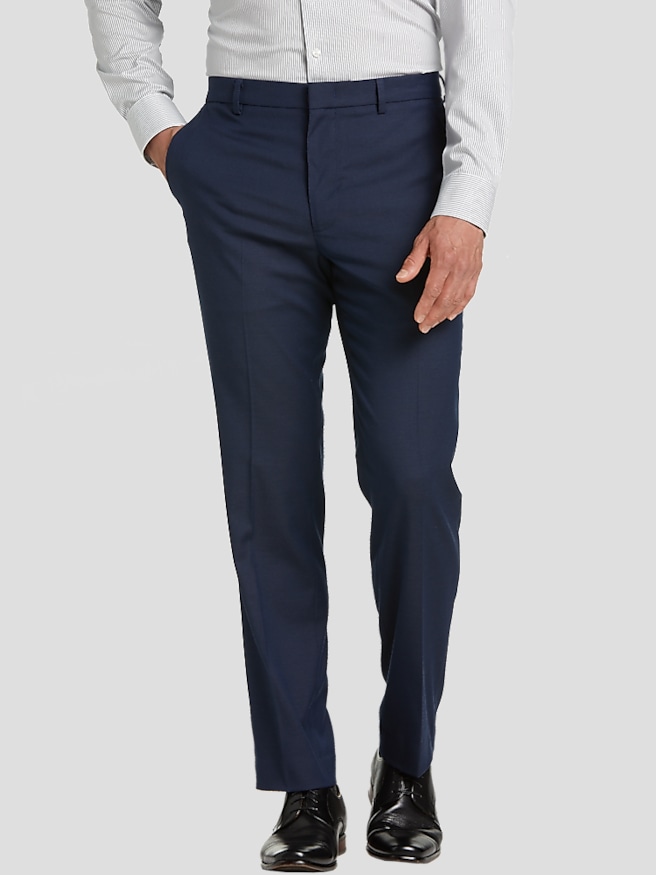
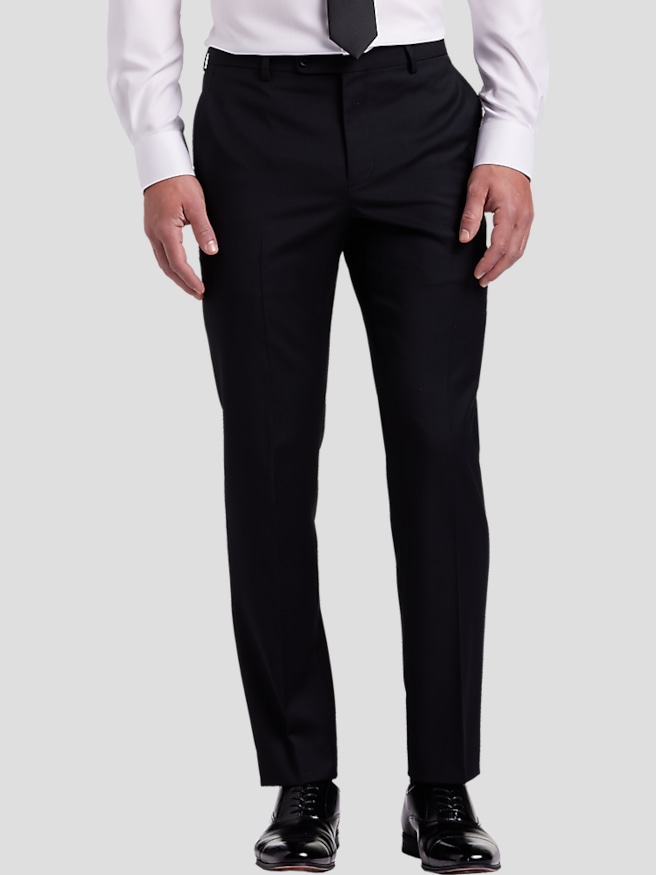
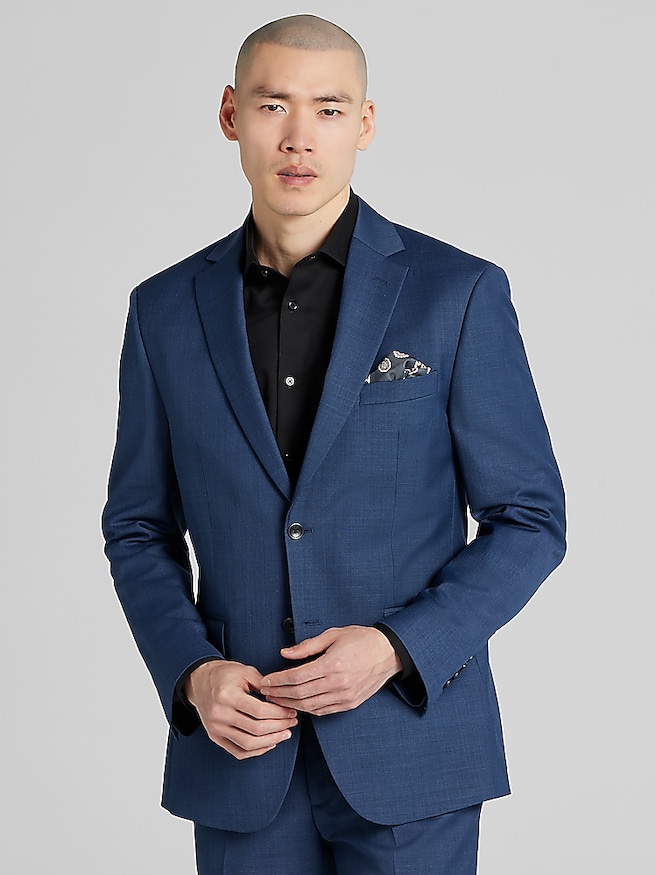
Navy blue suit pants are tailored trousers that bring a deep, versatile color to business attire, wedding outfits, and other dressed-up occasions. Worn with a matching jacket, they create the continuous line of a suit; paired with a contrasting sport coat or a neatly tucked shirt, they can also work as separates. Navy has enough depth to feel formal without the sharper contrast of black, making it easy to pair with white, light blue, pale pink, and subtle patterned shirts. A white dress shirt and dark tie give navy trousers a focused look for a presentation or interview, while an open-collar shirt can feel appropriate for a dinner reservation or a less formal office. The fabric and finish influence how dressy the pants appear: a smooth, finely woven cloth generally looks more formal than a visibly textured weave. The shade matters, too. Deep midnight navy reads differently from a brighter blue, particularly beside a jacket or under indoor lighting. For a complete suit, the closest match comes from coordinating pieces made in the same fabric and color rather than combining two garments described simply as navy. Browsing Men's Navy Blue Suits can help establish that coordinated look. When navy pants are worn separately, a clearly contrasting jacket in gray, tan, or a complementary pattern usually looks more deliberate than a near-match in another blue fabric. This flexibility makes navy suit trousers useful for professionals building a dependable work wardrobe, wedding guests dressing for a venue’s expectations, and graduates preparing for ceremonies and interviews. They also suit anyone who prefers a small group of coordinated clothes over outfits that work for only one occasion. The result depends less on adding accessories than on getting the proportions, fabric, and level of formality right.
Fabric composition and fit shape how navy blue suit pants look and feel through a full day of wear. Wool offers a refined drape and natural resilience, helping tailored trousers fall smoothly rather than cling to the legs. Fine wool can feel soft and fluid, although a finer fiber is not automatically more durable; the weave, cloth weight, construction, and care all contribute to longevity. Wool blends combine those characteristics with the properties of other fibers, while polyester blends can offer resistance to wrinkling. Elastane adds stretch, but the amount of movement also depends on the fabric construction and the cut. Stretch is helpful when sitting through a meeting or stepping into a car, yet it does not replace adequate room through the seat and thighs. A well-fitting waistband rests securely without digging in, and the front should lie relatively smooth rather than pull into horizontal lines. Slim-fit trousers generally follow the leg more closely, while classic fits provide a straighter, roomier profile. Athletic proportions can accommodate fuller thighs and a smaller waist, though fit labels are not standardized across clothing makers. The most useful comparison is the garment’s actual measurements against the wearer’s waist, seat, thighs, and preferred rise. Rise determines where the waistband sits and affects both comfort and the balance between the shirt and trousers. Pleats can provide additional room through the upper leg, while a flat front offers a cleaner visual surface; neither detail guarantees a particular fit. At the hem, little or no break creates a crisp, shorter line, while a slight break lets the fabric rest gently on the shoe. Excess length can pile around the ankles and interrupt an otherwise polished silhouette. Trying trousers with the shoes intended for the outfit gives a more accurate sense of the finished length. Unfinished hems leave room for that adjustment, and alterations can refine the waist or length within the limits of the garment’s construction.
Finishing details help distinguish navy suit pants intended for regular office use from trousers chosen mainly for occasional events. Pocket openings should sit flat, the closure should fasten comfortably, and the seams should remain smooth when standing and sitting. Pocket bags that stay contained and a waistband that holds its shape contribute to a neat appearance beneath a jacket. Partial lining can reduce friction against the legs, although comfort depends on the lining material and overall construction. For daily wear, keeping a phone, keys, and a thick wallet out of closely fitted pockets helps preserve the trouser line and reduces strain on the openings. Navy also gives footwear a clear role in the outfit: black leather shoes create a restrained, formal combination, dark brown adds softer contrast, and burgundy can introduce depth without a bright accent. A leather belt close in color to the shoes keeps the finish cohesive when the pants have belt loops. Care is equally important to the lasting appearance of dark tailored fabric. The care label determines whether professional cleaning or washing is appropriate, and stretch blends may require different treatment from traditional wool cloth. Excessive heat and direct pressure can leave shine on dark fabric, so pressing methods should suit the material, with a pressing cloth used when appropriate. Letting trousers air after wear, brushing away surface dust with a suitable garment brush, and hanging them neatly can help maintain their appearance between cleanings. A broad trouser hanger or properly positioned clips can minimize unwanted folds, while storage away from direct sunlight helps limit fading. Rotating between pairs reduces repeated friction at the seat, knees, and hems. With a comfortable fit, an appropriate fabric, and consistent care, navy blue suit pants can remain a dependable foundation for everything from a routine workday to an occasion that calls for a complete suit.