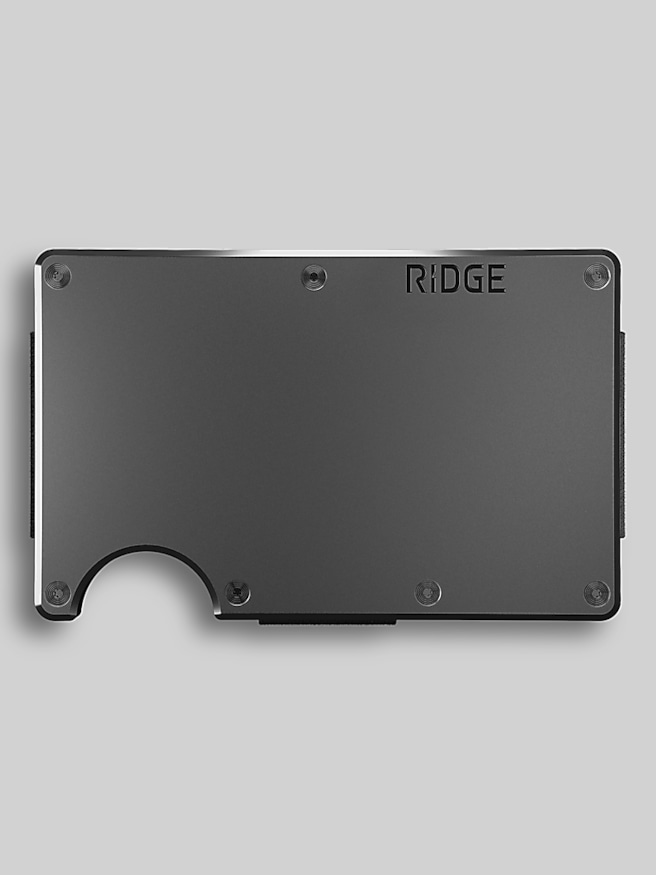
Modern men's wallets bring a slimmer profile and more deliberate organization to an accessory used throughout the day. The category spans minimalist leather cardholders, compact bifolds, metal card cases, and designs with pop-up mechanisms that make cards easier to reach. Their shared purpose is straightforward: keep payment cards, identification, and a manageable amount of cash together without creating unnecessary bulk. A cardholder suits someone who pays mostly by card and wants a clean outline in a front pocket, while a streamlined bifold leaves more room for folded bills and a few additional essentials. Neither format needs to feel overbuilt to be useful. Well-proportioned compartments, accessible openings, and a closure that stays secure can matter more than a long list of features. Some mechanical cardholders raise cards in a staggered arrangement, making it easier to identify the right one at a checkout counter instead of pulling out the entire stack. A money clip or elastic band can hold folded bills separately, although that arrangement feels distinct from a traditional full-length currency compartment. For someone who regularly carries cash, the way bills fit deserves as much attention as card capacity. A wallet should accommodate its normal contents without bowed panels, strained stitching, or cards pressed so tightly together that removing one becomes a struggle. Advertised capacity is only part of that picture, since embossed cards and folded receipts add thickness quickly. RFID-blocking construction, when specified, is designed to limit contactless scanning of compatible cards, but it does not replace ordinary precautions against lost cards or account fraud. The strongest modern designs balance useful details with simplicity. A wallet that opens smoothly at the coffee counter, slips back into a pocket without catching, and keeps its contents organized has a practical advantage that extends well beyond its appearance. Even a familiar bifold can feel modern when excess layers are removed and the pocket layout reflects what someone actually carries.
Material gives a wallet much of its character, from the feel of the exterior to the way its edges respond to repeated handling. Men's Leather Wallets offer the familiar combination of flexibility, texture, and an appearance that can gain character with use. Full-grain leather retains the natural grain surface and may show subtle markings, while top-grain leather is typically finished for a more uniform appearance. Neither description alone determines how a wallet will perform; leather thickness, construction, lining, and finishing all contribute to its feel and longevity. A softly structured leather cardholder may settle comfortably into a pocket, while a firmer bifold can retain a more defined shape. Smooth finishes create a restrained look alongside tailored clothing, and pebbled textures add visual depth while sometimes making small surface marks less noticeable. Black, brown, and deeper neutral shades work across a broad wardrobe, with edge paint and stitching either blending into the exterior or adding quiet contrast. Metal cardholders introduce another approach, using a rigid shell rather than flexible panels to maintain their shape. Their durability depends on more than the outer material: hinges, release levers, bands, and internal retention components all experience repeated use. Fabric and synthetic constructions can provide lightweight alternatives, though abrasion resistance and care requirements vary by material. Across these styles, neat stitching, securely finished edges, and compartments that hold cards without excessive force are useful signs of thoughtful construction. Everyday care is generally modest but worthwhile. Leather benefits from a soft cloth, prompt attention to moisture, and occasional use of a suitable conditioner when the care instructions recommend it. Soaking, direct heat, harsh cleaners, and prolonged contact with wet surfaces can damage finishes or distort the shape. Metal and synthetic exteriors also benefit from gentle cleaning according to their care directions, especially around moving parts where lint can collect. Keeping a wallet away from loose keys helps reduce avoidable scratches, while removing old receipts prevents unnecessary pressure on seams and closures.
The best fit for a modern wallet depends on both pocket space and daily routine. A narrow front pocket in tailored trousers leaves little room for a thick stack of cards, making a low-profile design especially practical for office commutes, dinners, and occasions that call for a suit. A jacket pocket can accommodate another shape, but excess weight may pull at the fabric and interrupt an otherwise clean silhouette. Someone who moves between business clothing and jeans may appreciate a wallet that feels unobtrusive in either setting rather than one built around maximum capacity. For a commuter, easy access to a transit card can be more useful than extra compartments; for someone who frequently presents identification, a dedicated ID section may be worth the additional layer. Travel introduces its own considerations, including room for essential cards and currency without turning an everyday wallet into a document organizer. Keeping a wallet comfortably filled, rather than packed to its limits, helps preserve its shape and makes routine transactions less awkward. Size should be considered when the wallet is loaded, not just when it is empty, since several cards and a few bills can noticeably change its profile. The same attention to habits makes a wallet a thoughtful gift for a birthday, graduation, career milestone, or other personal occasion. A recipient who already carries a compact cardholder may value a refined version of that familiar format more than a larger design with unused features. Someone attached to a classic bifold may prefer updated proportions without giving up a dedicated bill compartment. Understated colors and restrained detailing are versatile choices when personal preferences are less certain, while distinctive texture or contrast stitching can suit someone whose accessories carry more personality. A well-chosen wallet supports those preferences without demanding a new routine. It becomes the small, dependable accessory reached for before leaving home, familiar in the hand and useful through countless ordinary moments.