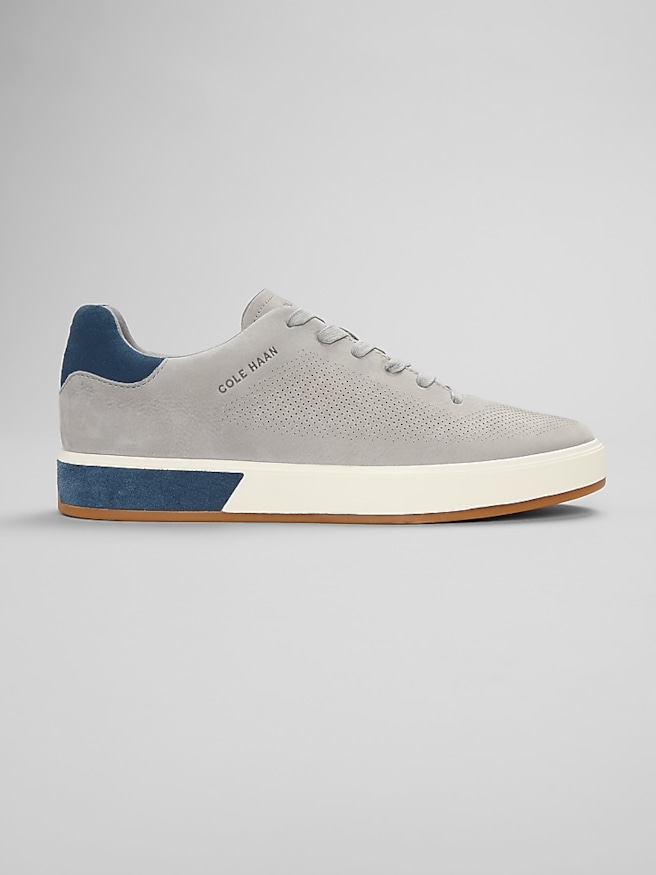
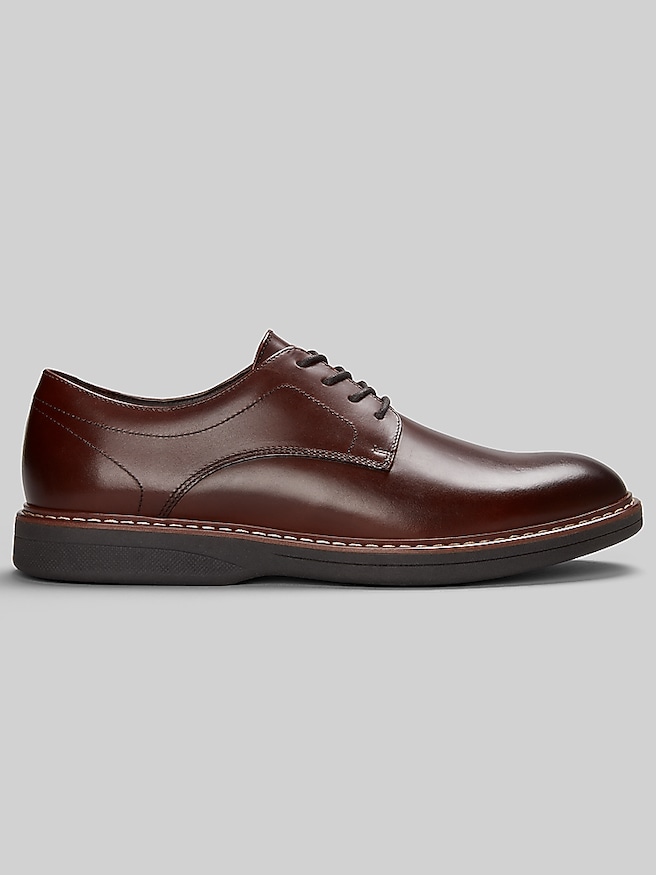
Modern men’s sneakers combine clean leather minimalism, retro running silhouettes, and technical, outdoor-inspired detailing in footwear designed for everyday dressing. The distinction is often in the shape: a low-profile sneaker sits close to the foot with a restrained sole, while a running-inspired design brings layered panels, curved lines, and more volume underfoot. Technical styling, sometimes associated with gorpcore, adds details such as textured mesh, substantial tread, and utility-influenced overlays. These looks serve different wardrobes, but each offers an alternative to traditional casual shoes. A simple leather silhouette can sit neatly beneath straight-leg chinos and an unstructured jacket, while a retro runner gives dark denim and a knit polo a more relaxed finish. Wider trousers generally work well with a little more substance at the sole; tapered pants tend to emphasize a slimmer shoe. Color changes the effect, too. White and off-white create a clear contrast with dark trousers, black keeps the transition quieter, and gray, navy, or brown can connect footwear to familiar wardrobe colors without making every piece match. Tonal stitching and discreet detailing keep attention on the overall outfit, while contrasting panels make the sneaker itself more prominent. For shoppers comparing these directions, Men's Stylish Sneakers provides another way to explore the relationship between casual footwear and personal style. The most useful choice is often the one that feels natural with clothing already worn regularly, whether that means jeans for dinner, chinos for a casual office, or relaxed trousers for a day spent moving between appointments. Sneakers can also accompany tailoring when the setting permits, particularly with an understated upper, a clean sole, and trousers that do not bunch around the ankle. That combination reads as intentional rather than as a substitute for dress shoes, though formal events and workplaces with traditional dress requirements may call for a different kind of footwear.
Materials influence both appearance and the way sneakers feel over repeated wear. Smooth leather offers a relatively uniform surface that can be wiped clean, while suede has a softer, textured appearance and needs more careful treatment to preserve its nap. Canvas gives casual sneakers a straightforward, easygoing character; mesh and knit constructions introduce flexibility and airflow, although their structure varies with the backing, lining, and overlays. Mixed-material designs use these differences visually as well as functionally, placing firmer panels around more flexible sections. Inside the shoe, lining texture, seam placement, cushioning, and heel construction can matter as much as the outer material. A cushioned insole may soften the initial feel, but cushioning alone does not establish whether a sneaker will remain comfortable through a long day. Fit starts with enough room for toes to rest naturally without sliding excessively inside the shoe. The widest part of the foot should sit comfortably within the forefoot, and the heel should feel secure without a collar that rubs. Laces can adjust how closely the upper holds the foot, but they cannot reliably correct a shoe that is too narrow or too short. Trying sneakers with the socks normally worn with them gives a more useful impression than testing them with an unfamiliar thickness. Walking across a room, turning, and taking a few stairs can reveal pressure points that standing still misses. Size labels are only a starting point because toe shape, width, interior volume, and the form used to construct the shoe all affect fit. Anyone using orthotics also needs adequate interior space and should confirm whether the original insole is removable. For commuting, travel, or an office routine that includes substantial walking, a secure fit and a comfortable sole are more important than choosing the softest-feeling pair during a brief try-on.
Intended use helps separate a lifestyle sneaker from footwear built for a particular sport. Running-inspired styling does not necessarily mean a shoe is engineered for distance running, just as a substantial outsole does not automatically make it suitable for demanding trails. Everyday sneakers are often chosen for walking between destinations, casual social plans, travel days, and workplaces where relaxed footwear fits the dress code. Grip depends on the outsole material, tread pattern, surface, and wear, so an aggressive-looking sole is not a guarantee of traction everywhere. Durability also comes from the whole construction rather than a single feature: the strength of the upper, reinforcement at stress points, outsole attachment, and the way the shoe fits all contribute. Scuffing near the toe and wear along the heel are common signs of regular use, while uneven outsole wear can affect how stable a pair feels. Care should follow the material and the manufacturer’s instructions. Loose dirt is generally easier to remove before it becomes embedded; a soft brush suits many textured surfaces, while smooth leather often responds to a lightly dampened cloth and an appropriate cleaner. Suede needs tools and treatments intended for its finish, and mixed-material sneakers require attention to the most delicate component. Machine washing is not a universal solution, even for casual styles. Allowing shoes to air-dry away from direct heat, loosening the laces after wear, and alternating pairs can help interiors dry between outings. Clean laces and tidy sole edges also make a noticeable difference when sneakers accompany more polished clothing. As a gift, modern sneakers can suit someone starting a casual-office job, building a versatile wardrobe, or replacing a well-worn everyday pair. Familiarity with the recipient’s preferred fit, usual size, and most-worn colors makes that choice more personal. A restrained silhouette can become a dependable wardrobe staple, while a layered runner or textured design may better suit someone who treats footwear as the focal point of an outfit.