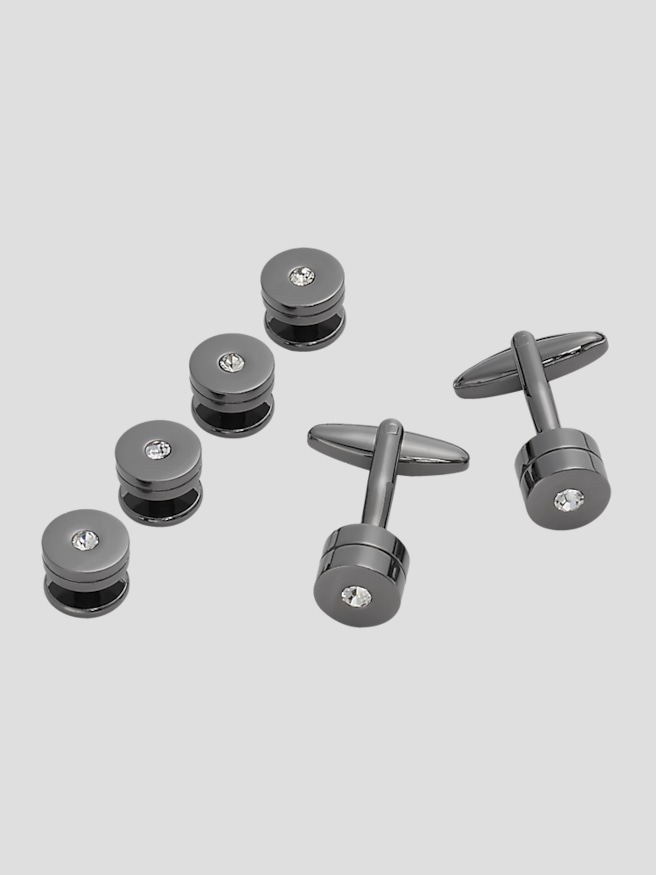
Metallic rings are jewelry defined by the character of their metal, from a bright, reflective polish to a muted brushed surface. Their appeal comes from a balance of substance and simplicity: even a plain band can add a distinct finishing touch without competing with the rest of an outfit. Silver-tone finishes tend to look crisp beside navy tailoring, white shirts, and gray knits, while gold-tone finishes bring a richer contrast to deep blue, brown, and cream. Dark metallic finishes create a more understated effect, especially when paired with a black watch dial or dark leather accessories. The shape matters just as much as the color. A narrow band adds a small point of light at the hand, while a broad band has a stronger visual presence. Flat profiles feel clean and architectural; domed surfaces catch light more softly. Beveled edges, recessed lines, and contrasting textures give a ring definition without relying on elaborate decoration. Signet shapes offer another approach, with a defined face that can feel traditional or contemporary depending on its proportions. For a darker interpretation, Men's Black Rings provide a useful point of comparison when considering contrast, finish, and overall style. A ring does not need to match every metal detail in an outfit exactly. Repeating one tone through a watch case, belt buckle, or cuff links usually creates enough connection, while a deliberate mix can look relaxed and personal. With a business suit, a smooth band can keep the effect restrained. With denim and an open-collar shirt, a textured surface or stronger silhouette can feel equally natural. The most versatile choice is often one that reflects the wearer’s usual accessories rather than a look reserved for a single occasion.
The material beneath a metallic finish affects weight, comfort, maintenance, and how the ring changes with wear. Stainless steel is valued for its strength and resistance to corrosion, though its exact alloy composition matters for anyone with a metal sensitivity. Titanium offers a relatively light feel for its size and good corrosion resistance, making it appealing to someone who prefers less weight on the hand. Tungsten carbide, a hard composite used in jewelry, feels noticeably substantial and resists scratching well, but that hardness does not make it unbreakable; a sharp impact can cause chipping or fracture. Sterling silver has a familiar luster and can develop tarnish that calls for appropriate cleaning. Gold alloys vary in hardness and color according to their composition, so the karat designation alone does not describe every aspect of durability. Plated finishes also deserve attention because the visible surface is a layer over another material, and repeated friction can gradually reveal the metal beneath it. No metallic ring is completely scratchproof, and a mirror polish generally shows fine marks more readily than a textured finish. Fit is equally important to everyday satisfaction. A ring should sit securely without pinching and pass over the knuckle with modest resistance rather than sliding off freely. Wider bands cover more of the finger and may feel tighter than narrow ones at the same stated size, making a measurement taken with a comparable width more useful. Rounded interior edges can soften the feel against the skin, especially on a substantial band. Finger size also fluctuates through the day, so a comfortable fit leaves room for normal changes without becoming loose. Anyone who expects to adjust a ring later should consider the material early: some precious-metal bands can be resized, while titanium and tungsten carbide generally cannot be resized through conventional methods. These distinctions matter more to long-term comfort than appearance alone.
Everyday use gives metallic rings their personal character, but thoughtful care helps preserve both their finish and their fit. A soft cloth removes fingerprints and light surface residue without unnecessary abrasion. For many unembellished metal rings, mild soap, lukewarm water, and thorough drying are suitable for routine cleaning, provided the maker’s care directions allow it. Plating, decorative inlays, stones, and specialized surface treatments may need a gentler approach, so one cleaning method should not be assumed suitable for every construction. Harsh chemicals, abrasive cleaners, and prolonged contact with chlorine can damage certain metals or finishes. Separate storage in a soft pouch or a lined compartment also limits rubbing against harder jewelry. A ring worn at a desk encounters different demands from one worn while lifting weights, handling tools, or working with equipment. Removing jewelry for activities that create pressure, impact, or a catching hazard protects the hand as well as the ring; workplace safety requirements should always take priority over styling. For celebrations, metallic rings can complement wedding attire, mark an anniversary, or acknowledge a graduation or another meaningful achievement. As a gift, the strongest choice usually begins with the recipient’s habits: the metal tones already worn, the preference for a light or substantial feel, and whether jewelry tends to be subtle or expressive. Accurate sizing is especially valuable for materials that cannot be conventionally resized. Engraving, where the design and material permit it, can add meaning without changing the outward appearance, although adequate space and legibility remain practical considerations. For someone wearing a ring for the first time, a smooth profile with minimal projection may be easier to incorporate into daily routines than a taller, more detailed design. Whether chosen as a symbol of commitment, a milestone gift, or a personal accessory, a metallic ring works best when its proportions, construction, and upkeep suit the life it will accompany.