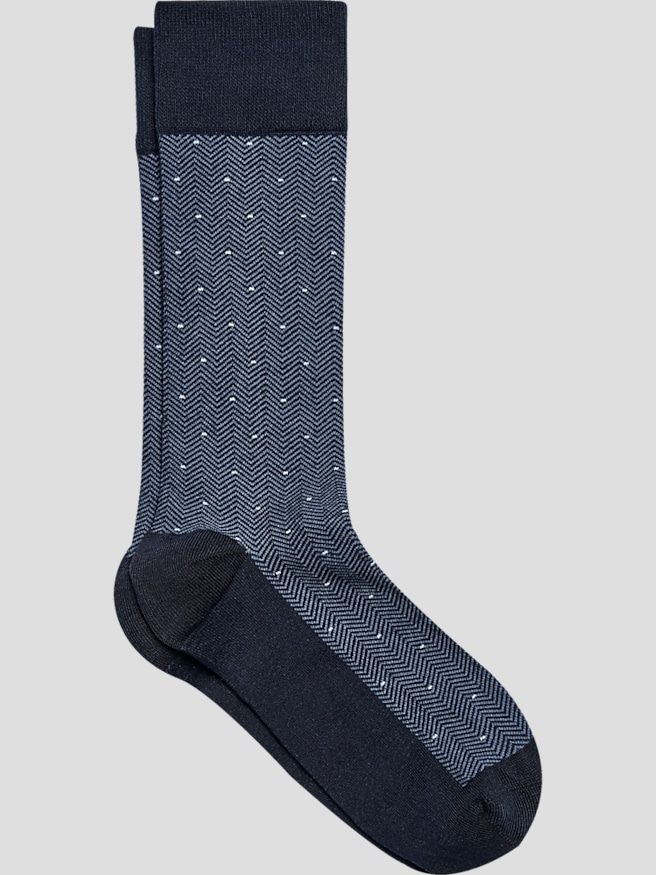
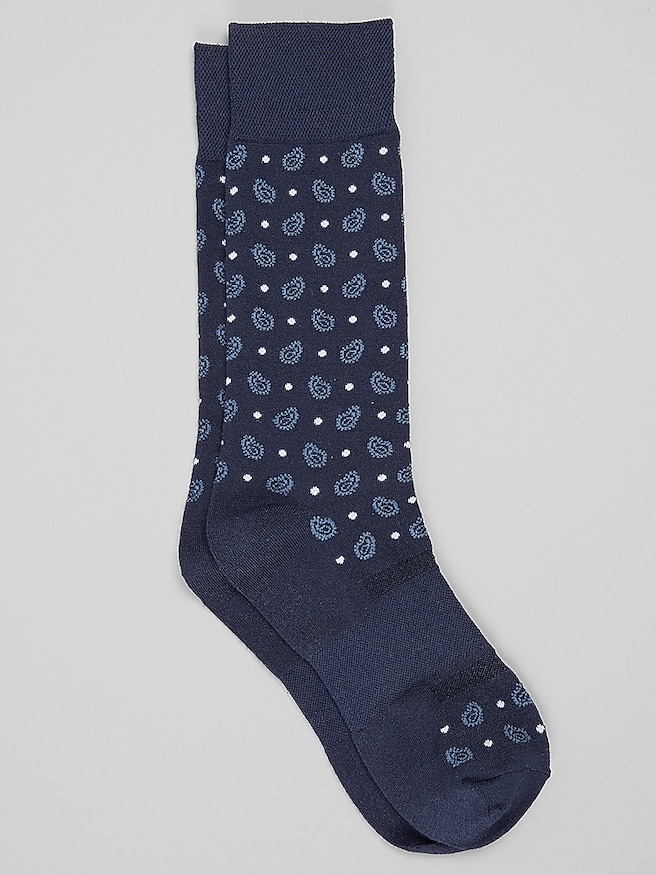
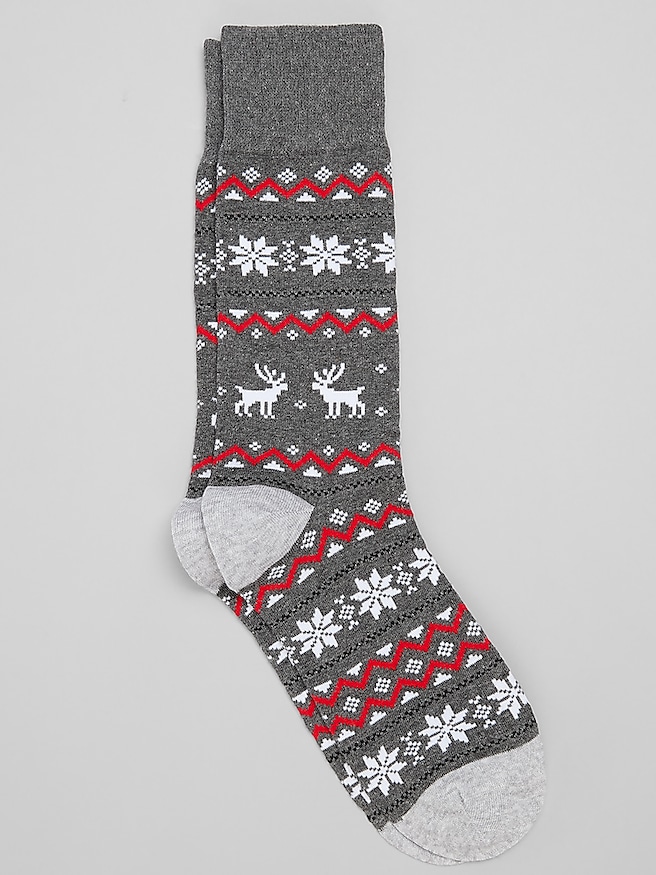
Men’s socks are everyday wardrobe essentials that provide a comfortable layer between the foot and the shoe while adding a finishing detail to an outfit. Dress socks, casual socks, and low-profile styles serve different purposes, with the most suitable choice depending on footwear, trouser length, and the amount of cushioning desired. Fine-gauge dress socks have a smooth, relatively thin construction that fits comfortably inside close-fitting leather shoes without crowding the toes. Crew socks offer a familiar mid-calf silhouette for everyday dressing, while over-the-calf socks provide more coverage beneath tailored trousers. That extra length matters when sitting across a conference table or crossing a leg at a wedding reception, when trouser hems naturally rise. No-show socks sit below the opening of compatible shoes, creating an exposed-ankle look while maintaining a layer of fabric against the foot. Their effectiveness depends on the shape of the shoe, since a liner that disappears inside a loafer may remain visible in a lower-cut shoe. Color and pattern also influence how socks fit into a wardrobe. Navy, charcoal, black, and brown create understated combinations with tailored clothing, while stripes, small geometric patterns, and textured knits add interest without dominating an outfit. Matching socks closely to trousers creates a more continuous visual line from the hem to the shoe. A contrasting pair makes the transition more noticeable and can echo a color in a tie, pocket square, or shirt. With a navy suit and brown leather shoes, for example, navy socks keep the focus on the tailoring, while a restrained burgundy pattern adds personality when the wearer sits down. Ribbing can give a solid color more depth, and a small repeating motif may appear nearly solid from a distance. These details make men’s dress socks useful for office wardrobes, interviews, celebrations, and other settings where even a brief glimpse at the ankle contributes to the overall impression.
Sock materials affect softness, moisture handling, shape retention, and the way fabric feels inside footwear. Cotton is valued for its familiar soft hand and ability to absorb moisture, making cotton blends a common foundation for everyday socks. Because absorbed moisture can remain in the fabric, cotton content alone does not establish how quickly a sock will dry. The complete fiber blend and knit construction matter. Wool, including fine merino wool, can absorb moisture vapor and offers a soft, resilient option in suitable blends; the feel depends on fiber quality, yarn thickness, and finishing. Synthetic fibers such as polyester and nylon can contribute durability, lighter construction, and moisture-management properties, while small amounts of elastane or spandex help socks stretch and recover their shape. Moisture-wicking performance depends on the fabric’s design rather than simply the presence of one fiber. A smooth toe seam can reduce the noticeable ridge across the toes, and cushioning beneath the heel or forefoot can soften contact with the shoe. More cushioning is not automatically more comfortable, however: a thick sock inside a snug dress shoe can reduce usable space and create pressure. A thinner pair may suit that same shoe better, while a roomier boot or casual shoe may accommodate a denser knit. Fit is equally important. Sock sizing generally corresponds to a range of shoe sizes, but the heel pocket should still settle around the heel rather than pull beneath the foot or climb toward the ankle. Excess fabric can bunch inside a shoe, while an undersized sock can strain across the toes and slip out of position. The cuff should hold the sock securely without feeling sharply restrictive. Ribbed construction and elastic recovery can help maintain that balance, although comfort varies with calf shape and personal preference. Low-profile socks may also use a heel grip to help resist slipping. Across styles, a stable fit means less time adjusting cuffs, smoothing wrinkles, or retrieving a liner that has worked its way beneath the heel during an ordinary day.
Intended use helps explain the differences among socks that might look similar when folded. Someone spending a full day in dress shoes may prefer a lightweight, smooth knit with enough coverage to remain neat beneath trousers. A commuter moving between sidewalks, public transportation, and an office may value secure cuffs and reinforced high-wear areas. For casual dressing, a textured crew sock can complement jeans, chinos, or boots without the fine, sleek finish associated with formal footwear. Occasion dressing calls for attention to both appearance and comfort, particularly when a ceremony is followed by several hours of standing, conversation, and dancing. Socks also make practical gifts for fathers, partners, graduates, and groomsmen, especially when the colors and patterns suit the recipient’s established wardrobe. Familiar neutrals are easy to coordinate, while a subtle motif can reflect an interest or personality without becoming difficult to wear. Long-term usefulness depends partly on construction and partly on care. Reinforcement at the heel and toe can help address areas exposed to repeated friction, but no knit is immune to abrasion from rough shoe interiors, long toenails, or a poor fit. Rotating pairs gives each one time to be cleaned and fully dried between wears. Following the care label is important because cotton blends, wool blends, and stretch fibers may have different washing and drying requirements. Excessive heat can affect elasticity or cause shrinkage in some fabrics, and harsh laundering can change softness and surface appearance. Keeping pairs together during washing makes everyday dressing simpler, while checking for thinning fabric catches wear before a small weak spot becomes a hole. Related categories such as Men's Fall Socks offer another starting point for coordinating texture and color with a complete outfit. Whether nearly hidden beneath a trouser hem or visible above a casual shoe, thoughtfully selected socks bring together fit, fabric, coverage, and personal style in a detail that gets used every day.