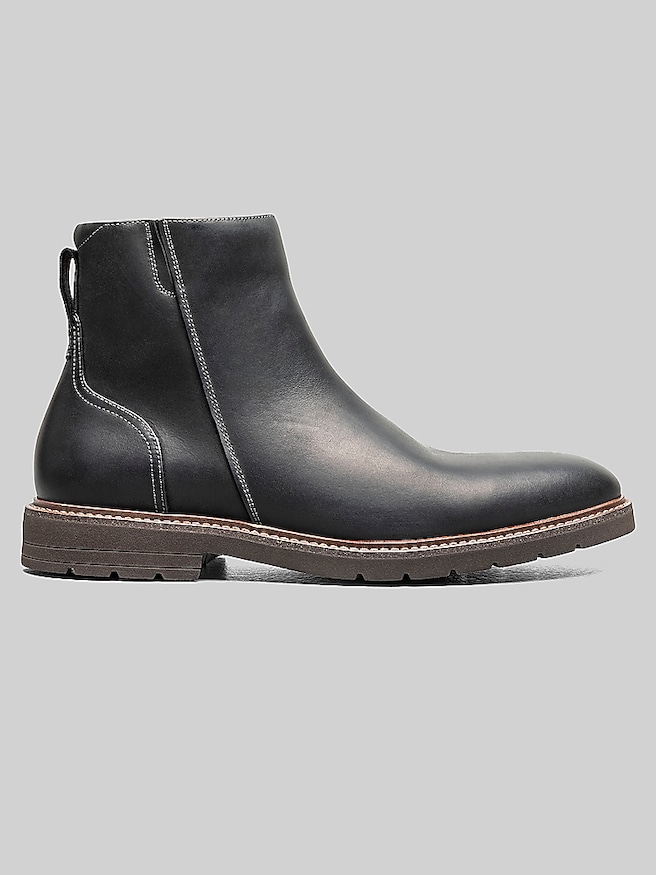
Men's zip boots bring the substantial feel of a boot together with a closure that makes getting dressed less complicated. Instead of adjusting laces, a zipper opens the shaft so the foot can slide in, then closes to hold the boot around the ankle. That clean construction gives the upper an uninterrupted shape, whether the design has a slim profile suited to tailored clothing or a broader toe and heavier sole that looks at home with denim. Zipper placement affects both appearance and convenience: an inside zipper tends to stay discreet, while an exposed outer zipper can become part of the design. A leather tab or protective backing behind the zipper can help keep the hardware from pressing directly against the ankle or catching a sock. Materials make an equally noticeable difference. Smooth leather offers a polished surface that works well with dress trousers, and its natural creases can develop character with regular wear. Full-grain leather retains the grain of the hide, while other leather finishes may have a more uniform appearance. Suede has a softer, textured finish that gives a simple boot a relaxed look without making it feel unfinished. Synthetic uppers offer another construction option, with comfort and longevity depending on the material and how the boot is assembled. Inside, the lining, footbed, and shape of the heel influence how the boot feels over the course of a day. A supple lining can reduce friction, while cushioning underfoot helps soften contact with hard floors. The outsole also changes the overall character: a slimmer sole keeps the profile close to a dress shoe, while a thicker rubber sole adds visual weight and may provide more cushioning. Those distinctions matter when choosing footwear for a commute, a desk-based workday, or an evening that includes walking between several stops. The best match balances the desired appearance with the support, flexibility, and closure that suit the wearer's routine.
The appeal of zip boots is especially clear in a wardrobe built around pieces that need to work in more than one setting. A dark, smooth-leather pair with a restrained toe shape can sit neatly beneath tailored trousers, giving a blazer and button-down shirt a grounded finish. With straight-leg jeans and a knit polo, the same general silhouette feels less formal while still looking considered. Suede and subtly textured leather tend to complement chinos, corduroy, and other fabrics with some surface character. Black creates a crisp connection with charcoal or black trousers; brown shades can add depth alongside navy, olive, tan, or indigo. A discreet ankle closure defines the Men's Side Zip Boots category, keeping the front of the boot visually simple and allowing the trouser hem to fall over it without a row of laces underneath. The relationship between the shaft and the pant opening deserves attention. A narrow trouser opening can catch on a broad shaft, while an overly long hem can gather heavily over the vamp and hide the shape of the boot. A hem that rests lightly at the top of the foot usually creates a cleaner line. For an office with a business-casual dress code, a restrained design can bridge the space between casual footwear and traditional dress shoes. For dinner, a celebration, or a wedding with a relaxed dress code, the right boot can complement tailored separates without looking overly formal. Strictly formal occasions may call for another type of footwear, so the event's expectations still matter. Fit is just as important as styling. Toes should have room to move without sliding forward, the heel should feel secure without being pinched, and the closed zipper should not pull the upper tightly across the instep. Because most zip boots lack adjustable lacing, matching the boot's shape to the foot is particularly important. Trying them with the socks normally worn, then walking and sitting in them, gives a better sense of ankle comfort than standing still alone.
Long-term satisfaction with men's zip boots often comes down to construction details and consistent care rather than appearance alone. The zipper should move smoothly without needing to be forced, and the surrounding stitching should look even and secure. A sturdy heel counter helps maintain the shape at the back of the boot, while the connection between the upper and sole deserves a close look. Some constructions allow a worn sole to be replaced by a qualified shoe repair professional; others are not designed for that work. Repairability depends on the individual construction, not simply on whether stitching is visible along the edge. A flexible forefoot can make walking feel more natural, although a substantial leather upper may need some wear to soften. That settling-in period should never be expected to solve painful pressure, cramped toes, or a zipper that will not close comfortably. Care should suit the upper material. Smooth leather generally benefits from removing surface dust with a soft brush or cloth, followed by an appropriate conditioner when needed. A compatible polish can refresh color and add a controlled sheen, but excessive product can leave buildup around seams and hardware. Suede calls for a suede brush and material-specific cleaning products rather than conventional leather polish. Testing a treatment on an inconspicuous area helps reduce the chance of an unwanted change in color or texture. Opening the zipper fully before putting the boots on or taking them off avoids unnecessary strain on the closure and heel. A shoehorn can also help protect the back of the boot. Between wears, allowing the lining to air out and using properly sized shoe trees can help preserve the shape; storage away from direct heat protects the materials from avoidable stress. Zip boots can also make a thoughtful gift for someone who appreciates practical footwear with a polished appearance, whether for a birthday, graduation, or another personal milestone. Familiarity with the recipient's size, preferred colors, and everyday clothing makes that choice more personal. A comfortable fit, useful silhouette, and manageable care routine give the gift lasting value beyond the first occasion it is worn.