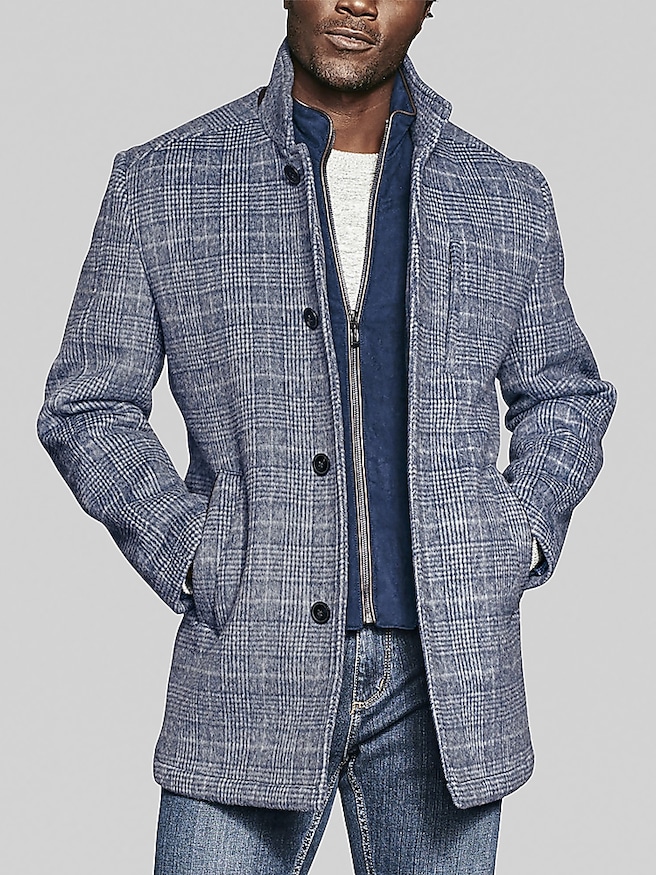
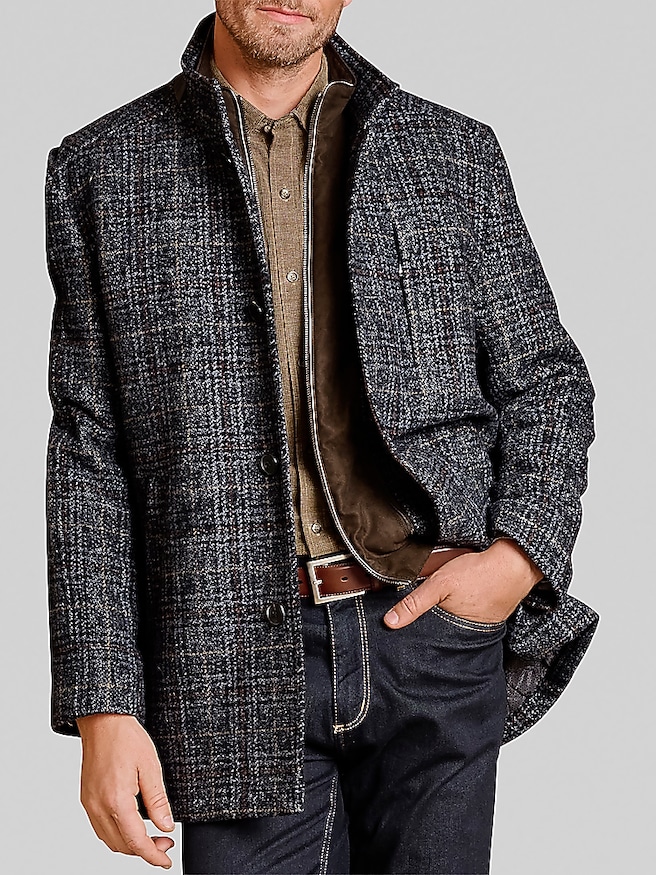
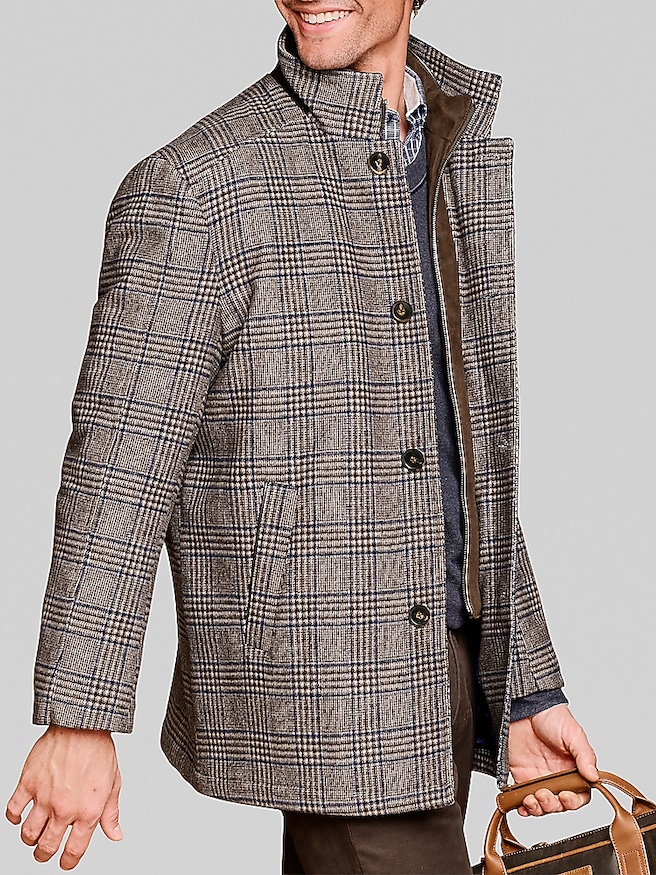
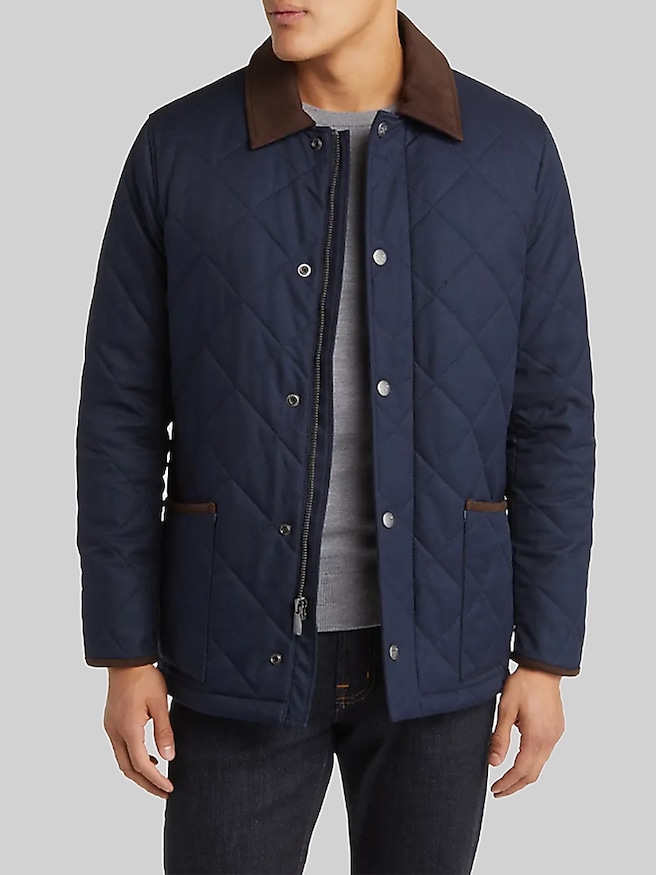
Men's XL jackets are sized extra large, but the XL label doesn't correspond to one set of measurements. Two jackets with the same size on the tag can fit quite differently through the chest and shoulders, especially if one is cut close to the body and the other is meant to go over thicker layers. For a useful starting point, run a flexible measuring tape around the fullest part of your chest, under your arms and level across your back. Keep the tape snug without pulling it tight, then compare that number with the size chart for the cut you're considering. Check whether the chart lists body measurements or the dimensions of the finished jacket. A finished jacket needs to be larger than your chest measurement to leave room to move, so those numbers aren't interchangeable. If there's a jacket in your closet that already fits well, lay it flat and measure across the chest, from armpit to armpit, to compare with flat garment measurements. Try on an XL over the shirt or sweater you're most likely to wear with it, fasten the front, and reach forward as if you're holding a steering wheel. The back shouldn't pull hard across your shoulder blades, and the front should lie flat rather than straining at the closure. On a jacket with conventional shoulder seams, those seams should generally sit near the outer edge of your shoulders. Check the sleeves with your arms down and again with your elbows bent; sleeves that look fine at rest can ride up farther than you'd like when you reach for a bag. If the chest and shoulders fit but the sleeves or body run short, a tall cut can add length without the extra width of a larger size. If XL feels snug across the chest and you'd also prefer a longer hem, compare the chest and length measurements for Men's XXL Coats.
Fabric can make two jackets with nearly identical measurements feel quite distinct. A firm cotton twill tends to hold its shape, so a collar or pocket flap has a crisp edge and the body doesn't cling to what's underneath. A softer knit has more give when you bend your arms, though the cuffs and hem should settle back into place rather than stay stretched out. Wool and wool blends can range from smooth and finely woven to visibly textured, with a drape that suits trousers and a tucked-in shirt. The fiber label tells only part of the story: a dense weave may feel substantial even when the fabric is thin, while a loose weave can catch more easily on a bag clasp. Lining makes a noticeable difference, too. A smooth sleeve lining lets the jacket slip over a knit top without dragging the knit up your arm. An unlined construction often feels less structured, but the seams inside should still lie flat and feel comfortable against a thin shirt. For a jacket that will see frequent use, look closely at the places that get handled every day. Pocket openings should sit flat, stitching at the cuffs should look even, and a zipper should move without catching its lining. If you carry a shoulder bag on the same side most days, a smooth, tightly woven surface may show less abrasion from the strap than a fabric with raised threads. Read the care label before settling on a fabric, especially for a lined or structured jacket. Even when the outer fabric seems easy to wash, the lining and materials that give the jacket its shape may need gentler handling. Emptying pockets before hanging the jacket helps keep their openings from stretching, and a hanger broad enough to support the shoulders helps prevent dents at the ends. Follow the label for cleaning, and avoid pressing a textured surface flat unless the care directions call for it.
The right XL jacket should make sense with the clothes you already reach for and the places you wear them. For an office where the dress code lands between jeans and a suit, a clean front and a hem that sits neatly over trouser pockets can look put together without feeling too formal. If you spend much of the day seated, check how the jacket falls when you sit. A shorter hem may stay clear of the seat, while a straighter cut through the waist can keep the front from bunching when the jacket is fastened. For travel or errands, pockets matter as much as the silhouette. A pocket that looks roomy may not sit deep enough to hold a phone securely when you get in and out of a car. An inside pocket can keep a card case close without adding bulk at the hips. For a jacket that goes from a workday to dinner, muted colors and simple hardware will generally pair easily with both denim and dressier trousers. To judge the proportions, try it with the pants you'd wear most often. A more relaxed jacket can look balanced over straight-leg jeans, while a closer cut can sit neatly over slim trousers without adding much volume around the waist. An XL jacket can also make a practical birthday or graduation gift for someone whose size and everyday style you know. If possible, check the measurements of a jacket the recipient wears often rather than relying on the size of a T-shirt. Look for clues in how that jacket gets worn: someone who leaves it open over a collared shirt may prefer less bulk at the front, while someone who fastens it over a sweatshirt will need more room through the upper arms and chest. Those details are more useful than the size label alone, and they're the ones that make a jacket easy to wear again and again.