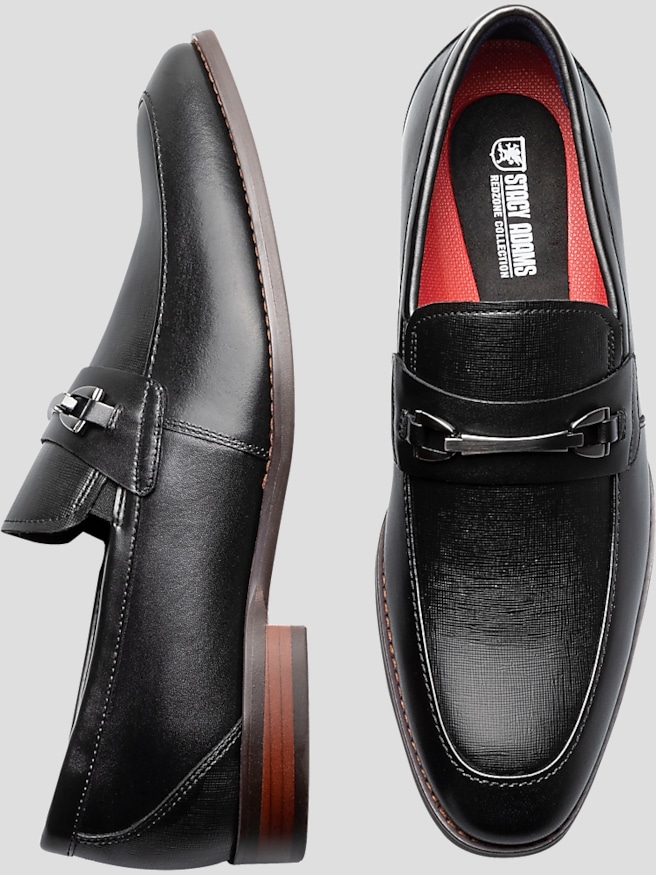
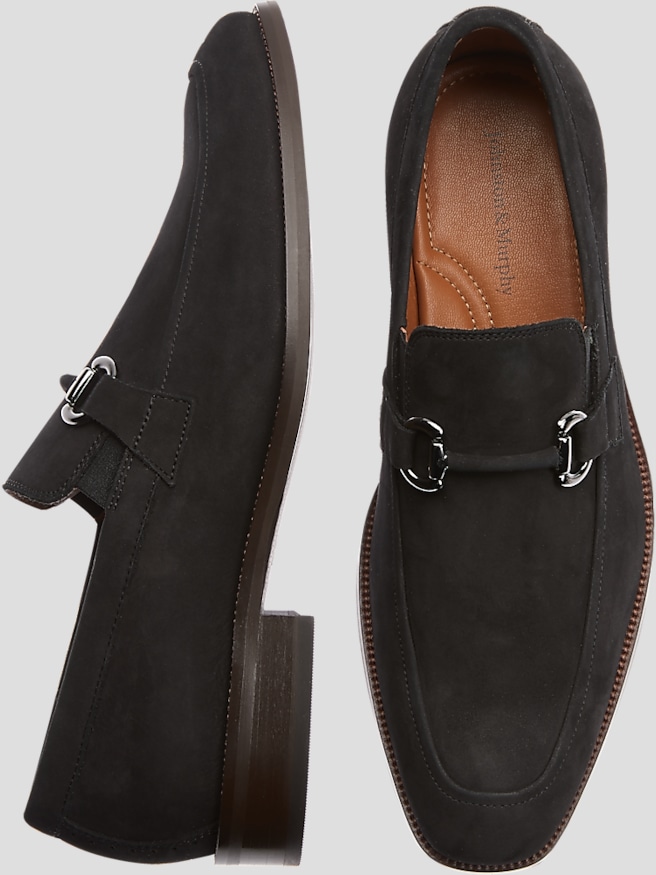
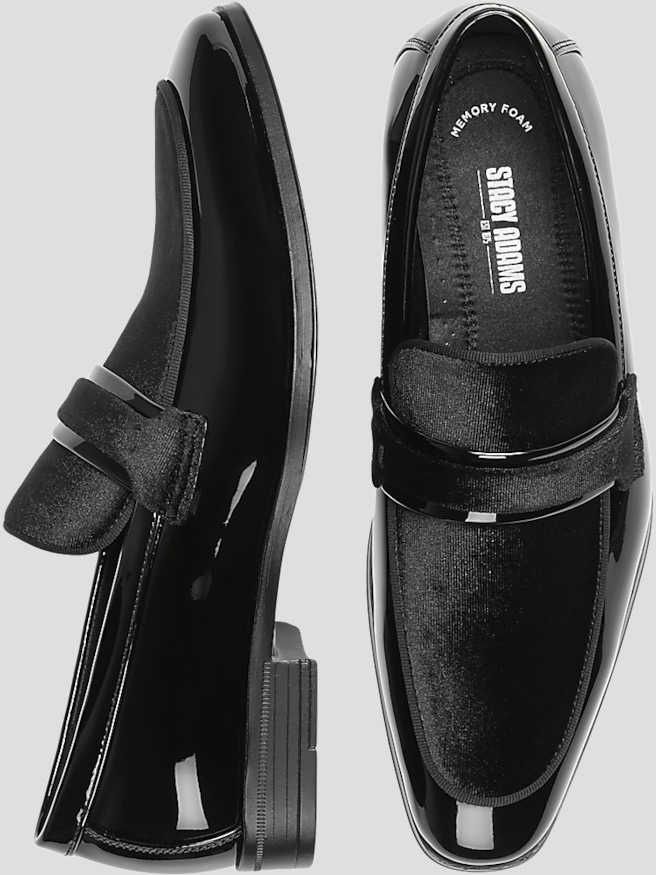
Men’s work loafers bring the clean lines of dress shoes to a slip-on shape that fits naturally into a professional wardrobe. Defined by their laceless construction and low profile, they work particularly well in offices where tailored clothing and business casual outfits share the same space. A smooth leather pair can look composed beneath suit trousers for a client meeting, then feel equally appropriate with chinos and a button-down shirt at a team lunch. The details determine how formal the shoe appears. Penny loafers have a strap across the upper with a small opening, giving them a restrained, familiar look that complements both dress pants and more relaxed tailoring. Tassel loafers add movement and a slightly more decorative finish, while metal-bit styles introduce a hardware accent across the vamp, the section covering the top of the foot. An elongated but not exaggerated toe, discreet stitching, and a relatively slim sole generally create a dressier impression. Rounded shapes, pronounced seams, and substantial soles lean more casual. Color also influences how easily loafers fit into a work rotation. Black offers a crisp finish with charcoal, gray, and black trousers, while dark brown brings depth to navy, olive, and tan. Burgundy can serve as a distinctive neutral when the rest of an outfit stays understated. For wardrobes built around dark tailoring, men’s black loafers offer a straightforward foundation without requiring an exact match to every piece of clothing. A belt in a similar color and level of polish helps the outfit feel cohesive. Trouser length matters, too: a clean hem with little excess fabric allows the shoe’s shape to remain visible rather than disappearing beneath a heavy break. These are shoes for professional settings that permit loafers, rather than a substitute for protective footwear where safety toes or certified traction are required. Their appeal lies in that balance of polish and ease, whether the day involves desk work, presentations, or moving between meeting rooms.
Materials and construction shape the experience of wearing work loafers just as much as their appearance. Smooth leather has a defined surface that can be cleaned and conditioned, and appropriate polish helps maintain its finish. Full-grain leather retains the hide’s natural grain and can develop character with use, although the leather grade alone does not determine a shoe’s comfort or longevity. Suede offers a softer, textured appearance that sits comfortably alongside chinos, textured trousers, and less structured jackets; it also calls for its own brushing and cleaning routine. Lining materials influence how the interior feels against the foot, while seams, edge finishing, and the placement of padding can make a noticeable difference over a full workday. Because loafers have no laces to adjust, a secure fit through the heel and instep is especially important. The upper should hold the foot without squeezing it, and the toes need enough room to rest naturally rather than pressing into the front or sides. A small amount of initial heel movement may occur with some constructions, but persistent slipping, rubbing, or the need to grip with the toes suggests that the size or shape is not suitable. Leather can soften through wear; that is not a reason to accept painful pressure or insufficient length. Trying loafers with the socks intended for work gives a more useful impression of fit than trying them with a substantially thicker or thinner pair. Anyone using an orthotic also needs adequate interior space and, when necessary, a removable footbed. Underfoot, cushioning can soften contact with hard floors, but softness alone does not guarantee support. Heel stability, arch shape, shoe flexibility, and overall fit all contribute to comfort. Rubber soles can provide useful grip and flexibility, depending on their tread and composition, while leather soles offer a traditional profile and a distinct feel underfoot. A thicker sole may suit frequent walks between buildings, yet its weight and stiffness still deserve attention. For roles involving prolonged standing, the right loafer needs to suit those demands rather than simply look appropriate with the dress code.
Durability comes from the relationship between materials, construction, daily use, and care. Repeated friction at the heel, creasing across the vamp, and wear along the outer edge of the sole are normal points to watch as loafers become part of a regular routine. Stitched construction may allow resoling in some cases, but repairability depends on how the entire shoe is made; visible stitching by itself is not a guarantee. Even a well-made pair benefits from time between wears so the interior can air out. Shoe trees sized to fit without stretching help preserve the shape, while a shoehorn protects the heel counter from being crushed during hurried departures. For smooth leather, wiping away surface dirt before applying a suitable conditioner or cream keeps grit from being worked into the finish. Any care product should be compatible with the leather and tested discreetly first, particularly on lighter or specially finished surfaces. Suede needs a dedicated brush and treatments intended for its texture rather than ordinary shoe polish. Drying shoes naturally away from direct heat helps protect their materials, and storing them with space around the uppers avoids unnecessary scuffs. These small habits support the tidy appearance that makes loafers useful for work in the first place. The same versatility makes them a thoughtful gift for someone starting a first office position, stepping into a client-facing role, or refining an established professional wardrobe, provided the recipient’s size and preferred fit are known. A person who wears tailored trousers most days may appreciate a sleek silhouette and subtle detailing; someone in a relaxed creative office may get more use from visible stitching or a textured upper. Fine-gauge socks in a complementary shade keep the transition from trousers to shoes deliberate, especially when sitting down. With denim, where permitted, a clean finish and an uncluttered hem help preserve that professional balance. The strongest work loafers are not necessarily the most ornate or the softest at first touch. They are the ones whose shape, support, finish, and level of formality make sense for the wearer’s actual working day.