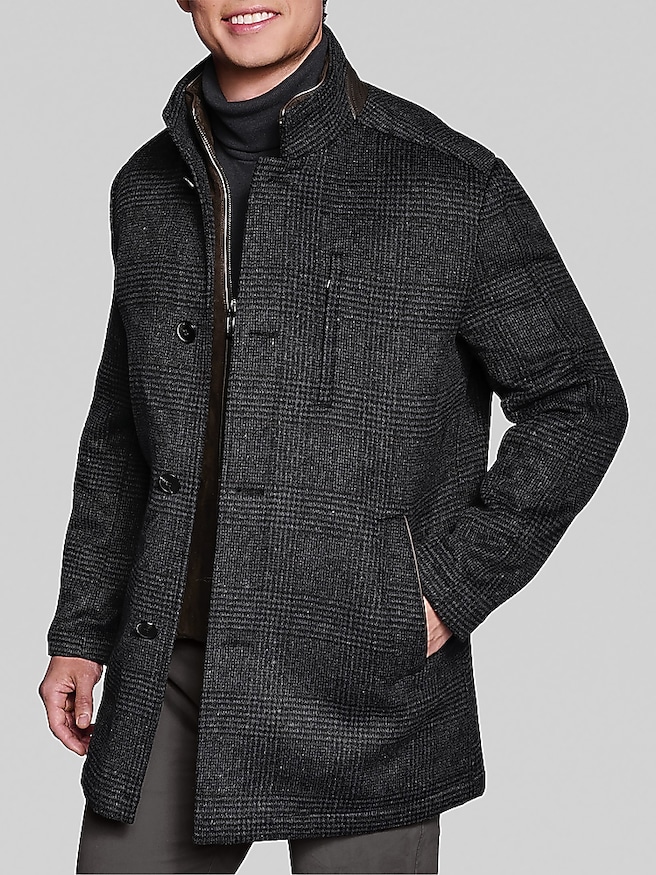
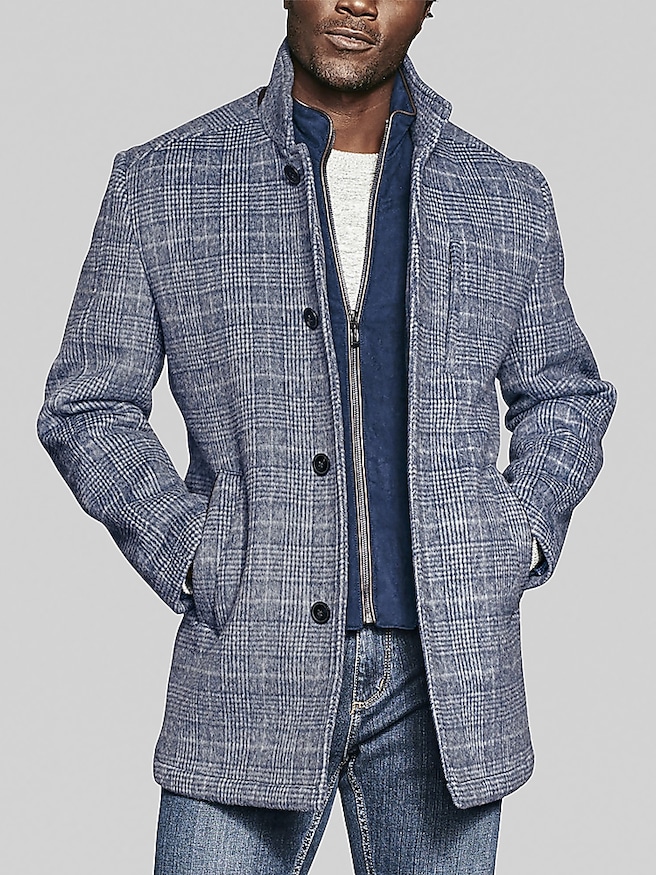
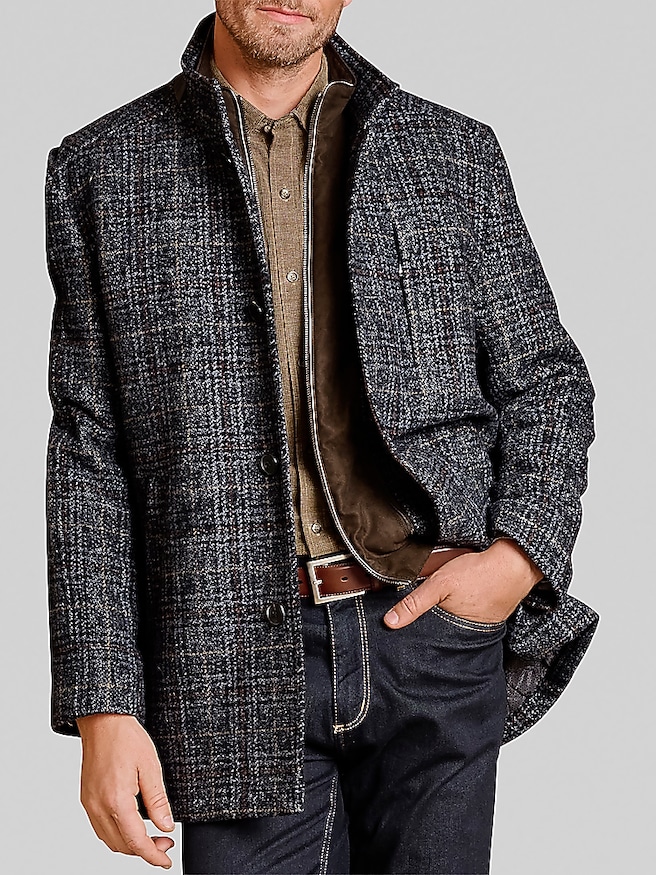
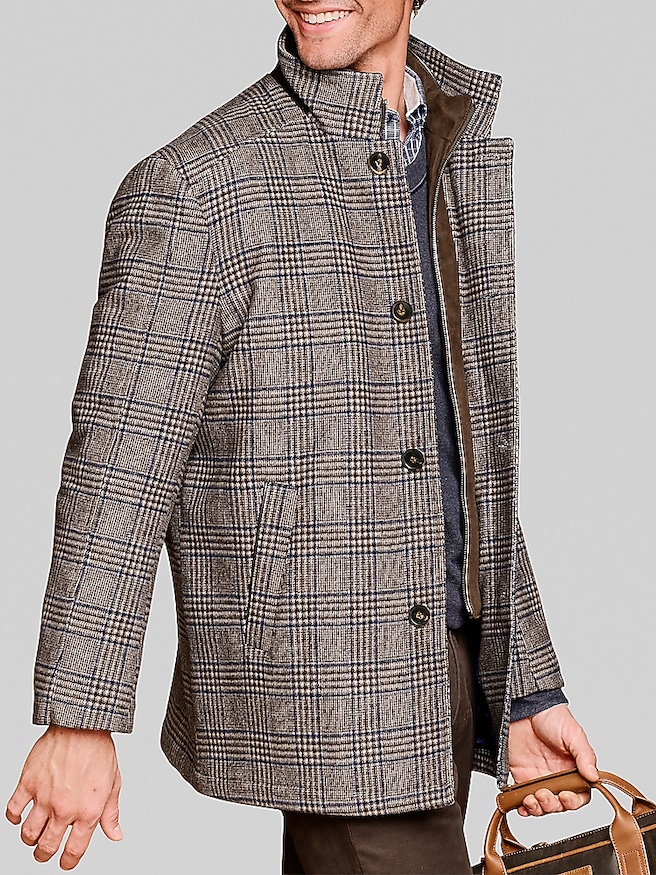
Men's wool blend winter coats bring together the texture of wool, the structure of tailored outerwear, and the versatility needed for everyday cold-weather dressing. The main styles include overcoats, peacoats, and car coats, each with a distinct shape and purpose. An overcoat generally offers a longer line that works well over a suit or sport coat, while a peacoat brings a shorter, double-breasted silhouette that pairs naturally with sweaters and denim. A car coat typically falls between these looks, with a straightforward shape that feels appropriate for a commute, dinner out, or a weekend away. Within the broader category of Winter Wool Coats, blends combine wool with other fibers to influence weight, texture, strength, and how the fabric holds its shape. Polyester or nylon may contribute durability, while a blend containing cashmere may have a softer hand. The fiber percentages matter, but they do not tell the whole story: fabric density, lining, construction, and coat length also affect comfort and warmth. A substantial, tightly woven fabric can feel quite different from a lighter, loosely structured cloth with a similar wool content. Wool offers natural insulation and can absorb some moisture vapor, but a wool blend coat should not be assumed to be waterproof or suitable for prolonged exposure to heavy precipitation. For everyday dressing, charcoal, navy, black, and shades of brown provide versatile foundations, while a subtle herringbone or other woven pattern adds depth without dominating an outfit. A dark overcoat over gray trousers creates a clean line for the office; a textured coat over a crewneck sweater feels more relaxed without looking unfinished. These distinctions make wool blend outerwear useful for people whose winter routines move between professional settings, social occasions, and ordinary errands, with enough variety in silhouette to complement both tailored clothing and casual layers.
Fit makes a noticeable difference in how a winter coat looks and feels, especially when it is worn over more than a shirt. A well-fitting coat leaves room for the clothing beneath it without pulling across the chest, bunching through the upper back, or letting the shoulder line extend excessively beyond the body. Someone who regularly wears a suit jacket needs enough space for its shoulders and sleeves, while someone who favors knitwear may prefer a slightly closer shape. Neither fit should restrict a comfortable reach toward a steering wheel or make the front closure strain when seated. Sleeve length also deserves attention: coat sleeves generally extend beyond the sleeves of a jacket underneath, offering coverage at the wrist without swallowing the hands. Length changes both the appearance and the experience of wearing the coat. A longer overcoat provides more leg coverage during a walk from the train station, while a shorter coat can feel less cumbersome when getting into a car. A hem that covers a suit jacket helps maintain a neat outline, particularly when the coat is worn open. Details such as a back vent, smooth sleeve lining, and accessible pockets can make daily wear easier, although their presence and construction vary by design. A collar that sits comfortably around the neck should work with a scarf rather than crowd it, and lapels should lie smoothly instead of buckling over thick layers. Double-breasted fronts create an overlapping shape with a pronounced tailored character, while single-breasted fronts offer a simpler visual line. For a winter celebration or an evening performance, an understated coat can finish dress trousers and polished shoes without competing with them. For an everyday commute, the same attention to proportion helps a coat look intentional over a button-down shirt, sweater, and chinos. The most useful fit is one that accommodates the wearer's actual routine, not just a good appearance while standing still.
Durability depends on more than the fiber label. A dense fabric, secure seams, firmly attached buttons, and a lining that moves comfortably over clothing all contribute to how a wool blend coat wears over time. Areas that receive repeated friction, including cuffs, pocket edges, and the sides beneath a shoulder bag, may show wear sooner than less exposed surfaces. Some surface pilling can develop as fibers rub together; careful treatment with a tool appropriate for the fabric can help maintain a tidy appearance without damaging the weave. Care should always follow the garment label, since a blended shell, lining, and internal tailoring may require professional cleaning even when an individual fiber seems easy to wash. Between cleanings, gentle brushing can lift surface dust, and airing the coat in a ventilated space can help it feel fresh. A broad, supportive hanger helps preserve the shoulders, while crowded hooks can distort the shape. If the coat becomes damp from light snow or an unexpected shower, allowing it to dry naturally away from direct heat is generally preferable to placing it beside a radiator. Emptying the pockets before hanging it also reduces unnecessary strain and helps prevent stretched pocket openings. For storage beyond winter, a clean coat in a breathable garment bag benefits from space around it and appropriate protection against fabric pests. These habits support the coat's appearance without treating it as something too delicate for daily life. A wool blend winter coat can also be a thoughtful gift for a graduate beginning an office job, a partner who enjoys tailored dressing, or someone building a more versatile outerwear wardrobe. Familiarity with the recipient's measurements, usual layers, and preferred coat length makes that choice more personal. Whether worn over a suit for an important appointment or a sweater for a neighborhood dinner, the right combination of fabric, fit, and practical care gives this category its lasting appeal.