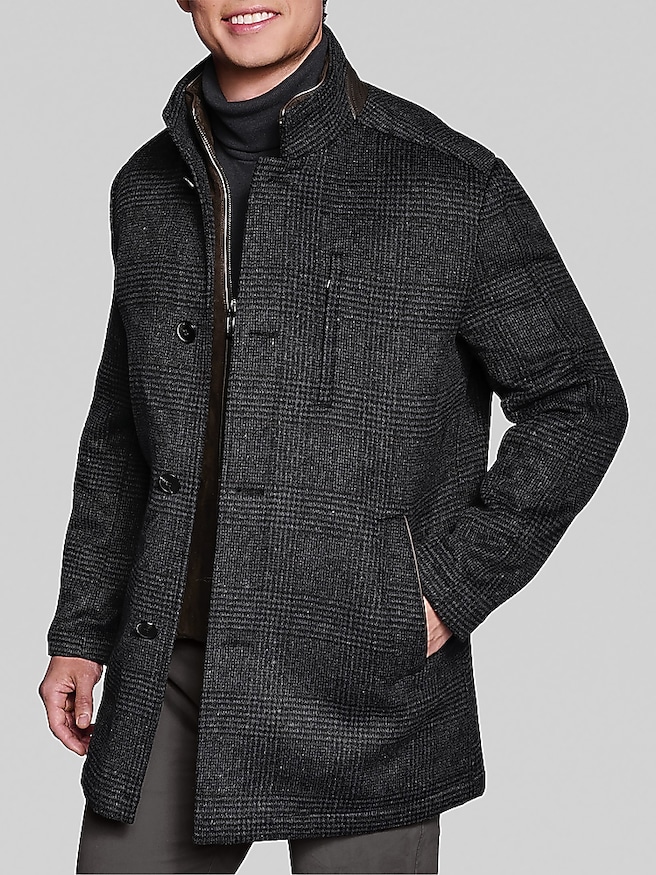
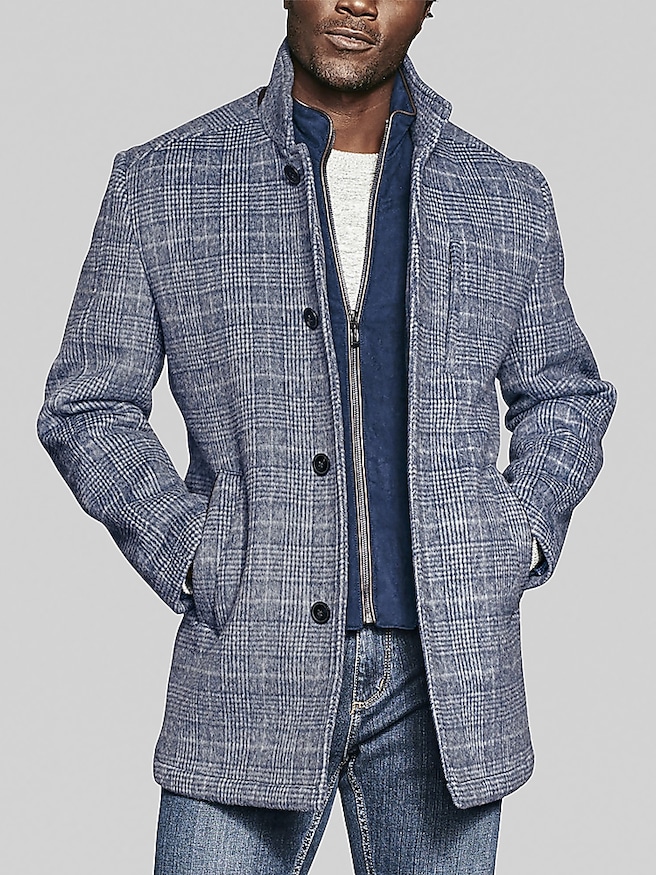
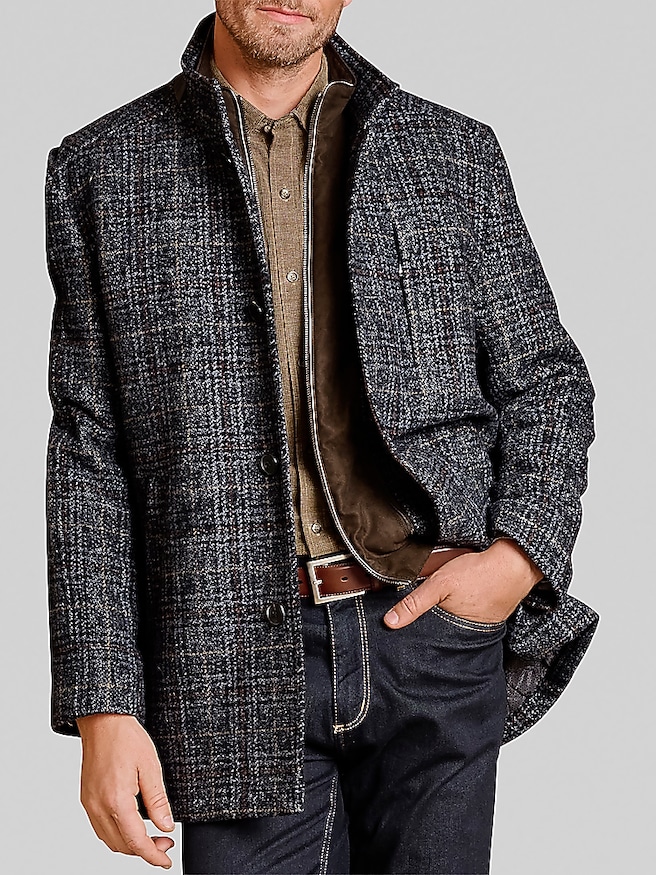
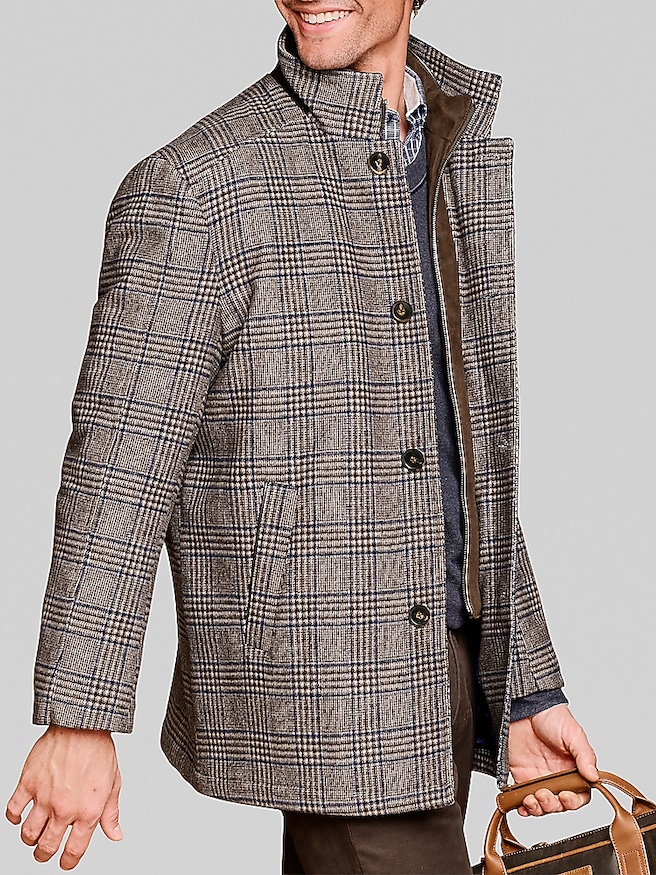
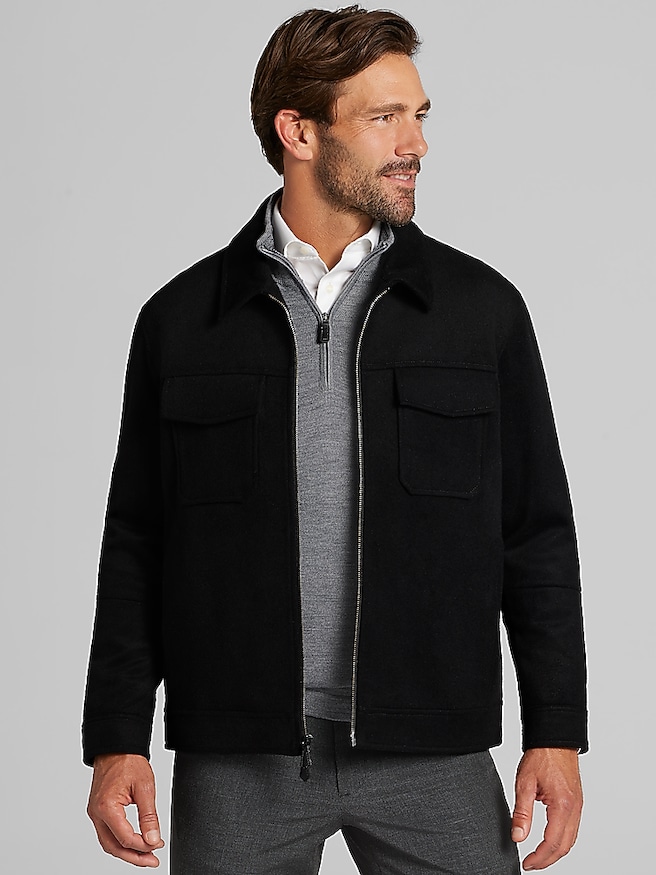
Men’s wool blend shirt jackets combine the familiar shape of a button-up shirt with the substance of a lightweight jacket. Often called shackets, they typically feature a fold-down collar, a full front opening, and enough room to wear over another shirt without the structure of a tailored coat. Their appeal comes from that balance: a defined collar and clean front look polished, while a relaxed body and practical pockets keep the overall feel casual. Wool contributes natural resilience, texture, and insulation; the other fibers in a blend help shape the fabric’s performance and feel. Polyester or nylon can add strength and help the material hold its shape, while cotton may contribute a softer, more familiar hand. A small amount of stretch can make reaching and sitting more comfortable, though the cut matters just as much as fiber content. The wool percentage alone does not tell the whole story. Fabric weight, weave, surface finish, and lining also influence how substantial a shirt jacket feels and how smoothly it layers. A brushed finish has a soft, slightly fuzzy surface, while a tighter, smoother weave can look more refined. Heathered yarns give solid colors subtle depth, and checks bring a stronger workwear character. Construction details make a visible difference, too. Patch chest pockets emphasize the shirt-inspired design, side-entry pockets add everyday convenience, and a covered or streamlined closure creates a cleaner front. Button-front styles preserve the classic overshirt look, while zip-front versions offer a more continuous line. Neither closure is inherently dressier; the surrounding fabric and details establish the overall mood. An unlined design may feel less bulky, whereas a smooth lining can help sleeves slide over a knit or woven shirt. These variations give wool blend shirt jackets a place between everyday shirts and more structured outerwear, with enough texture to make a simple outfit feel considered.
Fit determines whether a wool blend shirt jacket looks intentional or simply oversized. The body should accommodate the layers normally worn beneath it, with enough ease to button or zip the front without pulling across the chest. A clean shoulder line creates a sharper profile, while a deliberately dropped shoulder produces a more relaxed silhouette. Either can work when the rest of the proportions are balanced. Sleeves should allow the elbows to bend comfortably, and the back should not feel tight when reaching forward to pick up a bag or settle behind the wheel. Trying the jacket over a usual base layer gives a more useful sense of fit than judging it over a thin undershirt alone. A substantial sweater needs more room than a cotton T-shirt, but excess fabric around the waist can make even a soft jacket feel cumbersome. Hem length matters as well. A shorter, straighter hem pairs naturally with higher-rise trousers and presents a compact shape, while a slightly longer or curved hem reinforces the overshirt character. Worn open over a plain crewneck, a wool blend shirt jacket adds texture without making an outfit feel dressed up. Buttoned over an Oxford cloth shirt with chinos, it can suit an office with a relaxed dress code or a dinner where a blazer would feel unnecessary. Dark denim and leather boots support the rugged character of a checked fabric; clean sneakers and straight-leg pants give a solid version an easy everyday direction. Charcoal, navy, brown, and muted earth tones pair readily with established wardrobe staples. A larger plaid becomes the focal point, so quieter layers underneath keep the combination balanced. For a sharper result, a fine-gauge knit and trousers with a clean line let the jacket’s texture do most of the work. The collar should sit comfortably over the layer beneath rather than competing with a bulky neckline. It is a useful option for someone moving between a desk, a drive across town, and a casual meal, especially when the same outfit needs to feel comfortable in each setting.
Durability in men’s wool blend shirt jackets depends on more than a substantial feel. Even stitching, secure buttons, neatly finished seams, and reinforced pocket openings all contribute to how well a garment handles repeated wear. A dense fabric can resist losing its shape, but no wool blend is immune to abrasion, snagging, or pilling. Friction from a shoulder bag, a seat belt, or frequent contact at the elbows may gradually raise small fiber clusters on the surface. Gentle treatment with a wool-safe clothing brush or an appropriate fabric-care tool can help maintain a neat appearance when used according to the garment’s care directions. Those directions should always take priority: some blends require dry cleaning, while others permit carefully controlled washing. Wool content by itself is not enough to establish the right cleaning method. Unless the label specifically allows machine washing and drying, neither should be assumed safe. Excessive agitation and heat can cause shrinkage or alter the fabric’s shape, and linings or trims may have their own care requirements. Between cleanings, letting a jacket air out and addressing marks promptly can reduce unnecessary full-garment cleaning. Pockets are best emptied before storage so keys, phones, and wallets do not leave the fabric stretched. A supportive hanger helps maintain the shoulder shape, while longer storage calls for a clean garment and suitable protection from fabric pests. These practical habits matter for a piece intended to become a regular part of a wardrobe rather than an occasional extra. As a gift, a wool blend shirt jacket can suit someone who favors useful clothing with a little texture and character. Familiar colors, a preferred fit, and the recipient’s usual layering habits are more reliable starting points than an unfamiliar statement pattern. For related outerwear silhouettes, explore Men's Casual Wool Jackets. The shirt-jacket shape remains especially appealing for its straightforward combination of shirt details, relaxed structure, and the substantial feel of a wool blend.