Men's white undershirt tank tops create a close-fitting foundation beneath everyday shirts without adding another layer of sleeves. Often called A-shirts or ribbed tanks, these sleeveless undershirts typically have a scooped neckline, broad shoulder straps, and a body designed to sit near the skin. Their straightforward shape works beneath button-downs, polos, and casual shirts, especially when a smooth torso layer matters more than coverage at the arms. Fabric makes a noticeable difference in how that layer feels throughout the day. Cotton absorbs moisture and offers a familiar, soft hand, while cotton-modal blends can bring a smoother surface and more fluid drape. A small amount of elastane or spandex adds stretch and helps the fabric recover after movement. Ribbed construction also contributes flexibility: the vertical knit expands across the chest and torso, allowing a close fit without relying entirely on stretch fibers. An all-cotton ribbed tank may therefore feel more flexible than its fiber label alone suggests. Fabric weight and knit density matter as much as fiber content. A lighter knit creates less bulk beneath a fitted shirt, while a more substantial knit may offer greater coverage when the tank is worn on its own around the house. Neither thickness nor softness, by itself, guarantees durability; the quality of the seams, neckline, and armhole binding also affects how well an undershirt holds its shape. White is a straightforward choice for a coordinated basics drawer, but it is not automatically invisible beneath white clothing. Under a thin or loosely woven dress shirt, the tank's neckline, straps, or rib pattern may remain visible. The combination is generally more discreet beneath an opaque shirt with enough structure to skim over the undershirt rather than cling to it. For someone who prefers sleeveless layering, the appeal is practical: coverage across the chest and back, less fabric around the shoulders, and a familiar base beneath a wide range of everyday outfits.
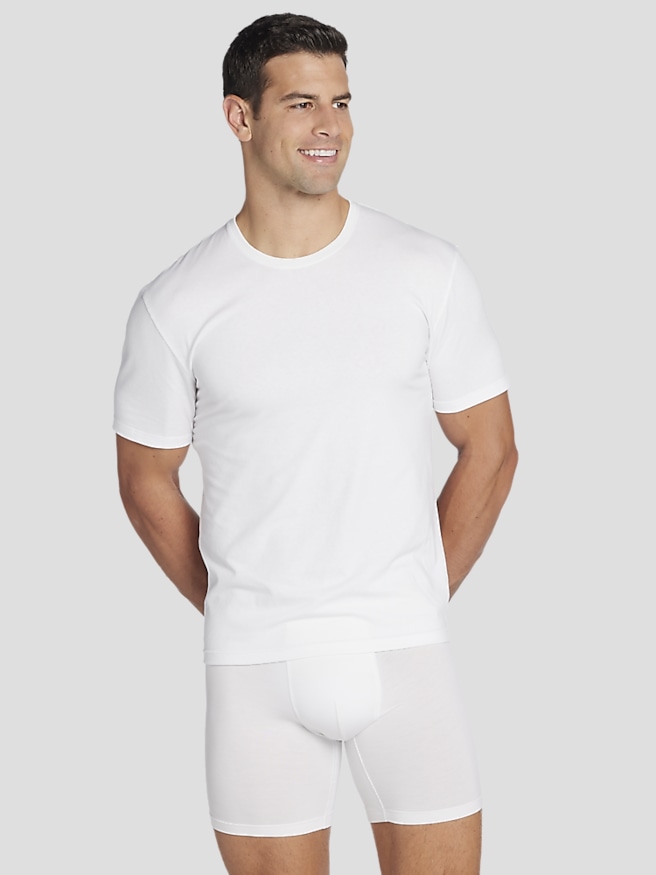
Fit determines whether a white tank undershirt stays in the background or needs repeated adjustment. A close fit should follow the torso without pulling hard across the chest, digging into the shoulders, or leaving deep marks around the armholes. Excess fabric can collect above the waistband or form ridges under a dress shirt, while an overly tight tank may ride upward as the wearer reaches or sits. The neckline also has a job to do. A deeper scoop is less likely to show when the top button of a shirt is open, although its position depends on the wearer's build and the cut of both layers. Shoulder straps should lie flat rather than twist, and armholes should allow movement without hanging so low that the tank shifts loosely across the chest. Extra body length is useful for tucked-in wear, particularly through a workday that includes sitting at a desk, reaching for a bag, and standing for meetings. That length needs to extend comfortably below the waistband without creating a thick bundle inside the trousers. A hem that stays tucked during normal movement is more useful than additional length for its own sake. Flat, well-finished seams and soft binding make a difference where fabric rests against the skin, and tag-free designs remove a sewn-in label from the neckline. Reinforced necklines and armholes can help these high-use edges resist distortion through repeated wear and washing. Sleeveless construction does have a clear limitation: it does not place an absorbent barrier between the underarms and the outer shirt. For those who prefer that coverage, men's white tees offer a short-sleeve alternative. Tank undershirts remain a practical option beneath office shirts, relaxed button-fronts, or dress shirts for celebrations when a sleeveless base suits the outfit and the wearer's comfort preferences.
Regular care helps white undershirt tank tops retain the softness, shape, and clean appearance that make them useful daily basics. The care label takes priority because cotton, modal, and stretch blends do not all respond the same way to washing and drying. Separating whites from dark clothing reduces the chance of dye transfer, while measuring detergent helps avoid residue that can leave fabric feeling stiff. A heavily fragranced wash is not necessary for a fresh result; thorough cleaning and complete drying matter more than a strong scent. Perspiration, body oils, and personal-care products can leave marks along the neckline and armholes, so prompt treatment with a fabric-appropriate stain remover is generally more effective than allowing buildup to settle through repeated wears. Chlorine bleach is not suitable for every white fabric, especially some stretch blends, and any whitening treatment should match the garment's care instructions. High dryer heat can contribute to shrinkage or wear on elastic fibers, making lower heat or air-drying useful options when the label permits. After washing, a gentle reshaping can straighten the body and keep straps from drying in a twisted position. Durability becomes visible in small details over time: a neckline that lies flat, armholes that retain their shape, seams that remain secure, and a hem that does not curl excessively. Stretch recovery matters, too, since an undershirt that starts close-fitting but becomes loose during wear will not layer as smoothly. These are practical basics for men who wear collared shirts regularly, prefer a sleeveless layer under casual clothing, or want comfortable coverage for downtime at home. They can also make a useful gift when the recipient's size, preferred fabric, and neckline are already known. For a daily rotation, consistency often matters more than novelty: a comfortable fit through the chest, enough length to stay tucked, and fabric that feels good after repeated washing. A well-chosen white undershirt tank earns its place by making the clothing over it easier to wear, without drawing attention to itself.