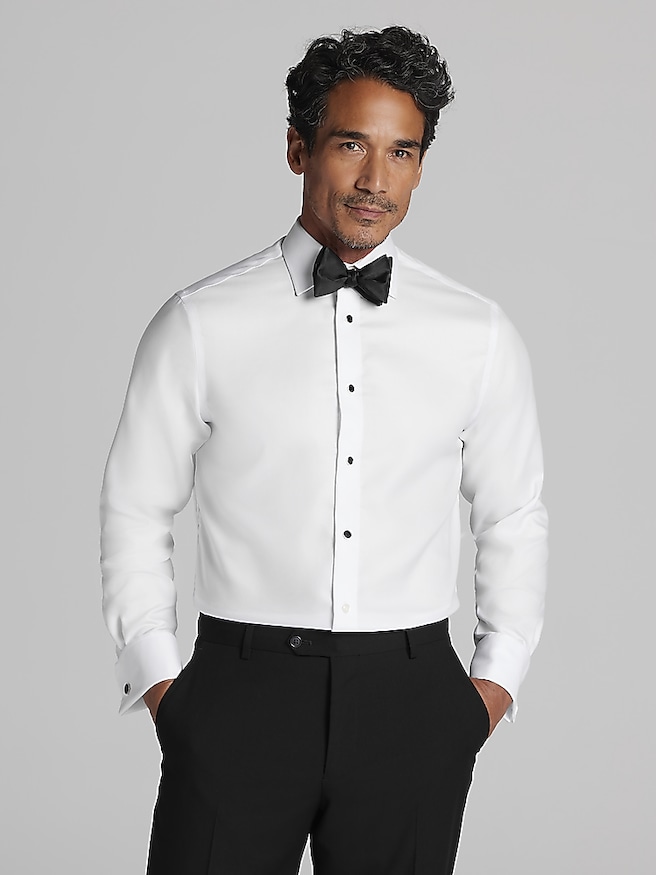
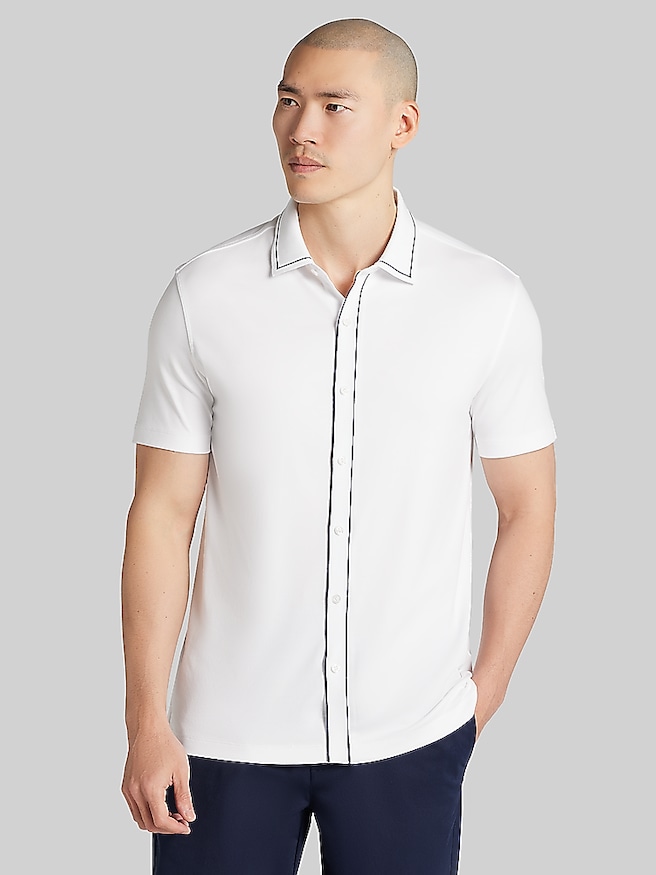
Men's white button-up shirts combine a full button-front closure with a clean, neutral color that works across business, dress, and casual wardrobes. Their versatility comes from the way fabric, collar shape, and cut change the overall impression: a smooth dress shirt creates a polished foundation beneath a suit, while a textured oxford feels more relaxed with chinos or jeans. “Button-up” describes the front closure; “button-down” refers specifically to a collar with points that fasten to the shirt. That distinction matters when matching a shirt to an occasion. A spread or point collar can frame a tie neatly for a client meeting, job interview, or wedding, while a button-down collar helps maintain a tidy appearance when worn open at the neck. White also provides a clear backdrop for navy, charcoal, brown, and patterned tailoring without competing with the rest of an outfit. For someone moving from a presentation to dinner, a well-fitting white shirt can remain the anchor even after the jacket and tie come off. Casual versions serve a different purpose, offering an easy alternative to a T-shirt for a restaurant outing, family gathering, or office with a relaxed dress code. The level of formality depends on more than color: collar structure, fabric texture, pockets, cuffs, and hem shape all contribute. A longer, curved hem generally suits tucked-in wear, while a shorter hem designed for untucked wear creates a more casual silhouette. Long sleeves with button cuffs cover many everyday and business occasions; French cuffs create a dressier effect and require cuff links. For a less formal silhouette, men's white short sleeve button up shirts pair naturally with casual trousers and simple sneakers or loafers. At events with a specific dress code, the shirt should match that expectation; formal attire may call for a dedicated tuxedo shirt rather than a standard white button-up. These details explain why two white shirts can look equally crisp yet belong in very different outfits.
Fabric and fit determine how a white button-up shirt feels through a full day and how neatly it sits beneath other clothing. Cotton is a common choice for its breathability and familiar feel, though the weave affects texture, drape, and upkeep. Poplin typically has a smooth, closely woven surface that works well with tailored clothing. Oxford cloth has a more visible basket-weave texture and often lends itself to everyday wear. Twill has a subtle diagonal pattern and can offer a softer drape, while linen brings a distinctive texture and a naturally rumpled character that suits relaxed dressing. Cotton blends may add wrinkle resistance, and fabrics containing stretch fibers can provide flexibility when reaching across a desk or sitting through a long meeting. Those benefits vary by construction and finish, so a fabric description and care label are more useful than assumptions based on fiber content alone. White fabrics also vary in opacity; weave density and fabric weight influence how much an undershirt shows through. A smooth, close-fitting undershirt near the wearer's skin tone can be less noticeable than a bright white layer beneath a white shirt. Fit deserves equal attention. Shoulder seams should sit near the edge of the shoulders, and the chest should allow movement without pulling the placket into gaps. A slim fit generally follows the torso more closely, while a regular or classic fit typically provides additional room; those labels are not identical across every shirt. Neck and sleeve measurements are especially helpful for dress shirts. A collar worn with a tie should close comfortably, and cuffs should reach the wrist without covering the hand. A small amount of shirt cuff showing beneath a jacket sleeve creates a balanced tailored appearance. Durability comes from the combination of fabric, construction, and appropriate care, not thickness alone. Secure buttons, even stitching, neatly finished seams, and reinforced areas at points of strain help a frequently worn shirt hold its shape and withstand repeated use.
A white button-up shirt earns its place in a wardrobe through repeat wear, whether it is part of a daily office routine or reserved for occasions that call for a sharper appearance. With a navy suit and understated tie, it provides a straightforward business combination; with dark jeans, a brown belt, and loafers, it can feel polished without looking overly formal. Texture helps keep simpler outfits interesting. An oxford shirt adds dimension beside smooth chinos, while a fine, smooth weave sits cleanly beneath a textured jacket. Wearing the collar open changes the mood, but the neckline should still sit neatly rather than collapse under the jacket. For tucked-in outfits, enough body length helps keep the shirt secure when sitting or reaching, without leaving excessive fabric bunched around the waist. Care is particularly important because white shows collar buildup, cuff marks, and small spills readily. Following the care label protects the fabric and any easy-care finish; some shirts are machine washable, while others have different cleaning requirements. Treating marks promptly with a fabric-appropriate method can help prevent them from becoming harder to remove, and checking stains before drying avoids setting them with heat. Washing with compatible light-colored garments reduces the risk of color transfer. Chlorine bleach is not suitable for every fabric or finish, so whitening methods should follow the garment's instructions rather than a blanket routine. Prompt removal from the dryer, when tumble drying is permitted, can reduce creasing, and a hanger helps preserve the shape between wears. Ironing or steaming requirements depend on the fabric and finish, including for shirts described as wrinkle resistant. Rotating shirts can reduce repeated wear on a single collar and pair of cuffs. As a gift for a graduate, partner, father, or someone beginning a new role, a white button-up shirt has practical value when the recipient's measurements, preferred fit, and usual dress code are known. The most useful choice is one that fits comfortably, suits the occasions ahead, and has care requirements that work with the wearer's routine.