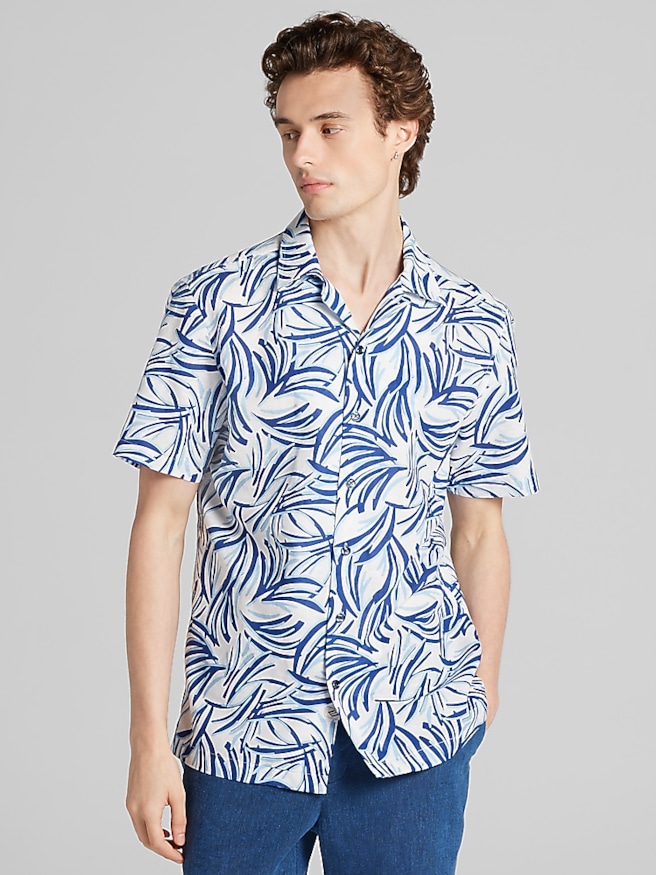
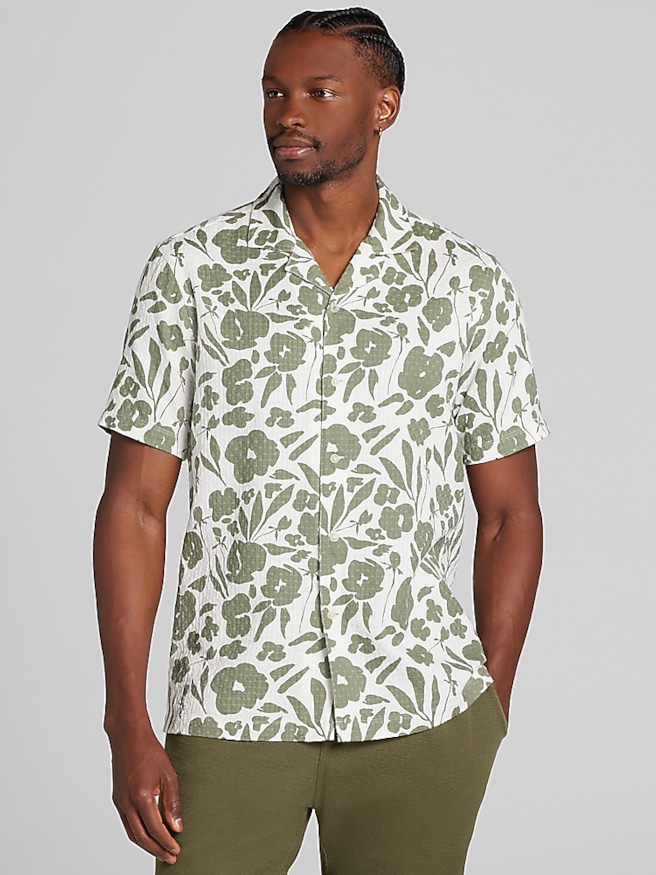
Men's white beach shirts bring an easy, clean look to days by the water, resort stays, and relaxed gatherings where a T-shirt feels too casual but a structured dress shirt feels out of place. The category includes short-sleeve button-front shirts, open camp collars, and long-sleeve styles that can be worn with the cuffs neatly turned back. Fabric makes a noticeable difference in how each style feels and falls. Linen has a naturally textured surface and a breezy feel, with creases that become part of its relaxed character. Cotton can feel soft and familiar against the skin, while its weave helps determine whether the finished shirt looks smooth, subtly textured, or more substantial. Linen-cotton blends combine qualities of both fibers, though the balance of softness, structure, and wrinkling depends on the blend and construction. Fabrics containing rayon or viscose often have a fluid drape, while some synthetic blends emphasize easy care or moisture management. Those performance qualities should be confirmed in the fabric details rather than assumed from a lightweight appearance. White also puts the weave on display: an open construction can feel airy but reveal more underneath, while a closer weave generally provides more coverage. Holding the fabric up to natural light offers a useful sense of its opacity, especially for a shirt intended to be worn without an undershirt. Bright white creates a crisp contrast with navy or tan, while softer white tones have a gentler effect alongside natural textures. For travel, beachside meals, or an afternoon spent moving between a hotel terrace and the shore, the most useful choice balances breathability with enough coverage and structure to feel comfortable beyond the sand. Lightweight fabric alone does not establish sun protection; anyone seeking that feature should look for a stated UPF rating and follow the associated care instructions. A white beach shirt is best understood as a versatile casual layer, with its suitability shaped by the fabric, cut, and details rather than color alone.
Fit gives men's white beach shirts much of their character. A relaxed cut should leave room through the chest and waist without creating excess fabric beneath the arms or across the back. When the shirt is buttoned, the placket should lie smoothly rather than pull into gaps, and reaching forward should not make the shoulders feel restricted. A dropped shoulder can be an intentional design detail, while a more traditional shoulder seam creates a tidier outline. Length matters just as much: a straight hem that finishes around the upper to middle portion of the fly often works well untucked, while a longer curved hem may be better suited to tucking, depending on the shirt's proportions. Short sleeves offer an uncomplicated look with swim trunks, chino shorts, or lightweight pants. Long sleeves provide more styling flexibility, moving from full length at dinner to a relaxed cuff at a casual lunch. Neither choice needs to look oversized to feel easy. An open collar and a little space through the body can provide that effect without sacrificing shape. For a walk along the boardwalk, a white shirt worn open over a simple tank creates a casual layer; for a waterfront restaurant, buttoning it and pairing it with tailored shorts or linen-blend pants gives the same color a more finished appearance. Leather sandals, understated sneakers, or loafers can each work when matched to the setting. Beach wedding guests should follow the invitation's dress code, since an informal shoreline ceremony and a formal resort reception may call for very distinct levels of dress. Under lightweight white fabric, a smooth undershirt close to the wearer's skin tone is often less noticeable than a bright white one. For another take on relaxed coastal dressing, Mens Floral Beach Shirts introduce pattern, while solid white keeps the emphasis on texture, proportion, and the pieces worn alongside it.
Care and construction help determine how well a white beach shirt holds up beyond a single trip. Even stitching, secure buttons, neatly finished seams, and a collar that sits comfortably are useful details to examine, particularly on lightweight fabrics that receive frequent wear. A fine, airy weave may call for gentler handling than a denser cotton, and a fluid fabric may need careful drying to preserve its shape. The care label should guide washing, drying, ironing, and any professional cleaning, since shirts that look similar can have very distinct requirements. Separating whites from colors helps reduce accidental dye transfer, while addressing sunscreen, food, and perspiration marks promptly can make routine care more manageable. Stain treatments should be appropriate for the fiber and tested on an inconspicuous area; chlorine bleach is not suitable for every white fabric. Using the recommended amount of detergent and allowing enough room in the machine can also help prevent residue and excessive creasing. Linen does not need to be pressed completely smooth to look intentional, although a lightly pressed collar and front placket can create a neater finish for dinner. Cotton and blends may respond well to steaming or ironing when their labels permit it. Before packing, shirts should be fully dry, with buttons secured and collars laid flat. Loosely folding around other soft clothing can reduce hard fold lines, but no packing method makes every fabric wrinkle-free. After arrival, hanging the shirt gives it space to settle before wear. For someone who takes beach vacations, enjoys cruises, or often chooses relaxed button-front shirts, a white beach shirt can also make a practical gift. The best match reflects the recipient's usual sleeve length, preferred fit, and willingness to handle fabric care. A person who likes linen's texture may welcome its natural creasing, while someone who favors a smoother finish may prefer another construction. Chosen with those habits in mind, a white beach shirt can move easily from a suitcase to regular casual wear, paired with familiar shorts or pants long after the trip ends.