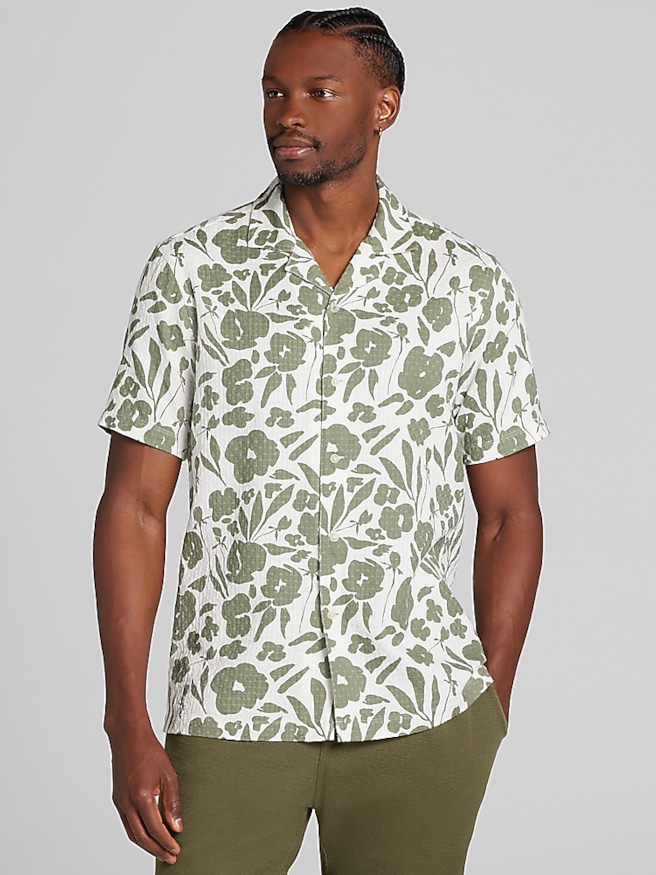
Men's beach shirts are lightweight, relaxed shirts suited to coastal outings, vacation days, and casual gatherings near the water. Their appeal comes from the combination of breathable fabrics, comfortable proportions, and details that feel easy without looking unfinished. Short-sleeve button-front shirts are a familiar choice, especially with open camp collars that sit flat around the neckline. Long-sleeve styles offer another option, with sleeves that can be rolled neatly for a walk along the shore or left down for dinner on a breezy patio. Fabric makes a noticeable difference in how each shirt feels and hangs. Linen has a lightly textured surface and an airy feel, with natural wrinkles that belong to its relaxed character. Cotton feels soft against the skin and comes in several constructions, from smooth plain weaves to textured seersucker that holds portions of the fabric away from the body. Cotton-linen blends combine qualities of both fibers, though the exact feel depends on the blend and weave. Rayon and similar drapey fabrics tend to fall more fluidly, giving printed shirts a softer silhouette rather than a crisp, structured shape. Fabric weight and construction matter as much as fiber content: a tightly woven shirt can feel quite different from a loosely woven shirt made from the same material. Lighter colors can emphasize the texture of linen or cotton, while deeper shades create a stronger contrast with pale shorts and light-colored trousers. Tropical motifs, botanical patterns, narrow stripes, and understated geometric prints each give beach shirts a distinct personality. A small repeating print feels subtle from a distance, while a larger pattern becomes the focus of an outfit. Solid colors keep attention on the collar, buttons, and fabric itself. Across these variations, the defining quality is relaxed polish: clothing that feels appropriate beside the ocean but still looks considered at a café table or an outdoor celebration.
The fit of a men's beach shirt should allow comfortable movement through the shoulders, chest, and upper arms without relying on excessive fabric. Shoulder seams that sit close to the natural shoulder line generally create a neater outline, while intentionally dropped shoulders produce a looser, more casual effect. When a button-front shirt is fastened, the placket should lie reasonably flat rather than pulling across the chest or stomach. Enough room to reach for a bag, sit comfortably, or lift an arm makes a practical difference throughout a day away from home. Shirt length also changes the overall impression. A straight hem often works well untucked, particularly when it finishes around the upper-to-middle portion of the fly rather than extending far down the thigh. Curved hems can look equally relaxed, although longer lengths may be better suited to tucking or layering. Worn open over a simple T-shirt, a beach shirt adds texture and pattern without requiring a complicated outfit. Buttoned with chino shorts, it feels composed enough for lunch after a morning on the boardwalk; paired with lightweight trousers, the same general style can suit a resort restaurant or a casual gathering with friends. The setting still matters. A beach wedding may call for a more polished outfit than an afternoon cookout, and the invitation's dress code takes priority over the location. Solid colors, restrained patterns, and a tidy collar tend to be easier to dress up than oversized graphics or very loose silhouettes. Small details influence comfort as well: a softly finished neckline, smooth interior seams, and sleeves with enough room at the opening help prevent a shirt from feeling restrictive. Chest pockets add a casual touch, though bulky contents can distort lightweight fabric. Beach shirts are primarily casual clothing, not substitutes for swimwear, and ordinary lightweight fabric should not be assumed to provide a specific level of sun protection unless the garment carries an appropriate rating.
Care and construction help determine how well a beach shirt keeps its shape and appearance through repeated wear. Secure buttons, even stitching, neatly finished seams, and cleanly sewn buttonholes are useful signs of thoughtful construction. Lightweight fabric does not have to feel flimsy, but it benefits from handling that respects the fiber and weave. The care label remains the best reference for washing, drying, and ironing because two shirts with a similar appearance may need different treatment. Many washable cotton shirts respond well to gentle laundering, while linen can develop a softer feel with wear and proper care. Rayon and some blended fabrics may require extra attention to water temperature, agitation, or drying method to help limit shrinkage and distortion. Promptly removing a shirt from the washer and smoothing the collar, placket, and hem can reduce deep creases before drying, when permitted by the label. High heat is not suitable for every fabric, and a relaxed texture does not mean a shirt needs to be pressed completely flat. For travel, a loosely folded shirt can be unpacked and hung to let the fabric settle; steaming may help with wrinkles when the care instructions allow it. Sand, sunscreen, and saltwater can leave residue, so timely care helps keep casual shirts fresh between outings. These practical qualities also make beach shirts appealing gifts for a father, partner, brother, or friend who enjoys coastal weekends, cruises, or laid-back travel. A familiar size and a color that already works with the recipient's wardrobe are more useful starting points than an unusually bold pattern chosen for novelty alone. Beyond a trip, these shirts can remain part of an everyday casual rotation with jeans, chinos, or simple shorts. For wardrobes that also include Mens Urban Shirts, beach-inspired fabrics and open collars offer an easygoing contrast to more structured city looks. The strongest choices balance personal style with comfortable fit, manageable care, and enough versatility to feel natural well beyond the shoreline.