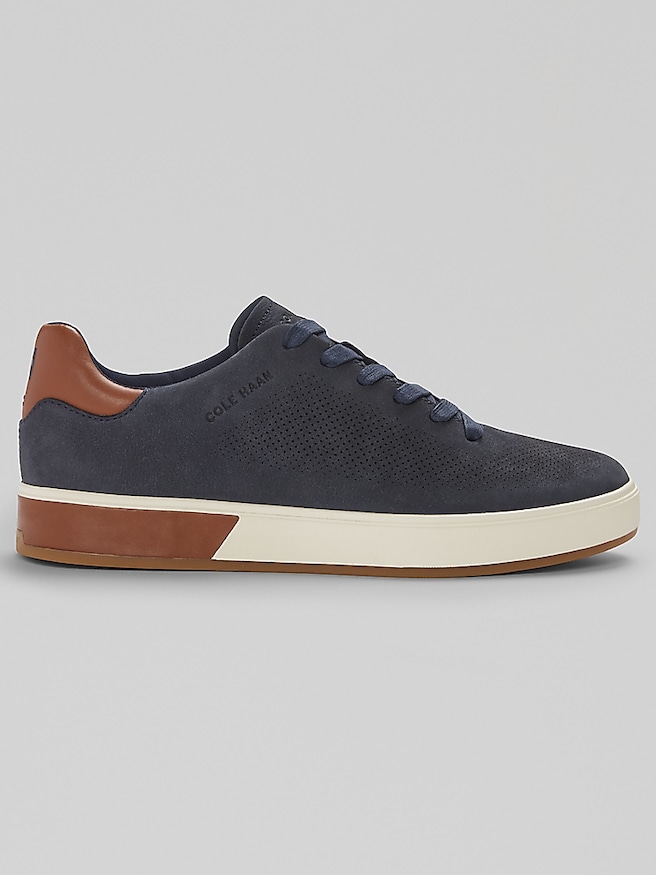
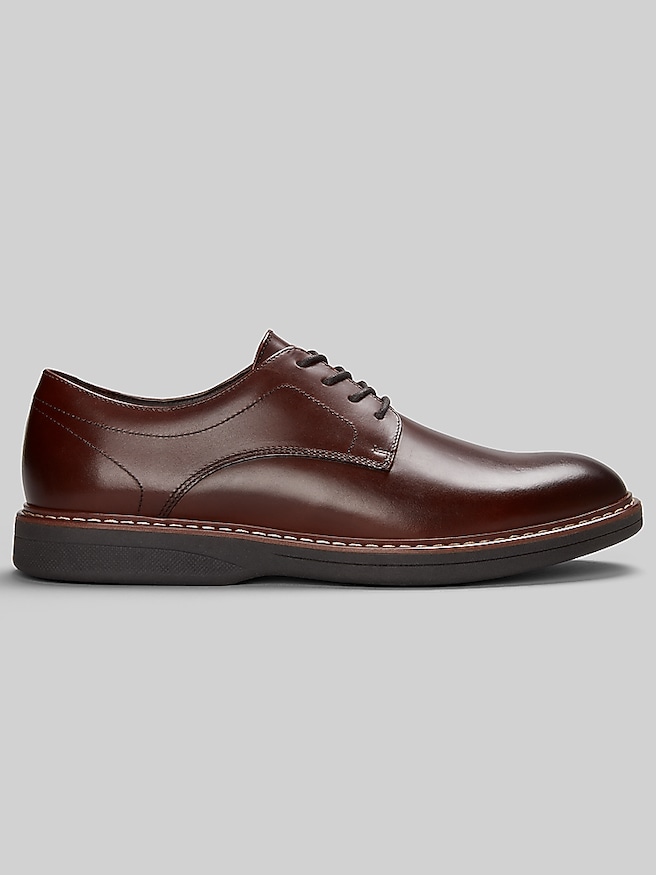
Men's wedge sneakers combine the familiar shape of casual sneakers with a sole that is thicker beneath the heel and tapers toward the forefoot. That raised profile gives the shoe a distinctive silhouette and can add height without the appearance of a separate dress-shoe heel. Some designs make the wedge visible along the outside of the shoe, while others conceal part of the elevation inside a more conventional sneaker shape. Hidden-lift sneakers, sometimes called elevator sneakers, belong to a related category, but an internal lift and an external wedge are not necessarily the same construction. Some shoes combine both features. The amount of added height depends on the design, and the thickness visible at the heel does not always equal the actual increase in standing height. Beyond elevation, the appeal is largely about proportion: a substantial sole can balance straight-leg denim, give tapered chinos a stronger finish, or add structure beneath relaxed trousers. Low-top shapes leave the ankle exposed and tend to look understated, while high-top silhouettes create a more pronounced line between the shoe and pant hem. Smooth, minimally detailed uppers can work with an untucked button-down or a knit polo in a casual office. More textured or paneled designs fit naturally with jeans, a plain T-shirt, and an overshirt for dinner or a weekend outing. Black, brown, gray, and white each create a distinct effect, from a continuous dark line beneath dark trousers to a crisp contrast against indigo denim. The most balanced outfits give the sneaker enough room to be seen without letting excess fabric gather around the collar. Men's wedge sneakers are primarily lifestyle footwear; a sporty appearance alone does not make them suitable for running, court sports, or demanding workouts. Their place is in everyday wardrobes where a sneaker's relaxed character and a more elevated profile feel equally at home.
Materials influence both the appearance of wedge sneakers and how they feel through a full day. Smooth leather offers a defined surface that can be wiped clean after ordinary wear, although its flexibility depends on the leather, lining, and overall construction. Suede has a soft, napped texture that gives even a simple silhouette more visual depth. For that same tactile character across casual footwear, Men's Suede Sneakers pair naturally with brushed cotton chinos, dark denim, and knitwear. Mesh and textile panels can reduce bulk and allow airflow, while synthetic uppers vary in flexibility and care requirements. Inside the shoe, smooth lining seams and a well-finished collar matter because they sit against areas that move with every step. Cushioning can soften the underfoot feel, but softness alone is not a measure of support or stability. A broad base, a secure heel, and a sole that bends comfortably near the ball of the foot all contribute to how controlled the shoe feels in motion. Rubber outsoles are common, though traction depends on the compound, tread pattern, surface, and wear rather than the material name alone. Fit deserves particular attention when the heel sits higher than the forefoot. The foot should remain secure instead of sliding forward and pressing the toes against the front of the shoe. Adequate toe room, comfortable width through the forefoot, and space over the instep are more useful indicators than a familiar size number by itself. Laces allow adjustment across the upper, especially when sock thickness changes. A high collar may change the feel around the ankle, but it does not automatically provide ankle support. Trying both shoes with the socks intended for everyday use makes it easier to judge heel movement, pressure points, and walking comfort. Additional height inserts can crowd the interior and alter the fit, so a built-in wedge is best evaluated as a complete construction rather than a starting point for stacking extra lifts.
Durability comes from the way the upper, sole, and interior hold together through repeated wear, not simply from how substantial the shoe looks. Neat stitching, securely finished edges, and an even connection between the upper and outsole are useful details to examine. Areas that flex with each step should move without creating sharp pressure across the foot, and the heel lining should feel smooth rather than abrasive. For someone who spends part of the day at a desk and the rest moving between meetings, errands, and a restaurant table, a secure fit and manageable shoe weight may matter more than a dramatic wedge. A lower-profile design can be an easier introduction for someone accustomed to flat casual sneakers, while a more pronounced sole makes a deliberate style statement. Care should follow the material and the maker's instructions. Loose dust can be removed before it works into seams, and smooth leather generally benefits from gentle cleaning with suitable products rather than aggressive scrubbing. Suede needs a dedicated brush and a light touch to maintain its nap; cleaning products intended for smooth leather may flatten or discolor that texture. Textile sections require their own approach, and machine washing is appropriate only when the care instructions expressly allow it. Letting shoes air out between wears, loosening the laces before removal, and keeping them away from direct heat can help preserve their shape and interior condition. Outsoles also deserve attention as tread wears down, particularly when wear becomes uneven. As a gift, men's wedge sneakers suit someone who already enjoys expressive casual footwear or has mentioned a preference for a raised sneaker profile. Knowing that person's usual size, width, favored colors, and comfort preferences makes the choice more personal. Whether worn with clean-lined chinos or broken-in jeans, the strongest pairing is one in which the shoe's proportions, materials, and fit feel like a natural extension of the wearer's everyday style.