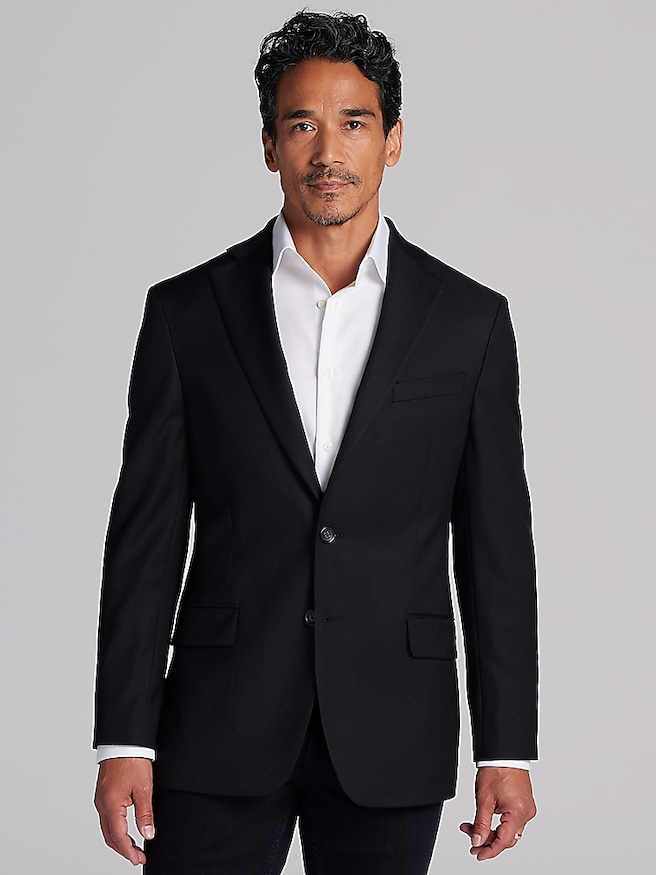
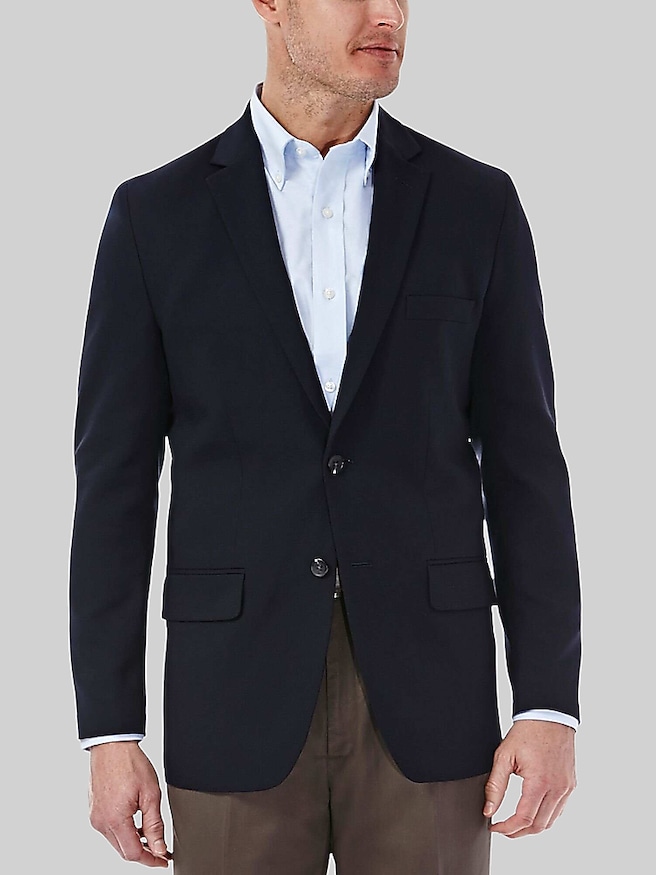
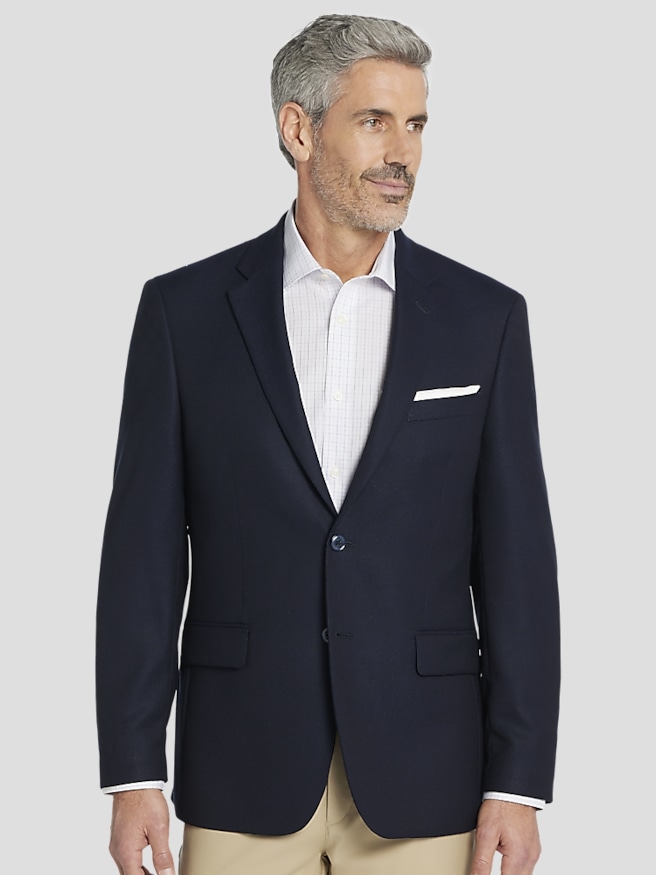
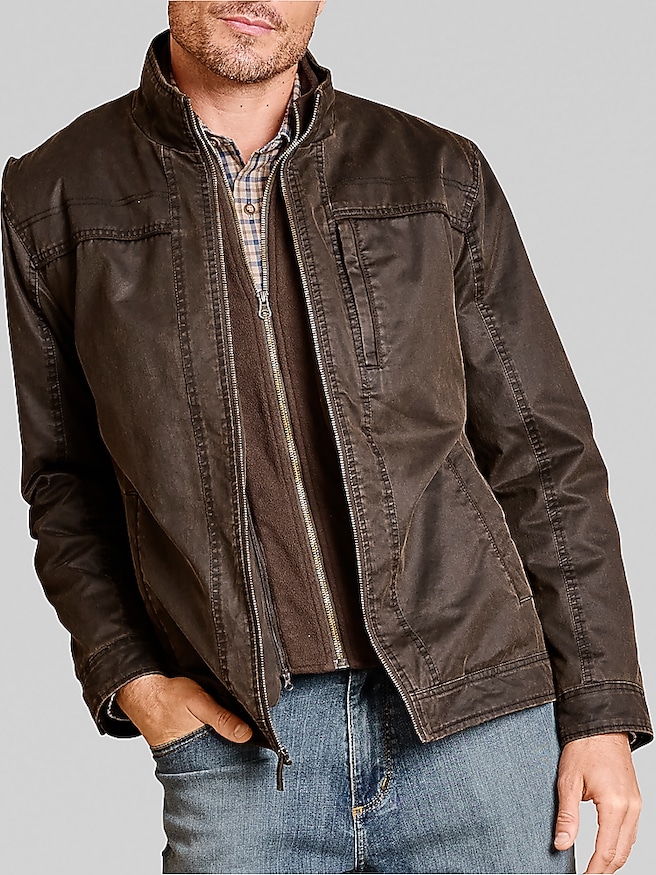
Men’s warm cotton jackets combine the familiar feel of a cotton outer shell with construction that helps retain body heat, often through a lining or added insulation. Their warmth depends on the complete jacket—not simply the thickness of the cotton—including the lining, insulation, closure, and coverage at the neck, wrists, and waist. A substantial cotton canvas or twill shell can provide a sturdy exterior for everyday wear, while a softer brushed surface gives the fabric a more relaxed feel. Fleece and sherpa-style linings add a cozy interior; quilted designs can hold synthetic insulation or down in place to help distribute warmth. These lining materials are not necessarily cotton, so fiber-content labels matter when comparing how a jacket will feel and perform. Waxed cotton deserves a separate distinction: the wax treatment helps the shell resist moisture and wind, but it is not insulation by itself. A waxed jacket still needs an appropriate lining or layers underneath to provide substantial warmth. For a chilly walk from the train station, an outdoor lunch break, or a weekend spent moving between shops and sidewalks, a lined cotton jacket can strike a useful balance between everyday comfort and a structured appearance. Cotton also has limitations worth understanding. Untreated cotton absorbs water and can take time to dry, making it less suitable for prolonged rain, wet snow, or demanding exposure without additional protection. Breathability varies with the weave, finish, and lining, and a densely woven or coated shell will feel different from a loosely woven cotton fabric. Fall and winter use therefore depends on the conditions as much as the jacket’s appearance. A dry, brisk afternoon calls for a different level of protection than a windy evening outdoors. Warm cotton jackets are especially useful as everyday layers when their insulation and coverage match the amount of time spent outside.
Fit gives a warm cotton jacket much of its everyday versatility. Enough room through the chest and upper arms allows a sweater or sweatshirt to sit underneath without bunching, while a shoulder seam that rests close to the shoulder keeps the jacket from looking oversized. The right balance becomes noticeable in ordinary movements: reaching for a steering wheel, carrying a work bag, or bending to tie a shoe should not pull the back tight or draw the cuffs far up the forearms. Sleeves need enough length to cover the wrists with arms relaxed, and the hem should provide the coverage expected from the silhouette. A waist-length cut can feel convenient for driving and sitting, while a longer body offers more coverage over the hips. Neither shape is automatically warmer; insulation, fit, and openings still determine how well the jacket holds heat. A close-fitting ribbed cuff or an adjustable sleeve opening can limit drafts, and a high collar can protect the neck without the bulk of a separate scarf. Full front zippers make quick adjustments easy, while a covered closure can provide another barrier against wind. Pocket placement matters, too. Hand pockets that are comfortable to reach, secure spaces for small essentials, and an interior pocket that does not press awkwardly against the body all contribute to daily usefulness. For an office with a relaxed dress code, a clean-lined cotton jacket can sit comfortably over a button-down shirt and fine-gauge sweater. With jeans, boots, and a textured knit, the same general category takes on a more casual character for errands or dinner with friends. Navy, olive, tan, and charcoal are easy to coordinate with familiar wardrobe staples, while differences in surface texture can make an otherwise simple outfit feel more considered. A rugged canvas surface brings a workwear influence; smoother twill tends to look more understated. These details give warm cotton outerwear a place in wardrobes built around practical clothing that still looks put together.
Durability and care are closely connected in cotton outerwear, particularly when a jacket combines several fabrics, insulation, hardware, and surface treatments. Dense canvas and twill can stand up well to routine friction, but fabric weight alone does not establish how long a jacket will last. Secure stitching at pocket corners, neatly finished seams, reinforced stress points, and a closure that operates smoothly are useful signs of thoughtful construction. Abrasion from a shoulder bag or repeated contact with rough surfaces can gradually change the shell’s appearance, sometimes creating a softened, worn-in character. That natural change is different from damage caused by improper cleaning. The care label should always take priority: some cotton jackets can be machine washed, while others need professional cleaning or special treatment because of their lining, insulation, or finish. Hot water and high dryer heat can cause shrinkage or affect the jacket’s shape, and washing a waxed shell like an ordinary cotton garment can strip its protective coating. Waxed fabrics generally need care specific to the finish, including compatible reproofing when recommended by the manufacturer. Small marks may be manageable with an approved spot-cleaning method, helping avoid unnecessary full washes. After exposure to moisture, a jacket should be allowed to dry thoroughly before storage, with pockets emptied and enough space around it for air to circulate. A supportive hanger helps preserve the shoulders, while insulation benefits from storage that does not leave it tightly compressed for long periods. These practical considerations also make a warm cotton jacket a thoughtful gift for someone who walks to work, spends weekends outdoors in town, or appreciates an easy layer over everyday clothing. Knowing the recipient’s usual size, preferred jacket length, and typical layers is more useful than guessing from appearance alone. For a lighter seasonal counterpart, Mens Summer Cotton Jackets provides a related direction when substantial insulation is not the priority. The appeal of a warm cotton jacket remains its combination of a familiar fabric, useful coverage, and an easygoing look suited to daily routines.