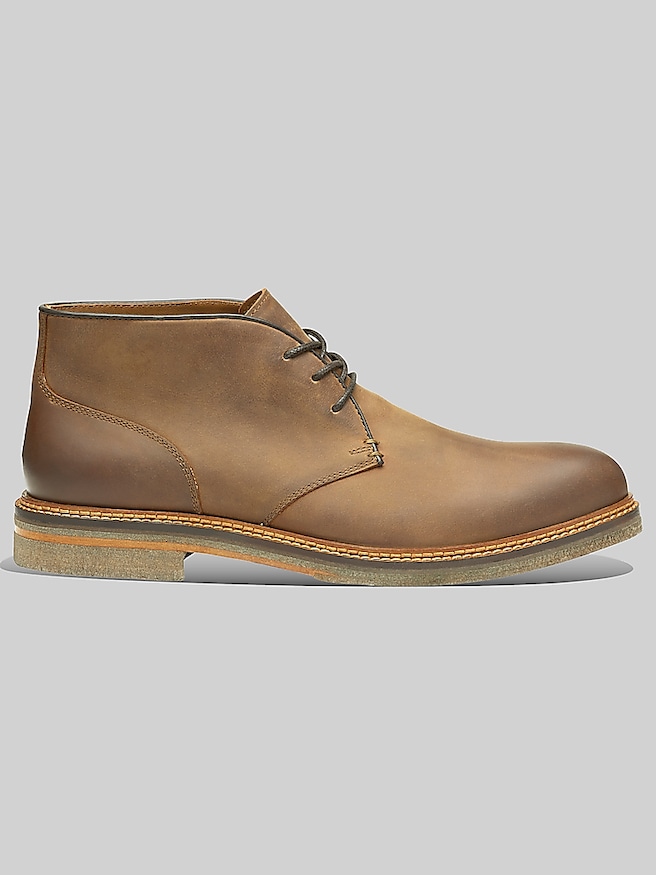
Men’s vintage boots draw on heritage workwear, military-inspired footwear, and Western traditions, bringing recognizable shapes and lived-in character to everyday dressing. The category includes authentic boots made in earlier decades as well as newly made boots designed with vintage influences; an aged appearance alone does not establish a pair’s history. Rounded toes, substantial soles, speed hooks, pull tabs, and restrained stitching are familiar details, though each silhouette expresses that heritage differently. Lace-up styles often have the sturdy proportions associated with traditional work boots, while streamlined ankle boots offer a quieter interpretation that feels natural with tailored clothing. Western-inspired shapes introduce angled heels, shaped shafts, and distinctive stitching without necessarily requiring a head-to-toe Western outfit. Much of the appeal comes from the relationship between material and construction. Smooth leather can develop creases and variations in tone through wear, while suede brings a soft, textured surface that contrasts well with denim and woven trousers. Full-grain leather retains the hide’s natural surface, including some visible variation, but the leather designation alone does not determine overall quality or comfort. Thickness, tanning, lining, stitching, and sole construction all contribute to how a boot feels and ages. Burnished toes and deliberately darkened seams can suggest years of use on a newly made pair, whereas genuine patina develops through handling, movement, and care. Neither approach needs to look exaggerated to feel convincing. A rich brown lace-up with subtle tonal variation can convey vintage character just as clearly as a more heavily distressed silhouette. Black leather tends to emphasize shape and hardware, while tan and deeper brown shades make changes in texture easier to see. The most versatile vintage-inspired boots balance these details rather than relying on artificial wear alone, creating footwear with visual depth that still works within a practical wardrobe. That balance lets the historical influence register without making an outfit feel like a reproduction of another era.
Fit gives men’s vintage boots their everyday usefulness, especially when a substantial-looking shape needs to feel comfortable beyond a short outing. Toe shape affects both appearance and space: a tapered profile can look refined, but the toes should not feel compressed, while a rounded toe should provide room without allowing the foot to slide forward. The widest part of the foot should align comfortably with the widest part of the boot, and the upper should hold the instep securely without creating concentrated pressure. Lace-up construction allows adjustments across the foot and ankle, which can be helpful when accommodating sock thickness or a higher instep. Pull-on styles depend more heavily on the shape of the opening, shaft, and footbed, making a secure fit especially important. Some leather uppers soften with use, but boots that pinch sharply or feel too short should not be expected to become the correct size through wear. Comfort also depends on what sits underfoot. A flexible sole and cushioned footbed may suit someone who spends much of the day moving between a desk, appointments, and dinner, while a firmer construction can feel more structured. Leather soles often create a sleeker profile, and rubber soles can add traction, although performance varies with the tread and surface. Intended use matters more than rugged styling: a heritage appearance does not mean a boot meets protective workplace requirements. For everyday outfits, straight-leg denim gives a substantial boot enough room to sit naturally beneath the hem. Chinos offer a cleaner contrast, particularly when the fabric falls without bunching around the ankle. With wool trousers or a casual sport coat, a less bulky silhouette and restrained hardware help connect the footwear to the rest of the outfit. More pronounced distressing can work with textured knits and denim, while smoother finishes suit settings that call for a neater appearance. Hem length makes a noticeable difference in either case, allowing the boot’s shape to remain visible without making the footwear the only focal point.
Durability in vintage-style boots comes from the complete construction rather than any single visible detail. Even stitching, securely attached soles, sound hardware, and leather that flexes without feeling brittle are useful qualities to consider. Welted construction can make resoling possible, depending on the design and condition, while other attachment methods may offer a lighter or more flexible feel. Repair potential is worth considering for someone who enjoys keeping familiar footwear in regular rotation, but not every boot can be rebuilt, and a pronounced stitched edge does not by itself confirm how the sole is attached. Authentic older boots call for particular attention to condition: an appealing upper can coexist with dried leather, worn linings, weakened seams, or deteriorating sole materials. Unworn older footwear can also show age-related deterioration, so little visible wear is not a guarantee of readiness for daily use. Ongoing care helps preserve both appearance and function. Loose dirt is best removed before it works into seams, and smooth leather generally benefits from a suitable cleaner and conditioner used according to the material’s needs. Too much conditioner can change the finish or leave leather overly saturated, so a light, considered approach is preferable to frequent heavy applications. Suede needs its own brush and compatible care products rather than treatments intended for polished leather. Allowing boots to air out between wears, using a shoehorn when appropriate, and supporting their shape during storage can reduce avoidable stress on the lining and heel. These habits preserve character without trying to erase every crease. Compared with the understated look of Men's Simple Boots, vintage-inspired footwear often makes its personality more visible through texture, hardware, and tonal variation. That character can make boots a thoughtful gift for someone drawn to classic clothing, old-school craftsmanship, or denim with a tailored jacket. For gifting, the recipient’s usual footwear shape, preferred closure, and actual measurements are more reliable starting points than size alone. A pair that complements familiar clothing and fits comfortably has the best chance of becoming a lasting part of everyday dressing.