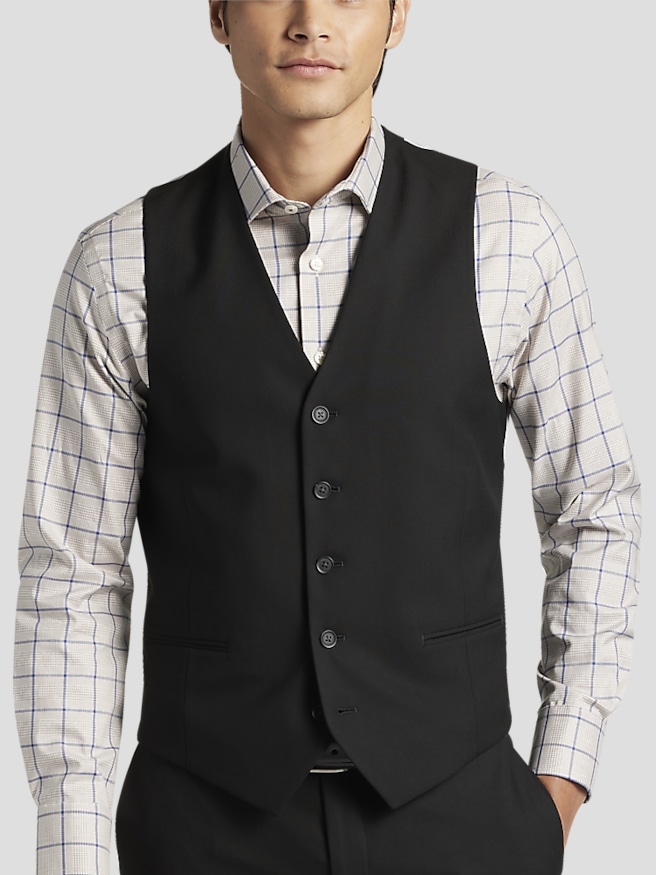
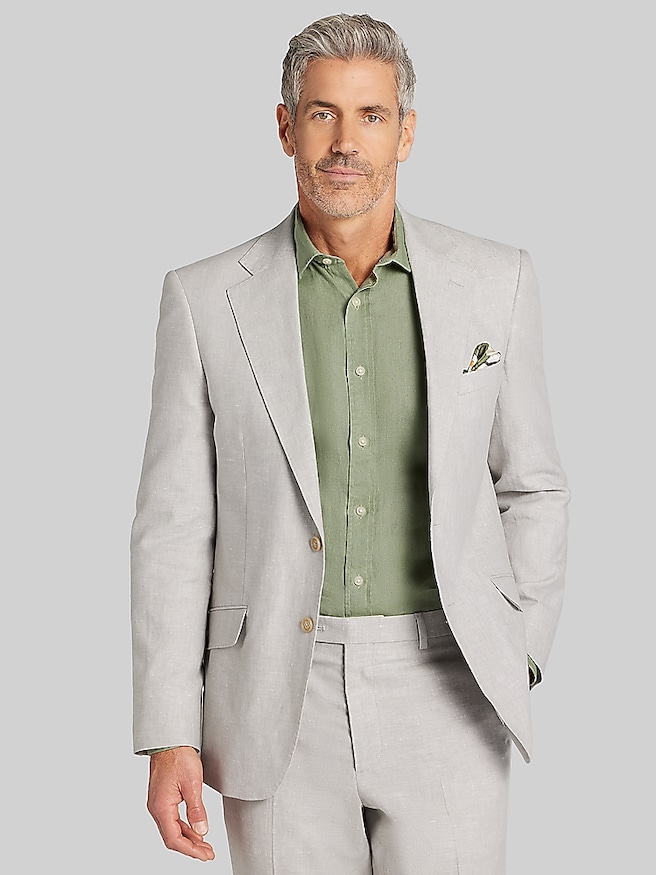
Men’s vested suits bring a distinctive sense of completeness to tailored dressing, pairing a jacket and trousers with a vest that gives the outfit a clean, layered silhouette. Often called three-piece suits, they have a place at weddings, business gatherings, graduation celebrations, and other occasions where a little more polish feels appropriate. The vest adds definition through the torso and keeps a shirt and tie looking composed when the jacket comes off, whether that happens during a long reception or between meetings at a conference. A coordinated vest creates a continuous line from the jacket through the trousers, while its neckline leaves room for a tie knot and a neat section of shirt front. That balance is part of the appeal: the extra layer adds visual interest without requiring elaborate accessories. Navy, charcoal, and medium gray offer familiar foundations for professional settings and formal celebrations, while textured fabrics and subtle patterns can give the same three-piece structure a more expressive character. A fine stripe emphasizes the vertical lines of the suit; a restrained check adds depth that becomes more noticeable up close. For a groom, a vested suit can distinguish the wedding outfit while remaining useful for later occasions. For a guest, it offers a dressed-up alternative to a standard two-piece suit without automatically reaching the formality of a tuxedo. Dress codes still matter, particularly when an invitation specifies black tie. A vested suit is not a substitute for a tuxedo in every setting, but it works naturally for many events calling for tailored attire. Celebrations with more room for personality may also invite the expressive styling associated with Mens Party Suits. The defining appeal of a vested suit, however, remains its coordinated structure: three pieces that look intentional together, with enough flexibility to suit both a photographed milestone and an ordinary workday that calls for sharper presentation.
Fabric and fit determine how comfortably that structure carries through the day. Wool is a traditional suiting material because it drapes well, allows moisture vapor to pass through, and can recover from light creasing with rest between wears. Wool blends may combine that natural character with fibers chosen for resilience, softness, or added stretch. Fabrics containing polyester can offer abrasion resistance and shape retention, while a small amount of elastane may provide more give through movements such as sitting, reaching, or walking. Fiber content is only part of the picture; weave, fabric weight, lining, and construction also influence how a suit feels and hangs. A smooth worsted fabric gives a crisp, even surface, while a more textured weave creates depth without relying on a bold pattern. Because a vested suit includes an additional fitted layer, proportion deserves particular attention. The jacket should sit cleanly at the shoulders, with enough room through the chest to close without pulling across the buttons. The vest should follow the torso rather than squeeze it, and its front should meet or overlap the trouser waistband so that a strip of shirt does not interrupt the outfit when standing. An adjustable back strap can refine the vest’s shape, though it cannot correct a size that is fundamentally too large or too small. The armholes should leave room for movement without excessive gaping. Slim, tailored, and more relaxed cuts can each look polished when their proportions suit the wearer; a close silhouette is not automatically a better fit. Trousers need comfortable room through the seat and thighs, with a rise that works with the vest’s length. Hem length affects the overall line as well, from a slight break over dress shoes to a cleaner finish with very little break. Useful fit checks happen in motion: sitting at a dinner table, extending an arm for a handshake, or climbing stairs can reveal tension that is easy to miss while standing still.
The details around a vested suit help establish its character without competing with the three-piece shape. A white dress shirt creates a clear, classic contrast, while pale blue introduces a softer distinction with many dark suit fabrics. A collar that holds its shape and accommodates the tie knot keeps the neckline tidy, especially because the vest draws attention to that area. Ties with modest texture or small-scale patterns can add dimension, and a pocket square works best when it complements the outfit rather than repeating every color and pattern exactly. The vest already provides a strong focal point, so a few deliberate accessories often look more assured than several competing accents. Dress shoes and a belt, when worn, should feel consistent in finish and formality; trousers with side adjusters or suspenders offer other ways to maintain a smooth waistband. On many traditionally cut vests, the lowest button is left undone to let the front sit naturally, although the garment’s design should determine how it is fastened. Long-term appearance depends on construction and care as much as styling. Neat seams, secure buttons, smooth linings, and fabric that hangs evenly all contribute to a suit that holds its shape through repeated wear. A broad, supportive hanger helps preserve the jacket’s shoulders, while hanging trousers along their crease reduces unnecessary folds. Emptying pockets after wear prevents stretched areas, and a gentle clothing brush can remove surface dust before it settles into the fabric. Care labels should guide cleaning, with professional cleaning used when needed rather than automatically after every outing. Cleaning coordinated pieces together can help limit noticeable differences in color over time. A vested suit can also be a thoughtful gift for a graduate, partner, or family member marking a professional or personal milestone, particularly when the choice allows for fitting and alterations. Its lasting value comes from comfortable proportions, versatile styling, and the confidence of an outfit that feels considered from the first button to the trouser hem.