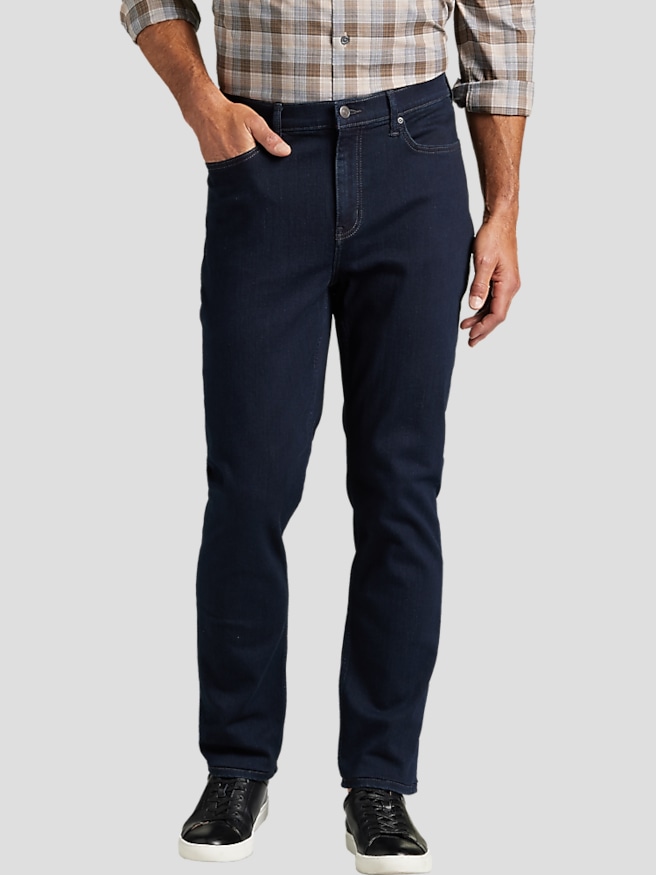
Trendy men's jeans combine contemporary fits, distinctive washes, and everyday comfort in denim that feels personal rather than overly styled. Slim, straight, tapered, and relaxed silhouettes each create a different outline, while details such as the rise, leg opening, and hem length determine how the finished outfit looks. Slim jeans follow the leg closely without needing to feel restrictive; straight-leg jeans maintain a more consistent width from the knee down. Tapered jeans provide more room through the upper leg before narrowing toward the ankle, and relaxed fits offer additional space through the seat and thighs. None of these shapes has to be reserved for a particular age or build. The strongest match depends on personal proportions, movement, and the shoes and shirts worn most often. A comfortable waistband should stay in place without pinching when seated, and the fabric across the front pockets should lie relatively flat rather than pulling sharply outward. Enough room through the thighs makes a difference during a commute, a long dinner, or an afternoon spent walking around town. Rise matters just as much as leg shape: a mid-rise cut offers a familiar balance, while a higher rise can create a longer leg line and pair neatly with a tucked shirt. Length also changes the character of the jeans. A hem that meets the top of a sneaker with minimal bunching looks clean and deliberate, while a little extra length can create a more casual break over boots. Excess fabric collecting around the ankle can obscure an otherwise well-proportioned fit. For someone updating an everyday wardrobe, a contemporary silhouette does not have to mean an extreme one. A modest change in taper, a straighter leg, or a cleaner hem can make familiar combinations feel more considered without sacrificing comfort. Jeans that accommodate sitting, bending, and walking naturally are more likely to become dependable favorites than a pair chosen for appearance alone.
Fabric and finish give men's trendy jeans much of their personality. Cotton denim has a recognizable woven texture and can develop softer creases and individual fading with repeated wear. All-cotton construction generally feels firmer at first, while denim blended with elastane or another stretch fiber can provide additional give. Stretch content alone does not determine comfort or shape retention; fabric weight, weave, construction, and fit all contribute. A substantial denim can create a structured silhouette, while a lighter fabric may drape more softly and feel less bulky through the legs. The right balance depends on whether the jeans are intended for desk time, frequent movement, travel, or casual evenings out. Washes make an equally noticeable difference. Dark indigo creates a relatively uniform foundation for a button-down shirt and an unstructured jacket, while black denim brings a sharp contrast to a light knit polo or a plain T-shirt. Medium blue offers a familiar, versatile appearance, and lighter washes emphasize the casual character of denim. Fading at the thighs, subtle whiskering near the pockets, and worn-looking seams add visual texture, but pronounced distressing creates a more informal impression than a clean, even finish. In workplaces that permit denim, an undamaged dark wash with minimal fading often fits more naturally alongside collared shirts and leather shoes; individual dress codes still take priority. Outside the office, straight jeans with low-profile sneakers and a tucked T-shirt can look effortless, while a tapered pair can frame boots without concealing their shape beneath excess fabric. Relaxed denim works well with a shirt that has enough structure to balance the fuller leg. Contrast can be more effective than matching every element: a smooth shirt highlights denim's texture, and a simple shoe allows an interesting wash to stand out. Belts, cuffs, and visible socks can add character, though the jeans do not need every detail at once. Explore additional denim looks with Mens Fall Fashion Jeans.
Thoughtful construction and practical care help denim keep its appeal beyond the first few wears. Even stitching, securely attached belt loops, reinforced pocket corners, and a smoothly operating zipper are useful details to notice. Areas exposed to repeated friction, including the inner thighs, pocket edges, and hems, naturally experience more wear. A good fit can reduce unnecessary strain at seams, while a hem that clears the ground avoids being dragged under a shoe. Care should follow the garment's label, since dyes, finishes, and fiber blends may need different treatment. When machine washing is permitted, turning jeans inside out and washing with similar colors can help limit surface abrasion and reduce the risk of dye transfer to lighter clothing. Cold water and a gentle cycle may help preserve the appearance of many denim fabrics, but the label remains the best reference. Dark denim can release color, especially early in its life, so contact with pale upholstery, light shoes, or other light fabrics deserves some attention. Excessive dryer heat can contribute to shrinkage and affect stretch fibers; air-drying or a lower-heat setting may be appropriate when the care instructions allow it. Washing according to actual wear rather than automatically after every brief outing can also limit unnecessary laundering, with prompt cleaning for stains and noticeable soil. For gifting, jeans are most useful when the recipient's preferred rise, fit, waist measurement, and inseam are known. Two pairs marked with the same size can feel different because their cuts and fabrics differ, so familiar measurements and established preferences matter more than assumptions. Someone who favors clean, understated outfits may appreciate uniform dark denim, while a person drawn to casual texture may prefer visible fading or a roomier silhouette. Whether intended for everyday rotation, relaxed social plans, or a thoughtful gift, well-chosen jeans bring together a comfortable fit, a wearable finish, and construction suited to repeated use.