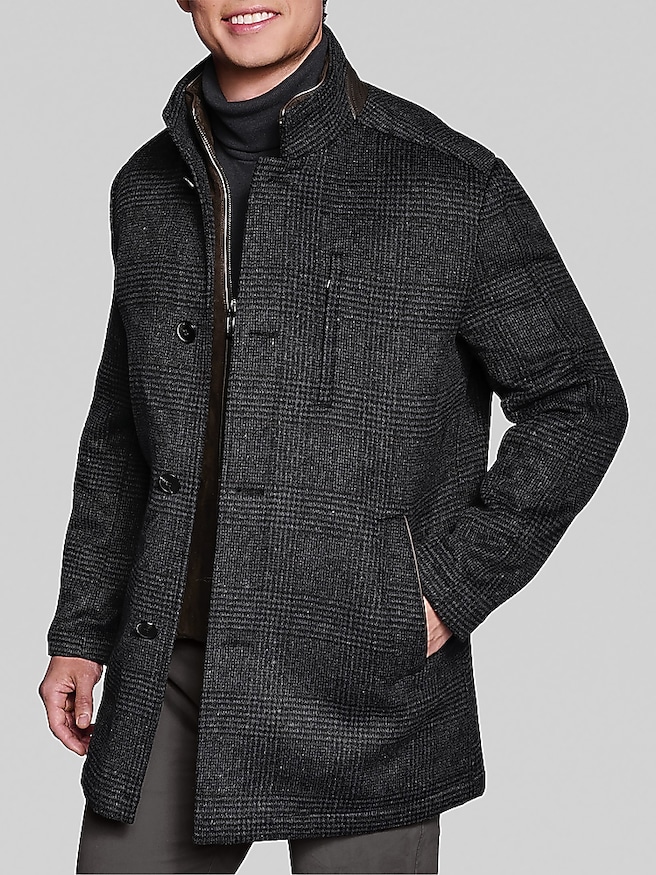
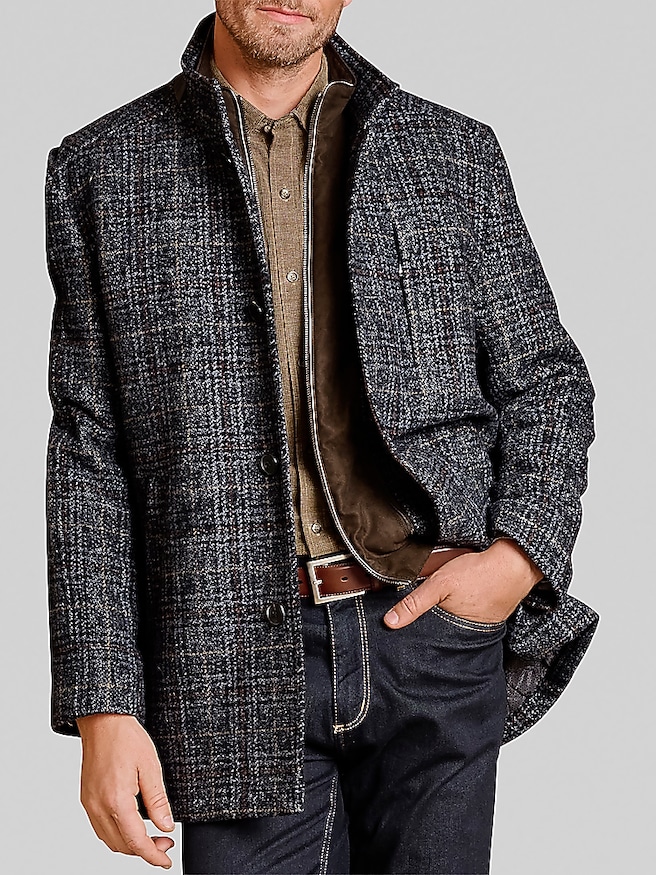
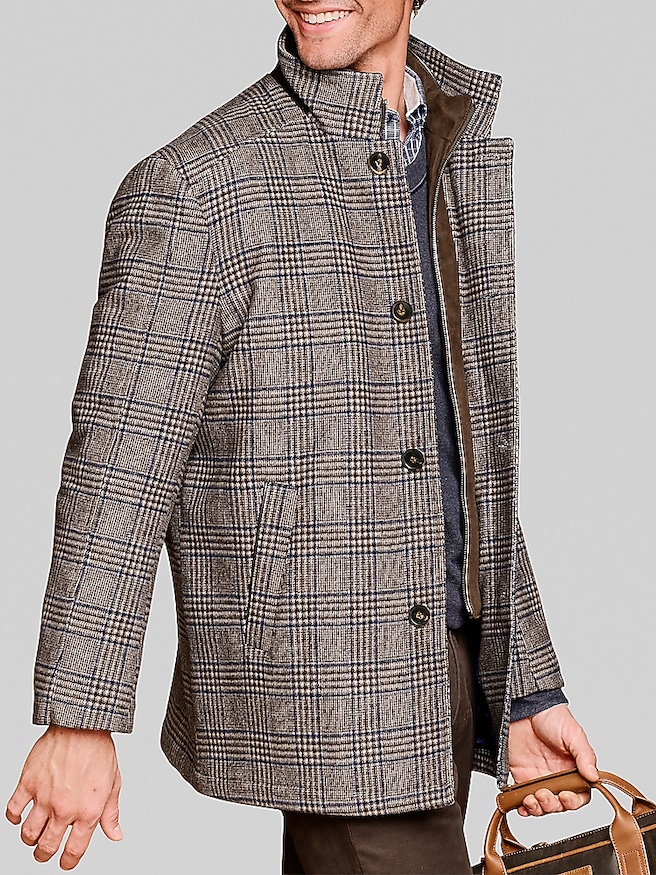
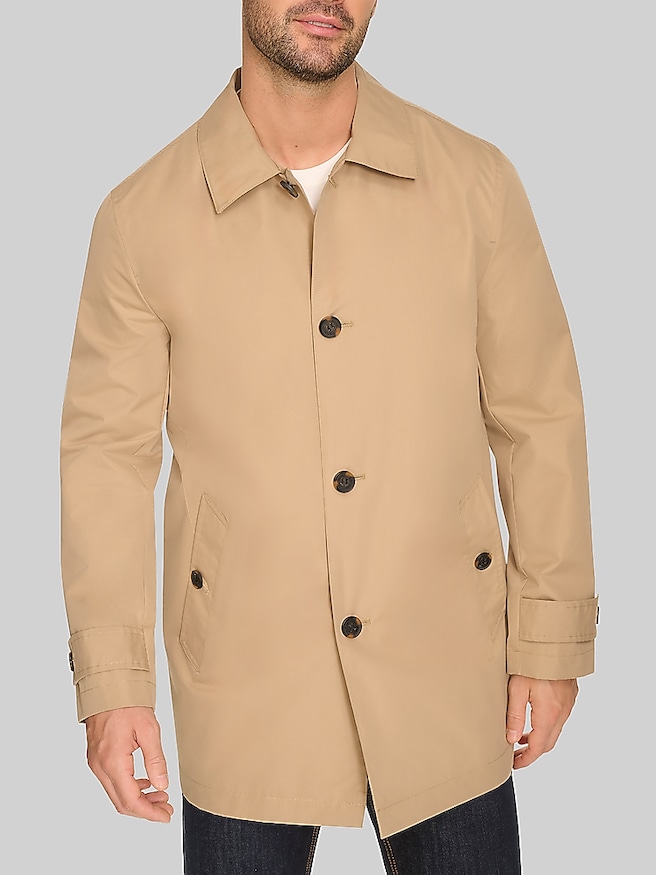
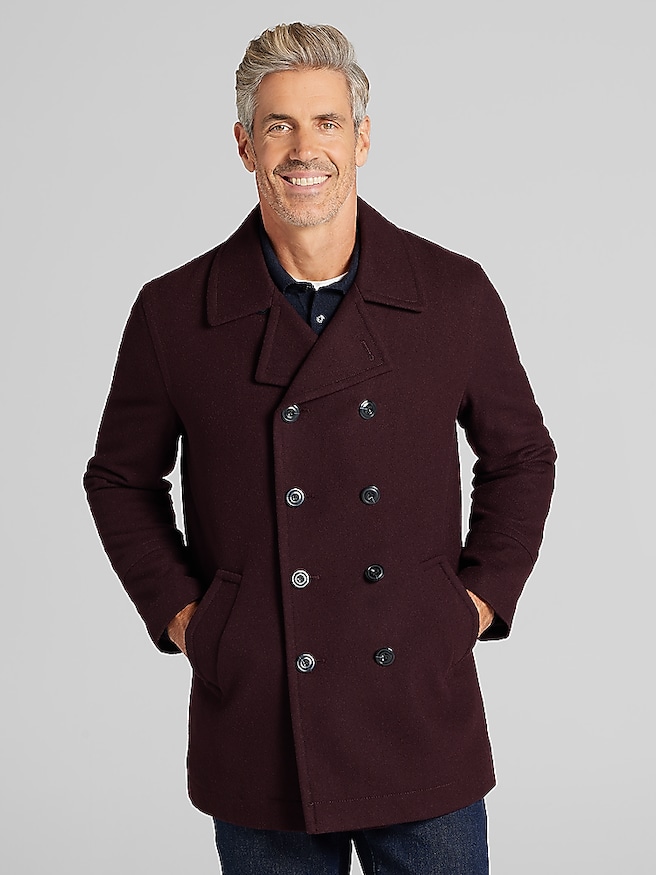
Men’s wool peacoats are short, structured outerwear defined by a double-breasted front, broad lapels, and a substantial fabric that brings warmth without the length of a full overcoat. Their roots in naval clothing explain much of their lasting appeal: an overlapping front helps shield the chest from wind, a wide collar can provide extra coverage when raised, and pockets offer a practical place for cold hands. The familiar silhouette works just as comfortably over office clothing as it does with denim and a knit sweater. Navy is the traditional color, while black, charcoal, and camel give the same shape a distinct character. Wool is central to that combination of warmth and structure, but the fiber content alone does not tell the whole story. Fabric weight, weave, lining, and the amount of room for layers all influence how a coat feels in use. Melton, a densely woven wool fabric finished to create a compact surface, is closely associated with traditional peacoats. Its firm hand helps the lapels hold their shape and gives the body a clean outline. A high wool content can provide insulation and a rich texture, while wool blends may include nylon or polyester for added strength or a lighter feel. A blend is not automatically less durable or less useful; the proportions and construction matter more than a simple distinction between pure wool and mixed fibers. A smooth lining makes it easier to slide the coat over a sweater or jacket, and added insulation can increase warmth without being obvious from the outside. Heavier cloth often feels more substantial, though weight alone is not a reliable measure of comfort or quality. For a walk from the train station to the office, dense wool and an overlapping front can make a noticeable difference. For prolonged exposure to severe cold, additional insulation, greater coverage, and accessories may be necessary. Wool peacoats are best understood as versatile cold-weather coats rather than waterproof shells; dense cloth can help resist wind and brief light precipitation, but sustained rain calls for more suitable protection.
The fit of a wool peacoat shapes both its appearance and its usefulness. A balanced fit sits neatly across the shoulders, closes without pulling across the chest, and leaves enough space for the clothing underneath. Double-breasted fronts are intended to overlap, so tension around the buttons or lapels that lift away from the chest can signal insufficient room. Extra space is useful for layering, but an overly loose body can lose the crisp outline that makes the style distinctive. The most realistic fit assessment reflects everyday wear: a coat that feels comfortable over a thin shirt may feel restrictive over a substantial sweater or suit jacket. Reaching for a steering wheel, sitting on a commuter train, or carrying a work bag can reveal tightness that is less apparent when standing still. Sleeves should cover the wrists without swallowing the hands, and the shoulder line should stay orderly rather than collapsing or extending noticeably beyond the body. Traditional peacoats generally finish around the hips or upper thighs, offering freedom of movement and a less formal profile than a long overcoat. That shorter length also makes jacket coverage worth considering; a longer suit jacket may extend below the hem. The visual effect changes with color and texture, too. Navy pairs naturally with gray trousers, dark denim, and brown leather footwear. Charcoal creates a quiet backdrop for textured knitwear, while black gives a sharper contrast against lighter clothing. Camel adds warmth to neutral outfits and looks especially distinct beside navy or deep gray. A scarf can fill the open neckline without crowding the lapels, and a fine-gauge sweater keeps the silhouette streamlined when bulky layers are unnecessary. These qualities make men’s wool peacoats useful for workdays, dinner plans, weekend errands, and travel with a relatively compact wardrobe. As a gift, the style suits someone who appreciates practical clothing with a tailored appearance, especially when the size and usual layering habits are already known. A familiar neutral color is often easier to integrate into an established wardrobe than a shade chosen only for its novelty.
Durability in a wool peacoat comes from the relationship between fabric, construction, and care. Dense cloth gives the coat substance, but secure buttons, sound seams, a sturdy lining, and well-finished pocket openings also matter because these areas receive repeated stress. A smooth, even surface and lapels that settle neatly contribute to an orderly appearance, while thoughtful maintenance helps preserve it. Wool does not need aggressive washing after every wear. Airing the coat after use, gently brushing away surface dust, and following the care label can reduce unnecessary cleaning and keep the fabric looking fresh. Many structured wool coats call for professional dry cleaning, particularly when linings and internal shaping materials are involved. Spot treatment should follow the label’s directions rather than a generic home-cleaning method. A broad, supportive hanger helps maintain the shoulders, and enough closet space keeps the lapels from being pressed into awkward folds. If the coat becomes damp, allowing it to dry naturally away from direct heat helps protect its shape; a radiator or hot dryer can damage wool and affect internal construction. Pilling may develop where a bag strap or sleeve repeatedly rubs the fabric, and careful use of an appropriate fabric tool can address surface fuzz without pulling at the weave. Before extended storage, the coat should be clean and completely dry, with breathable protection and suitable precautions against moths. For everyday cold-weather dressing, Winter Peacoats for Men offer a familiar balance of structure, warmth, and manageable length. That balance is particularly useful for routines involving outdoor walks between indoor destinations rather than hours of continuous exposure. A comfortable shoulder, enough room for a useful midlayer, and fabric suited to the expected conditions make the coat easier to wear repeatedly. With appropriate care, a well-made wool peacoat can remain a dependable part of a wardrobe for years, developing familiarity without losing the clean lines that give it its character.