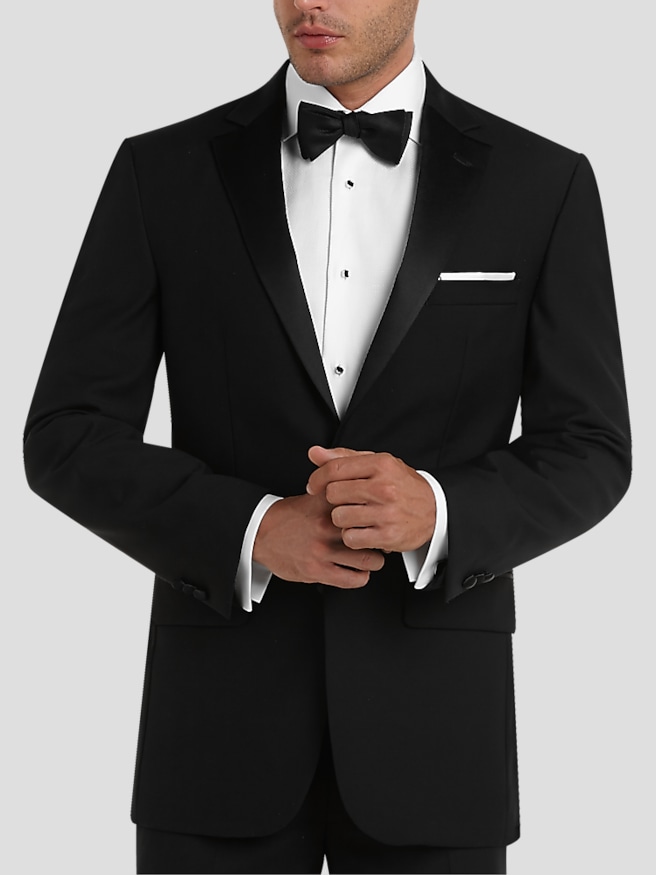
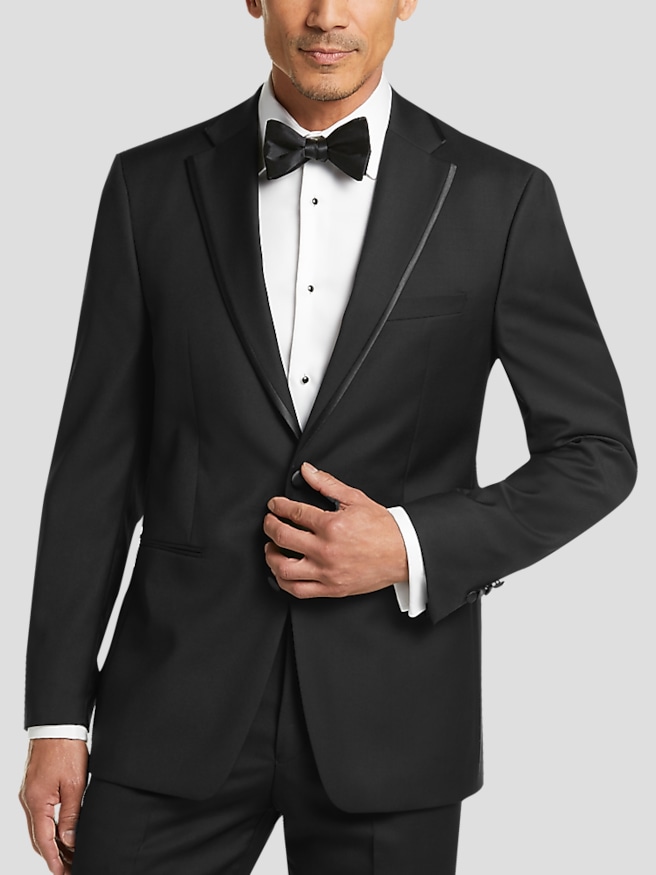
Men's tailored tuxedos bring a defined silhouette and traditional formal details to weddings, black-tie celebrations, galas, and other occasions that call for more than a business suit. A tailored tuxedo follows the body without pulling across the chest, restricting the shoulders, or leaving excess fabric through the seat and legs. The term describes the fit rather than guaranteeing a particular method of construction: ready-to-wear tuxedos can be adjusted through alterations, made-to-measure garments adapt an existing pattern to individual measurements, and bespoke garments begin with an individually developed pattern. Those distinctions matter, but the visible result should be balanced proportions and comfortable movement. A tuxedo is typically distinguished from a suit by satin or grosgrain lapel facings, formal button treatments, and coordinating trim along the outer trouser seams. Peak lapels create a pronounced line toward the shoulders, while a shawl collar forms a smooth curve around the neckline. A single-breasted jacket offers a familiar, streamlined profile; a double-breasted jacket places more emphasis on the chest and overlapping front. For a traditional foundation, Men's Black Tuxedos pair naturally with a white formal shirt and black accessories, creating the crisp contrast associated with classic black-tie dressing. Midnight blue is another established formalwear color, while textured fabrics and contrasting dinner jackets create a more expressive look when the occasion permits. The invitation should lead that decision. A strict black-tie event generally favors traditional tuxedo styling, whereas a celebration with a more flexible dress code may leave room for personal details. For a groom, a wedding guest, a prom attendee, or someone who regularly attends formal dinners, a tailored tuxedo provides a composed appearance that can feel distinctive without relying on conspicuous decoration. Its strongest details are often quiet ones: a collar that rests neatly against the shirt, lapels that lie flat, and trousers that fall in a clean line over formal shoes.
Fit deserves attention both in the mirror and in motion. Jacket shoulders should sit close to the natural shoulder line without obvious overhang or dents, and the collar should remain against the back of the neck rather than standing away from it. When the jacket is fastened, the front should lie smoothly; pronounced pulling around the button often signals that the chest or waist needs more room. A slim silhouette should not require holding the arms stiffly or avoiding a seated position. Trying a tuxedo with the intended formal shirt and shoes makes it easier to judge sleeve length, trouser length, and the overall balance. A small amount of shirt cuff usually shows below the jacket sleeve, while the trouser hem can be finished with little or no break according to the cut and personal preference. The rise should allow the waistband to sit comfortably without sagging, and the seat and thighs need enough ease for sitting through dinner or stepping onto a dance floor. Jacket length, lapel width, and trouser shape work together, so choosing the narrowest possible cut is not always the route to a polished result. Some adjustments, such as sleeve or trouser hemming, are relatively straightforward; major changes to the shoulders or jacket length can be more involved. Materials also influence how that fit looks and feels. Wool is a traditional tuxedo fabric because it combines drape, breathability, and natural crease recovery. Wool blends can offer other performance characteristics, depending on their fiber content and construction. A touch of stretch may support movement, but it cannot correct a garment that is too tight. Fabric weight, weave, lining, and internal structure all affect comfort and shape. Smooth lapel facings should lie evenly, seams should look tidy, and closures should feel secure. For repeated wear, careful construction and sufficient room at stress points can matter as much as the fabric's initial appearance.
Finishing a tailored tuxedo is largely an exercise in proportion and restraint. A formal shirt with a turndown collar is a versatile partner, and a bow tie relates naturally to the tuxedo's traditional character. Pleated fronts, textured bib fronts, French cuffs, and shirt studs each change the level of detail without requiring a different silhouette. A cummerbund or a low-cut formal waistcoat can cover the waistband beneath an open jacket; they are generally alternatives rather than pieces to wear together. Tuxedo trousers often use side adjusters or suspenders instead of a belt, helping preserve a smooth waistline. Polished formal shoes ground the outfit, while socks that stay up prevent an exposed gap when seated. A neatly folded pocket square adds contrast without competing with the lapels, and restrained cufflinks can provide a personal touch. For a wedding party, consistent shirt fronts, bow ties, and trouser hems create cohesion even when each tuxedo is fitted to a different body. For someone attending several formal events, familiar accessories can make getting dressed simpler while small changes keep the outfit appropriate to each setting. A tuxedo can also be a meaningful milestone gift, though measurements, preferred fit, and the recipient's expected occasions should guide such a personal choice. Protecting the garment afterward helps preserve both its shape and finish. Follow the care label, address spills promptly, and use a cleaner experienced with formalwear when professional cleaning is needed. Repeated cleaning without a clear need can be hard on fabrics and trims. After wearing, let the jacket and trousers air out before storage, and empty the pockets so they do not stretch or distort the garment. A broad, supportive jacket hanger helps maintain the shoulders, while properly supported trousers retain their line. Store the tuxedo clean and dry in a breathable garment bag with room around it rather than compressed tightly in a closet. Avoid improvised pressing on shiny lapel facings, which can be marked by inappropriate heat or pressure. With thoughtful fitting, restrained styling, and attentive care, a tailored tuxedo can remain a dependable part of a formal wardrobe for many occasions.