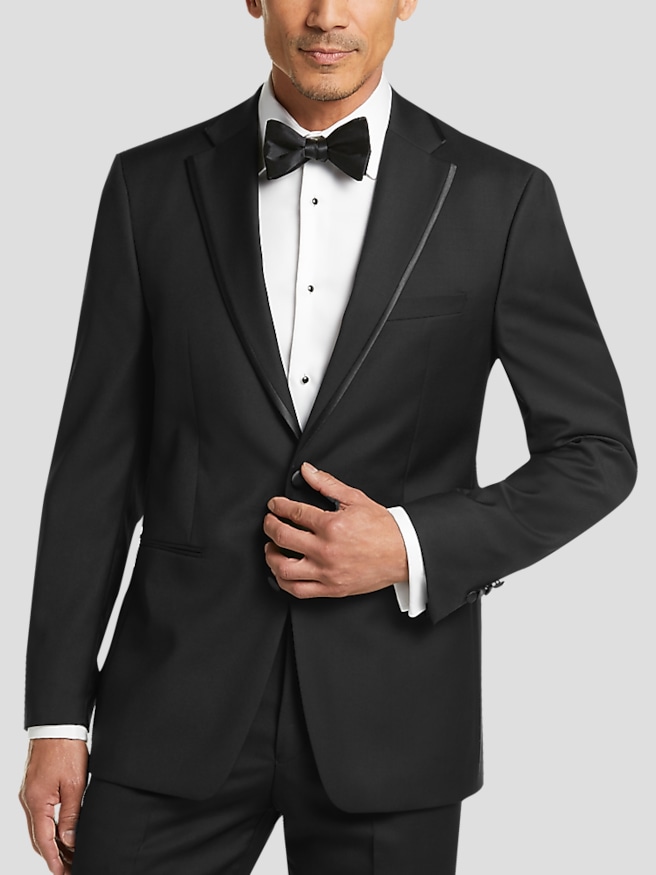
Men’s fashion tuxedos combine formal tailoring, distinctive lapels, and refined fabrics for weddings, black-tie events, proms, galas, and other dressy celebrations. A well-balanced tuxedo depends on three elements: a comfortable fit, a lapel shape that complements the wearer, and a fabric suited to the occasion. Unlike a standard suit, a traditional tuxedo typically features satin or grosgrain lapel facings, covered buttons, and coordinating trousers with a narrow stripe along the outside seam. Those details create a cohesive evening look without requiring elaborate decoration. Peak lapels have upward-pointing edges that give the jacket a defined, angular outline, while a shawl collar curves smoothly around the neckline for a softer effect. Lapel width also influences the overall impression: narrower proportions can feel understated, while broader lapels make a stronger statement. Black remains a dependable foundation for formal dressing, and midnight blue offers a similarly classic appearance with subtle depth under evening lighting. Other colors, textured fabrics, and patterned dinner jackets allow more personal expression when the event’s dress code leaves room for it. For a wedding party, coordinated details can establish a shared look without requiring every wearer to have the same build or preferred cut. Fabric contributes as much to the experience as it does to the appearance. Wool is valued for its drape, breathability, and ability to recover from light creasing, making it a practical choice for an evening that includes a ceremony, dinner, and dancing. Wool blends vary in feel and performance according to their fiber content and construction. Velvet creates a richer surface that catches the light, while fabrics with a touch of mohair can have a crisp hand and subtle luster. The appeal of Designer Tuxedos often lies in the relationship among these elements: the sweep of a lapel, the texture of the cloth, and the way the jacket falls when buttoned.
Fit gives a tuxedo its shape and determines how naturally it moves through an event. The shoulder line should sit close to the wearer’s own shoulders without extending noticeably beyond them or creating dents beneath the sleeve. Across the chest, the jacket should lie smoothly rather than pull into an X around the fastening. A close silhouette can still leave enough room to reach forward, sit at a dinner table, and greet guests comfortably. Slim, modern, and classic fit descriptions offer a starting point, but those labels are not standardized across all tailoring. The actual balance through the shoulders, chest, waist, and seat matters more than the name of the cut. Jacket length helps keep the torso and legs in proportion, while sleeve length generally allows a small amount of shirt cuff to show. Trousers should rest securely at the intended waist position and fall cleanly through the thigh and knee. Excess fabric around the ankles can interrupt the line of an otherwise sharp outfit, while an overly narrow leg may catch on the calf or pull when seated. A slight break or a clean, nearly unbroken hem can both work, depending on the trouser shape and footwear. These details become especially noticeable in wedding photographs, where a jacket that rides up or trousers that bunch can distract from the whole look. Alterations can refine sleeve length, trouser hems, and some waist shaping, but they cannot easily correct every issue with the underlying proportions. A tuxedo also needs to work with the clothing worn beneath it. A formal shirt should sit comfortably at the neck and remain smooth under the jacket, with enough sleeve length for easy movement. The result is formalwear that looks composed while standing at the ceremony and feels manageable several hours later, rather than a close fit that works only in a mirror.
Finishing details help establish whether a tuxedo feels traditional, expressive, or somewhere between the two. A black bow tie, white formal shirt, and polished black dress shoes create a familiar black-tie foundation. A waistcoat or cummerbund can provide a clean transition between the shirt and trousers, particularly when the jacket is open. Pocket squares add contrast without needing to match every other accessory exactly, and cuff links or shirt studs can introduce a small, personal detail. For a strict black-tie invitation, restrained combinations generally stay closest to the expected level of formality; a creative celebration may welcome more texture or color. The setting matters, but so does the wearer’s role. A groom may want a distinct lapel treatment or fabric that separates the wedding look from the rest of the party, while a guest may prefer a quieter combination suited to repeated occasions. Someone attending prom might value a more expressive silhouette while still needing comfortable movement throughout the evening. For frequent use, durability comes from sound construction as well as sensible care. Secure buttons, even stitching, smooth linings, and neatly finished seams are useful details to examine. After wearing, a tuxedo benefits from airing out before storage, with the jacket supported on a broad, shaped hanger and the trousers hung to preserve their crease. A breathable garment bag helps protect the fabric from dust without trapping moisture. Care labels should determine cleaning methods, and lapel facings deserve particular attention because direct heat or aggressive pressing can leave marks or unwanted shine. Professional cleaning is appropriate when the garment needs it, rather than automatically after every brief wear. A tuxedo can also be a meaningful gift for a milestone celebration or someone building a formal wardrobe, provided the wearer’s measurements, preferred silhouette, and tailoring needs are understood. With thoughtful fit and careful upkeep, it can remain part of a formal wardrobe for many memorable occasions.