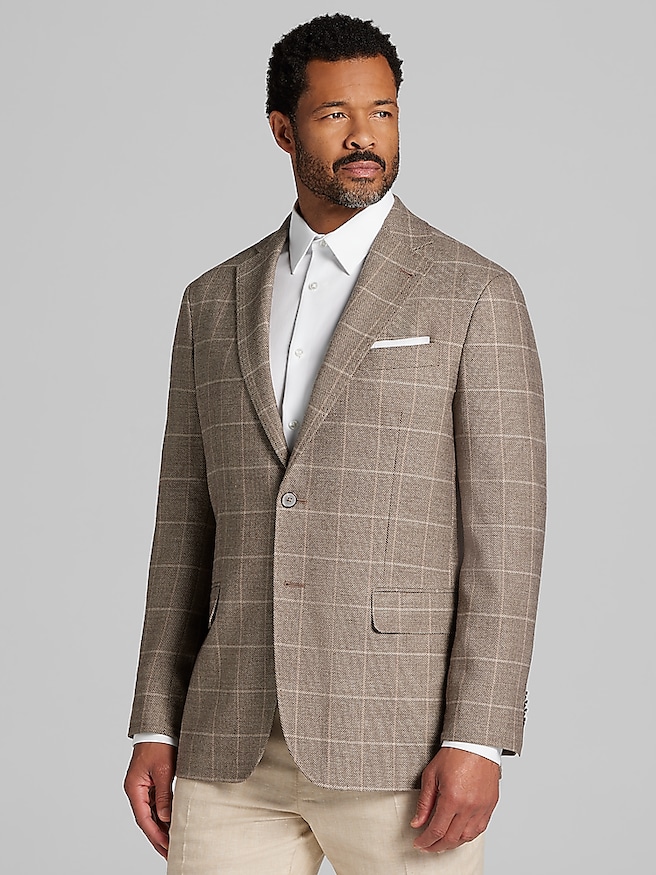
Men's summer linen sport coats bring tailored shape to warm-weather outfits without the weight or formality associated with heavier jackets. Linen is made from flax fibers and is valued for its breathable feel, distinctive texture, and ability to absorb and release moisture. Those qualities make it a practical fabric for outdoor receptions, daytime celebrations, and business-casual settings where a jacket still feels appropriate. The fabric often has subtle variations in the yarn that give the surface depth rather than a perfectly smooth finish. A few soft creases at the elbows or across the waist are part of that character, not necessarily a sign of poor fit or construction. Pure linen tends to have a crisp hand that softens with wear, while linen blends can change the balance of texture, drape, and wrinkle resistance. Cotton can lend a familiar softness, wool can contribute shape and recovery, and certain synthetic fibers can help a fabric hold its appearance. The blend percentage alone does not tell the whole story: fabric weight, weave, lining, and internal construction all influence how a sport coat feels. An open weave allows more airflow than a dense one, while a partial lining leaves more of the outer fabric unobstructed. Lightweight shoulder construction can create a relaxed silhouette, although more structured tailoring may suit someone who prefers a defined outline. Linen fibers have good natural strength, but an airy weave still benefits from thoughtful handling around rough surfaces and sharp edges. Pale shades such as stone, sand, and light gray emphasize the fabric's texture and pair easily with a range of trousers. Navy and deeper earth tones offer a more subdued interpretation while keeping the same distinctive linen character. The result is a category of tailoring that can look polished without needing to appear perfectly pressed from morning to evening.
Fit gives a summer linen sport coat its polish, especially when the fabric has a relaxed drape. The shoulder seam should sit near the natural shoulder, with the collar resting against the shirt rather than pulling away from the neck. Across the chest, there should be enough room for comfortable movement without excess fabric gathering beneath the arms. When the jacket is fastened, pronounced pulling around the button or lapels that bow outward can indicate that the cut is too close. A clean fit through the waist leaves room to sit at a reception table, reach for a glass, or walk comfortably between venues. Sleeve length that reveals a little shirt cuff gives the outfit definition, while jacket length should balance the torso and trousers rather than look cropped or oversized by accident. Slim and roomier silhouettes can both work; the useful distinction is whether the shape follows the body comfortably. For an outdoor wedding with a sport-coat-appropriate dress code, a light linen jacket, a pressed cotton shirt, and lightweight dress trousers create a composed outfit that does not depend on matching fabrics. A pocket square can add a small point of contrast without making the combination feel busy. For dinner on a patio or a less formal office gathering, an open-collar shirt or a fine-gauge knit polo brings the same jacket into a more relaxed setting. Smooth leather loafers make an outfit feel dressier, while understated suede shoes soften it. Texture matters as much as color: a visibly woven jacket often looks best beside trousers with a quieter surface. Linen also belongs within the broader category of Men's Airy Fabric Summer Occasion Sport Coats, where breathable fabrics support occasion dressing. The invitation remains the deciding factor, since a linen sport coat is not a substitute for a suit or tuxedo when either is specifically required.
Care has a direct effect on how well a linen sport coat keeps its shape over repeated wears. The care label should always take priority, because a washable fiber does not automatically make a finished tailored jacket suitable for machine washing. Linings, shoulder components, and internal shaping can react differently to water and heat, and many sport coats require professional cleaning. Between cleanings, a broad, contoured hanger supports the shoulders better than a narrow wire hanger, while space in the closet helps prevent the sleeves and lapels from being crushed. Allowing the jacket to air after wear can reduce lingering odors without unnecessary cleaning. Light steaming may ease wrinkles when the care instructions permit it, but heavy pressure from an iron can flatten the fabric's texture or leave shiny areas. A pressing cloth and an appropriate temperature matter if home pressing is allowed. Spills deserve prompt attention rather than vigorous rubbing, which can spread a mark or disturb the surface. For travel, a garment bag helps protect the fabric, and unpacking the jacket soon after arrival gives folds time to relax. A linen sport coat can be a useful choice for someone attending destination weddings, spending time at daytime social events, or building a business-casual wardrobe with more texture than a standard blazer provides. It can also make a thoughtful graduation or milestone-birthday gift for a recipient who enjoys dressing well but prefers a less rigid look. Shoulder fit, usual shirt size, preferred silhouette, and the colors already in the recipient's wardrobe are more useful considerations than choosing by size alone. Neutral shades often integrate easily with existing trousers and shirts, while a more expressive color suits someone comfortable making the jacket the focal point. With suitable care and a comfortable fit, linen tailoring earns its place through repeat wear: a familiar layer for occasions that call for a little more polish than a shirt alone.