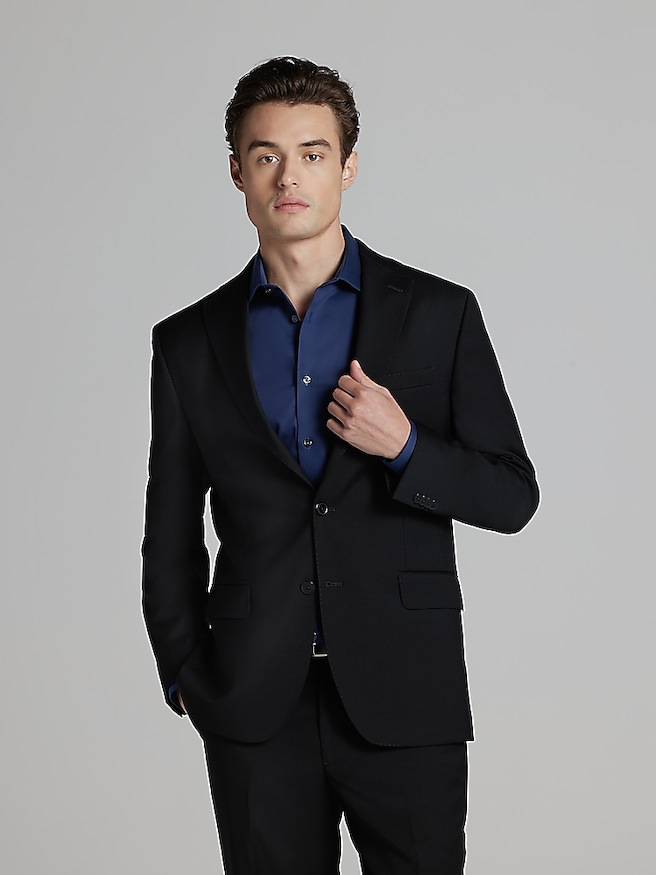
Men's summer lightweight jackets add a comfortable layer for cool evenings, breezy waterfront walks, and the transition from a hot sidewalk to an air-conditioned restaurant. Their appeal is coverage without the bulk of heavier outerwear, making them useful over a T-shirt, polo, or casual button-down. The category includes relaxed zip-front shapes, streamlined bombers, windbreakers, and unstructured shirt-style jackets, each with a slightly different balance of polish and practicality. A simple collar and clean front can sit comfortably alongside chinos for dinner, while a sporty silhouette works naturally with jeans and sneakers for a weekend away. Lightweight does not necessarily mean sheer, flimsy, or strictly athletic; a jacket can have enough structure to sharpen an outfit while remaining easy to carry over an arm. For a commute that starts outdoors and ends in a strongly air-conditioned office, an uncomplicated layer with room through the shoulders often makes more sense than a thick lining or substantial padding. At an outdoor gathering, sleeves provide coverage when the breeze picks up without requiring a complete outfit change. Color also shapes how versatile a jacket feels. Navy, gray, olive, and tan pair easily with familiar wardrobe staples, while lighter shades can create a softer contrast against dark pants. A matte surface tends to look understated, whereas a subtle sheen gives a sporty style a more technical appearance. Minimal detailing makes a jacket easier to wear across casual and slightly dressier settings, though visible stitching, patch pockets, and ribbed trim can add character. Summer and spring layers often share this easygoing construction, and men's lightweight spring jackets offer a closely related category for anyone comparing light coverage and everyday versatility. For travel, low-bulk construction is especially useful when a layer needs to fit beside a book and sunglasses in a carry-on, although wrinkle recovery depends on the fabric and finish rather than weight alone. A practical summer layer should feel useful when worn and manageable when carried.
Fabric and construction determine much of the comfort of a lightweight summer jacket. Cotton can provide a soft, familiar feel, and lighter cotton weaves often suit everyday wear when wind or rain protection is not the main priority. Linen brings visible texture and a relaxed appearance; its natural creasing is part of its character rather than an indication that the jacket has worn out. Cotton-linen blends can balance that textured look with a somewhat smoother hand, depending on the proportions and weave. Nylon and polyester are common in sporty outer layers because they can create thin, durable shells, but fiber content alone does not establish breathability, water resistance, or drying speed. A tightly woven synthetic shell may block a breeze effectively while allowing less airflow than a loosely woven fabric. Likewise, a soft cotton jacket may feel comfortable in dry conditions without offering meaningful protection from a shower. Water-resistant finishes can help shed light moisture, but they are not equivalent to waterproof construction; prolonged rain calls for protection specifically designed for that purpose. The inside matters as much as the outside. An unlined body reduces bulk, while a partial or mesh lining may help the jacket move over clothing or provide ventilation, depending on its design. A full lining can make a light shell feel warmer than expected, particularly across the back and sleeves. Small details also become noticeable through regular use. A smooth zipper is easier to manage when heading out the door with a bag in hand, and a protective flap behind it can reduce contact with the shirt underneath. Secure pockets help keep keys from slipping out when seated, while pocket placement affects whether a phone pulls the front out of shape. Adjustable cuffs and hems offer some control over airflow and silhouette, though a simple open cuff may feel less restrictive. Reinforced pocket openings, tidy seams, and firmly attached fasteners are useful signs of thoughtful construction, especially in a jacket intended for frequent commuting, travel, or weekend wear.
Fit is what allows a summer jacket to function as an easy layer rather than an extra piece to keep adjusting. The shoulders should sit comfortably without pulling across the upper back, and the sleeves should allow reaching forward, holding a steering wheel, or carrying a tote without dragging the whole jacket upward. Trying the fit over the type of shirt normally worn underneath gives a more useful impression than testing it over a much thicker layer. A close silhouette can look crisp, but fabric stretched across a closed zipper or buttons usually leaves too little room for comfortable movement. An overly roomy cut can bunch beneath backpack straps and obscure the clean lines that make lightweight outerwear appealing. Length changes the overall effect as well: a shorter hem emphasizes a sporty shape, while a slightly longer shirt-style cut offers more coverage over an untucked top. Ribbed hems may sit close to the waist, so their resting position matters as much as the stated jacket length. For gifting, familiar colors and a silhouette similar to the recipient's everyday clothing are often more useful than an unfamiliar statement style; checking measurements against a jacket that already fits can help clarify sizing. Long-term appearance depends on care suited to the fabric, lining, and trim. The care label takes priority over general assumptions, since washable-looking shells may have finishes or internal construction that require special handling. When washing is permitted, following the specified temperature and drying method helps limit shrinking, puckering, and unnecessary wear. Excessive heat can affect synthetic fabrics, elastic details, and some surface treatments. Addressing small marks promptly, emptying pockets before cleaning, and avoiding repeated overloading of pockets can help preserve the jacket's shape. Hanging it on a supportive hanger gives creases time to relax between wears; prolonged compression in a bag can leave deeper folds. A well-matched lightweight jacket earns its place through these ordinary moments: an easy fit over a favorite shirt, comfortable coverage at an outdoor dinner, and dependable construction that stands up to repeated use.